
A water timer for hose should be chosen by the kind of control you actually need. Mechanical, digital, multi-outlet, and smart timers can all work well, but they solve different problems. This page is a selector and comparison guide so it does not duplicate the separate mechanical-water-timer and digital-water-timer articles.
Quick Comparison
| Timer type | Best for | Main advantage | Main limitation |
|---|---|---|---|
| Mechanical | Simple one-time watering | No batteries, easy shutoff timer | Usually no repeating weekly schedule |
| Single-outlet digital | One repeating watering zone | Programmable start time, duration, frequency | Controls only one line |
| Multi-outlet digital | Two or more zones from one faucet | Independent schedules | Flow/pressure limits can matter |
| Smart hose timer | Remote changes and weather-aware features | App control and flexible scheduling | Higher cost and connection complexity |
Choose Mechanical If Simplicity Matters Most
A mechanical timer is a good fit when you want to start watering manually and have it shut off after a set period. It is useful for a sprinkler or hose when you are nearby but do not want to remember to turn the faucet off.
If you need recurring schedules while away from home, a digital or smart model is usually a better match.
Choose Digital for Repeatable Scheduling
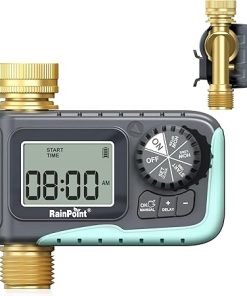
A digital hose timer is usually the best all-around option for gardens, drip irrigation, and routine lawn watering. Look for a clear display, manual watering mode, rain delay, and an easy way to set start time, duration, and frequency.
If you need details about programming and digital features, use the dedicated digital-water-timer guide rather than treating this page as another full digital manual.
Choose Multi-Outlet for Separate Zones
A multi-outlet timer is useful when one faucet serves different areas, such as a vegetable bed and a lawn sprinkler. Confirm whether outlets can run independently and whether your water source has enough pressure and flow for the planned setup.
Choose Smart Only if Remote Control Helps
Smart models make sense when app control, rain delay, or remote schedule changes solve a real problem. Check Wi-Fi or hub range, battery requirements, app support, and whether the timer still works reliably if the connection drops.
Credit: wateringtimers.us.com
Features Worth Paying For
- Manual watering mode: run water without erasing the saved schedule.
- Rain delay: pause watering temporarily after rain.
- Independent outlets: useful when zones need different schedules.
- Low-battery warning: helps prevent missed cycles.
- Easy controls: reduces programming mistakes.
- Durable hose-thread fittings: important for seasonal outdoor use.
Match the Timer to the Watering Method
Lawn sprinklers
Choose a timer that can handle the flow required by the sprinkler and supports the runtime pattern you need.
Drip irrigation
Digital scheduling is usually useful because drip systems often run on repeatable cycles. Use the pressure regulation and filtration required by the drip equipment.
Containers
Containers can dry quickly, so flexible scheduling or multiple start times may be useful during hot weather.
Soaker hoses
A simple digital timer is often sufficient. Test the wetting pattern because output can vary along long hose runs.
Installation Checklist
- Inspect the faucet and washer.
- Install fresh batteries if required.
- Attach the timer by hand without cross-threading.
- Connect the hose or compatible irrigation adapter.
- Turn on the faucet and run a manual leak test.
- Program the schedule and observe the first automatic cycle.

Credit: thespruce.com
What to Avoid
- Buying smart features you will not use.
- Assuming one outlet can run several high-flow devices at once.
- Hanging excessive hose weight from the timer.
- Ignoring washers, filters, or pressure requirements.
- Leaving a timer connected through freezing weather unless the manufacturer explicitly allows it.
FAQ
Which hose timer is best for most homeowners?
A single-outlet digital timer is usually the most practical starting point because it provides repeatable scheduling without the extra complexity of a smart system.
When is a mechanical timer better?
Choose mechanical when you only need a simple timed shutoff and do not need automatic recurring schedules.
Do I need a smart hose timer?
Only if remote control, app scheduling, or weather-related features provide real value for your setup.