
Choosing between a soaker hose and a drip line comes down to how much control, durability, and flexibility your garden needs. Both deliver water slowly at the soil level, which can reduce evaporation, limit leaf wetness, and water plant roots more efficiently than overhead sprinklers.
In the soaker hose vs drip line decision, a soaker hose is usually the simpler, lower-cost option for short garden beds and casual seasonal watering. Drip line is generally the better long-term system for larger gardens, mixed plantings, slopes, containers, and landscapes where even water distribution matters.
Neither option is automatically best for every yard. Soil type, bed length, water pressure, plant spacing, terrain, and how often you want to adjust the system all affect the right choice.
Quick Comparison: Soaker Hose vs. Drip Line
| Feature | Soaker Hose | Drip Line |
|---|---|---|
| How it delivers water | Water seeps through the porous hose along much of its length. | Water exits through built-in emitters placed at set intervals. |
| Best for | Small, simple, closely planted beds. | Vegetable gardens, shrubs, perennial beds, rows, and permanent landscapes. |
| Installation | Quick and simple. | More planning and parts required. |
| Watering precision | Less precise; output can vary with pressure and hose position. | More precise; emitter spacing and flow can be matched to plant layout. |
| Performance on slopes | Often uneven, especially on longer runs. | Usually better, particularly with pressure-compensating drip line. |
| Durability | Often best treated as a seasonal or occasional-use tool. | Typically better suited to long-term irrigation systems. |
| Repairs and changes | Can be awkward if the hose cracks, kinks, or needs rerouting. | Easy to extend, cap, branch, or repair with compatible fittings. |
| Initial cost | Usually lower. | Usually higher because of tubing, fittings, filtration, and pressure control. |
What Is a Soaker Hose?
A soaker hose is a porous hose that releases water gradually through its walls. It is typically made from recycled rubber, flexible porous material, or a similar water-permeable material. Instead of spraying water into the air, it wets the soil in a band around the hose.
Gardeners often snake soaker hoses through flower beds, along hedge rows, or between closely spaced vegetable plants. The hose can sit on top of the soil and be covered lightly with mulch, as long as the mulch does not pinch or kink it.
Where soaker hoses work well
- Short vegetable rows with similar watering needs
- Annual flower beds
- Foundation plantings with closely spaced shrubs
- Small raised beds
- Temporary watering setups where speed matters more than fine control
Limitations of soaker hoses
A soaker hose does not release exactly the same amount of water at every point. Water pressure, hose length, elevation changes, clogs, and bends can all affect the output. The end nearest the faucet may receive more water than the far end, especially if the hose run is long or the supply pressure is too high.
Soaker hoses also water continuously along their length. That is useful in densely planted beds, but wasteful when plants are widely spaced. A hose placed around individual shrubs may moisten bare soil where no roots are growing.
What Is Drip Line?
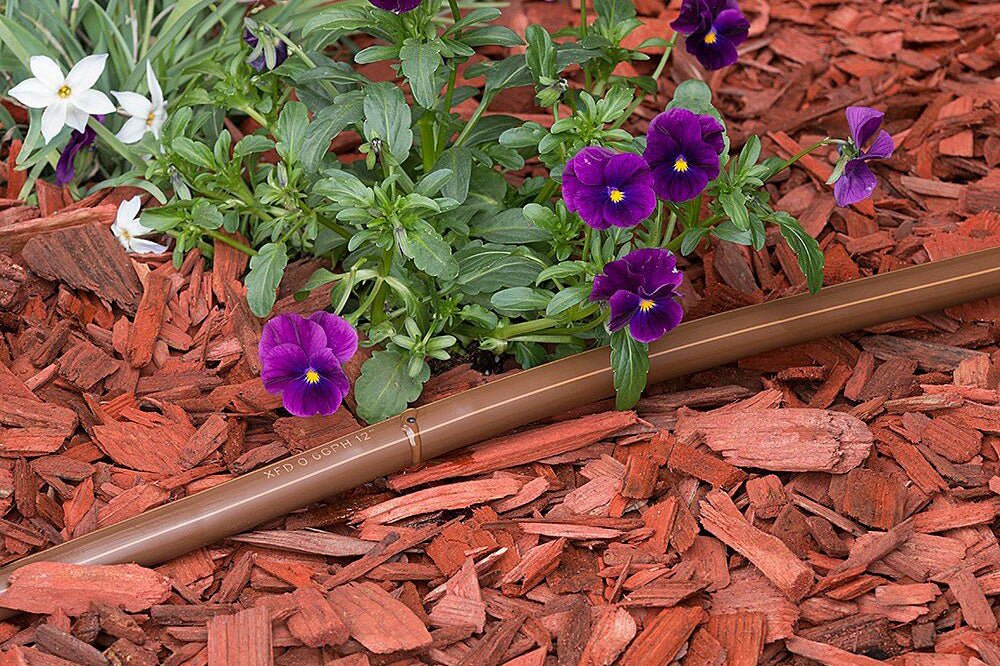
Drip line is flexible irrigation tubing with emitters built into the tube at regular intervals. Each emitter releases water at a controlled rate. The tube may be installed on the soil surface, beneath mulch, or, when designed and installed for that purpose, below the soil surface.
Drip line is sometimes confused with drip irrigation in general. A drip irrigation system can include plain distribution tubing, individual emitters, micro-sprayers, and drip line. The key difference is that drip line already has emitters built into it, while plain tubing carries water to those components.
Why emitter spacing matters
Drip line is available with different emitter spacing, so the tubing can be chosen to suit plant spacing and soil conditions. Closely spaced emitters can work well for densely planted vegetable rows and flower beds. Wider spacing may be more appropriate for shrubs, trees, and plants placed farther apart.
The right spacing also depends on soil texture. Sandy soil tends to absorb water more vertically and spread it less sideways, so wet areas may not overlap as much. Clay soil often spreads water farther across the surface but absorbs it more slowly, increasing the risk of runoff if the system runs too long at once.
Pressure-compensating drip line
Some drip line uses pressure-compensating emitters. These emitters are designed to provide more consistent output across longer runs and changes in elevation, within the manufacturer’s operating range. They can be especially helpful on slopes or in large beds, but they still need proper pressure regulation, filtration, and layout.
Not every garden needs pressure-compensating drip line. For a small, flat, uncomplicated bed, standard drip line may be sufficient. The more uneven or expansive the system becomes, the more valuable consistent emitter performance can be.
Water Efficiency and Distribution
Both systems can conserve water compared with frequent overhead watering because they place moisture near the root zone. However, drip line usually gives the homeowner more control over where the water goes and how evenly it is applied.
With a soaker hose, the entire porous length leaks water. That can be efficient in a full planting bed, but the watering pattern is less exact. If a section crosses an unplanted path or passes too close to a drought-tolerant plant, that area still receives moisture.
With drip line, the emitters create predictable wetting points. When emitter spacing matches the crop or landscape layout, the system can direct water more effectively to the plants that need it. This is especially useful in gardens containing plants with different moisture needs.
Credit: easygardenirrigation.co.uk
Even watering is not guaranteed
Neither system automatically solves watering problems. A poorly designed drip line can leave dry gaps, while a carefully installed short soaker hose can water a small bed well. Check the soil after the system has run. Moisture should reach the active root zone without creating standing water, runoff, or constantly soggy soil.
Use a trowel or soil probe to inspect below the surface rather than judging only by the top inch of soil. Mulch can keep the surface looking damp even when deeper roots have not received enough water, and the opposite can happen in dry, crusted soil.
Installation: Which Is Easier?
Soaker hose wins on simplicity. Attach it to a hose bib or garden hose, lay it through the bed, add an end cap if needed, and test the flow. A timer can make the setup more consistent. For a temporary vegetable patch or a homeowner who wants minimal setup, this can be appealing.
Drip line takes more planning, but the finished system is usually easier to manage over time. A typical system includes a connection to the water source, a filter, a pressure regulator, distribution tubing or a header line, drip line, fittings, end closures, and stakes or landscape pins. A timer is optional but useful.
Basic drip line planning steps
- Sketch the bed, rows, or planting zones and note where the water source is located.
- Group plants with similar watering needs on the same irrigation zone when possible.
- Choose drip line emitter spacing appropriate for the plant layout and soil conditions.
- Install filtration and pressure regulation recommended for the system components.
- Lay out the tubing, secure it without crushing it, and flush the lines before closing the ends.
- Run the system and inspect for leaks, dry areas, excessive pooling, and uneven coverage.
For either system, avoid placing tubing where it will be repeatedly stepped on, cut by edging tools, or damaged by mower wheels. Mark the layout before digging, planting, or applying mulch so future yard work does not accidentally puncture the irrigation line.
Soaker Hose vs. Drip Line for Common Garden Areas
Vegetable gardens
Drip line is often the better choice for a vegetable garden, particularly when crops are planted in rows. It can be positioned along each row and adjusted as the garden design changes. It also works well with mulch, helping keep foliage drier and reducing splash from soilborne disease organisms.
A soaker hose can still work well in a small vegetable bed with closely planted crops. It is less ideal when wide pathways separate the rows or when crops need distinctly different amounts of water. Tomatoes, squash, leafy greens, herbs, and young transplants do not always have the same root depth or moisture preference.
Raised beds
Both options can work in raised beds. A soaker hose is convenient for one small bed filled with plants at close spacing. For multiple raised beds, drip line is usually easier to organize, expand, and balance.
Raised beds can dry faster than in-ground gardens, particularly in warm, windy conditions. Do not assume a fixed timer schedule is enough. Check moisture at root depth and adjust for rainfall, temperature, plant size, and the water-holding ability of the bed mix.
Flower beds and perennial borders
For densely planted annuals or perennials, either option may be practical. A soaker hose can be tucked through a full bed before plants grow in. Drip line offers a cleaner long-term solution if you expect to divide perennials, add plants, or change the bed layout over time.
Use care around plants that prefer drier conditions. Lavender, many succulents, and some drought-tolerant native plants can struggle if irrigation tubing keeps the crown or surrounding soil consistently wet.
Shrubs, trees, and hedges
Drip line is generally the stronger choice for shrubs and hedges because it can follow the root zone rather than simply wetting a straight line. For individual shrubs or young trees, a drip system using individual emitters or a loop of drip line may be more efficient than running a soaker hose through empty areas.
Keep water away from the trunk flare and plant crown. The goal is to moisten the soil where feeder roots are growing, not to keep the bark constantly wet. As trees and shrubs mature, their active root area expands, so the irrigation layout may need to move outward.
Sloped yards
Drip line is usually preferable on slopes, especially pressure-compensating drip line installed in appropriately sized zones. Even then, water can run downhill through or over the soil if application exceeds the soil’s ability to absorb it.
Divide long watering periods into shorter cycles when runoff occurs. Allow time between cycles for water to soak in. A soaker hose on a slope may overwater the lower section while leaving higher areas comparatively dry.
Durability, Maintenance, and Repairs
Soaker hoses are simple, but they can become less reliable as they age. Sun exposure, kinking, freeze damage, mineral buildup, and punctures can affect performance. Because the hose releases water through its entire wall, a damaged area may be harder to isolate or repair cleanly.
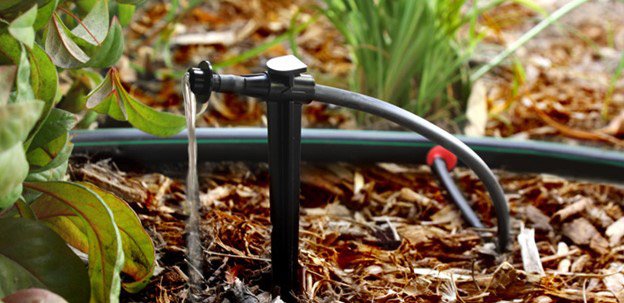
Drip line requires more components, but individual sections can often be cut out and reconnected with compatible fittings. The modular design makes it easier to add a new bed, reroute a line around a plant, or replace a damaged section.
Credit: outdoorwateringnerds.org
Maintenance tasks for both systems
- Inspect lines at the beginning of the growing season and after landscaping work.
- Look for leaks, crushed tubing, animal damage, and clogged outlets.
- Flush the system as recommended by the manufacturer, especially after installation or repairs.
- Use a filter when required to reduce clogging from sediment or debris.
- Adjust the timer as weather and plant needs change.
- Drain, disconnect, or winterize components before freezing weather when required for your system.
Do not bury standard garden hoses or irrigation components unless the manufacturer identifies them as suitable for burial. Underground installation can make leaks hard to find and may shorten the life of products not designed for soil contact and root pressure.
Water Pressure, Filters, and Timers Matter
Many disappointing results blamed on a soaker hose or drip line are actually installation problems. Household water pressure can be too high for low-flow irrigation products, causing uneven release, fittings that blow apart, or premature wear. Drip systems commonly use pressure regulators designed for the components in the system.
Filtration is particularly important for drip line because small emitter passages can clog from sediment, algae, mineral deposits, or debris in the water supply. A filter will not solve every water-quality issue, but it is a basic protection for a properly designed drip system.
A timer improves consistency, but it should not turn irrigation into a set-it-and-forget-it task. Rainfall, heat waves, cloudy periods, plant growth, and seasonal changes all affect how much water a landscape needs. Recheck the soil periodically and revise the schedule rather than watering by habit.
If your system connects to a potable water supply, use the backflow protection required by local plumbing rules and the irrigation equipment manufacturer. Requirements vary by location, so check with your water authority or local code office before installing a permanent setup.
Cost Considerations
A soaker hose usually costs less to begin with because it needs fewer parts. For a single small bed, that lower initial cost can make good sense. However, replacing several hoses over time, buying extra connectors, or struggling with uneven watering can reduce the savings.
Drip line generally has a higher upfront cost because it is part of a system. Filters, pressure regulators, connectors, valves, timers, and distribution tubing add to the project. The investment may be worthwhile when you have several beds, a large vegetable garden, permanent shrubs, or an irrigation layout that will remain in place for years.
Think beyond the purchase price. A system that waters the right areas evenly, avoids runoff, and can be repaired without replacement may offer better long-term value than the least expensive option.
Common Mistakes to Avoid
- Running the line too long: Long runs can cause uneven water distribution, particularly with soaker hoses and non-compensating drip line.
- Using full faucet pressure: Follow the product instructions for pressure regulation and connections.
- Skipping a filter: Sediment can clog drip emitters and reduce performance.
- Watering on a rigid schedule: Check the soil and adapt to current weather and plant growth.
- Installing one line for plants with very different needs: Grouping dry-loving plants with moisture-loving vegetables makes proper watering difficult.
- Covering lines too deeply: Heavy soil or dense mulch can hide leaks, restrict flow, and make maintenance harder.
- Ignoring winter preparation: Water left in hoses, fittings, and lines can freeze and damage components in cold climates.
Credit: waterirrigation.co.uk
Which Option Is Better for Most Homeowners?
Choose a soaker hose if you have a small, flat, densely planted bed and want the quickest, least complicated way to water at ground level. It is a practical solution for seasonal gardens and gardeners who do not need highly precise control.
Choose drip line if you want a more durable, adaptable, and controlled irrigation setup. It is usually the better option for larger gardens, multiple beds, vegetable rows, slopes, shrubs, and permanent landscaping. The extra setup work pays off most when consistent watering and easy expansion matter.
For many properties, the best answer is not one product for the entire yard. A short soaker hose may be enough for a temporary flower bed, while drip line serves the vegetable garden and shrub borders more effectively. Match the system to the planting layout instead of forcing one watering method everywhere.
Frequently Asked Questions
Can I connect a soaker hose to a drip irrigation system?
It is possible in some setups, but the components may have different pressure and flow needs. A soaker hose can alter the performance of the rest of the irrigation zone, so it is usually better to place it on a separate zone or follow the guidance supplied by the manufacturers of all connected parts.
Should irrigation tubing go above or below mulch?
For most home gardens, placing soaker hoses or drip line on the soil surface and covering them lightly with mulch works well. The mulch reduces evaporation and protects the tubing from sunlight while keeping the system accessible for inspections and repairs.
How do I know whether my drip line is watering deeply enough?
After an irrigation cycle, wait briefly for water to soak in, then check the soil with a trowel or probe at several points. The depth of moisture should match the active root zone of the plants without leaving the soil saturated for extended periods.
Will a soaker hose work with a rain barrel?
It may work, but gravity-fed rain barrels often provide limited pressure. A short soaker hose placed near the barrel may release some water, while a long hose may perform poorly. A system designed for low-pressure gravity flow is usually more reliable.
How often should I inspect a drip or soaker system?
Inspect it when you first start using it each season, after installation changes, and periodically during active watering. Check sooner after storms, digging, animal activity, lawn work, or any sign that plants are drying out or soil is staying overly wet.