
Knowing the parts of a garden hose makes everyday watering easier and helps you fix small problems before they turn into leaks, weak spray pressure, or a hose that will not connect properly. While a garden hose may look like one simple tube, it is a system of fittings, seals, layers, and optional accessories that all affect how it performs.
This guide explains the main garden hose components, what each one does, and how to care for them. Whether you are replacing a worn washer, choosing a new hose, or troubleshooting a stubborn connection, understanding the basic parts will help you make better decisions.
The Main Parts of a Garden Hose
A typical garden hose has a flexible hose body with a fitting at each end. One end connects to the outdoor faucet, also called a hose bibb or spigot. The other end connects to a nozzle, sprinkler, sprinkler timer, soaker hose, or another watering accessory.
| Part | Where It Is | Main Job |
|---|---|---|
| Hose body | Full length of the hose | Carries water from the faucet to the end attachment |
| Female coupling | Faucet end | Screws onto the outdoor faucet or another male fitting |
| Washer | Inside the female coupling | Creates a watertight seal |
| Male coupling | Attachment end | Connects to a nozzle, sprinkler, or another hose |
| Ferrule or collar | Where fitting meets hose | Secures the fitting to the hose body |
| Kink guard | Near one or both hose ends | Reduces sharp bends at high-stress connection points |
Hose Body: The Flexible Water-Carrying Tube
The hose body is the long, flexible tube that carries water. Its quality determines much of the hose’s durability, weight, flexibility, resistance to kinks, and ability to handle water pressure.
Garden hoses are commonly made from vinyl, rubber, or blended materials. Vinyl hoses are often lighter and less expensive, but they may become stiff in cold weather and are more likely to kink or crack over time. Rubber hoses tend to be heavier, more flexible, and more durable, although they can cost more. Hybrid hoses combine rubber-like flexibility with lighter synthetic materials.
Inner Tube
The inner tube is the layer that contacts the water. In a basic hose, it may be a simple vinyl tube. Better-quality hoses may use more durable compounds designed to resist cracking, splitting, or deterioration from regular outdoor use.
If you use a hose for watering edible gardens, filling pet water containers, or other uses where water quality matters, check the manufacturer’s intended-use information. Not every hose is designed for drinking-water applications.
Reinforcement Layer
Many hoses have a reinforcement layer between the inner tube and outer cover. This layer may be braided mesh, spiral reinforcement, or cord material. Its purpose is to help the hose resist bursting and maintain its shape under normal household water pressure.
A reinforced hose is usually a better choice for long runs, sprinkler use, or yards with higher water pressure. However, reinforcement does not make a hose immune to damage from sharp objects, repeated kinking, vehicle traffic, or freezing water.
Outer Cover
The outer cover protects the inner layers from sunlight, abrasion, dirt, and rough surfaces. A thicker cover may improve durability, but it can also make the hose heavier and harder to coil.
Look for cuts, soft spots, bulges, cracks, or flattened areas along the outer cover. These can signal damage beneath the surface and may eventually lead to a split or burst.
Female Coupling: The Faucet-End Connector
The female coupling is the fitting with internal threads, usually found at the end that attaches to your outdoor faucet. It is called “female” because it screws over a male threaded fitting, such as the threaded outlet on a hose bibb.
Most standard U.S. residential garden hoses use garden hose thread fittings. These fittings are intended for hose connections and are not the same as many plumbing pipe threads. Avoid forcing a hose fitting onto a connection that does not match.
Materials Used for Female Couplings
Female couplings may be made from plastic, aluminum, brass, or other metal alloys.
- Plastic: Lightweight and inexpensive, but more likely to crack if overtightened, dropped, or left outside in freezing weather.
- Aluminum: Lightweight and commonly used, though it can corrode or deform if abused.
- Brass: Durable, corrosion-resistant, and less likely to crack than plastic fittings. It is often a good long-term choice.
Metal fittings can still be damaged by cross-threading or excessive force. Hand-tightening is normally enough when the washer is in good condition.
Hose Washer: The Small Part That Stops Most Leaks
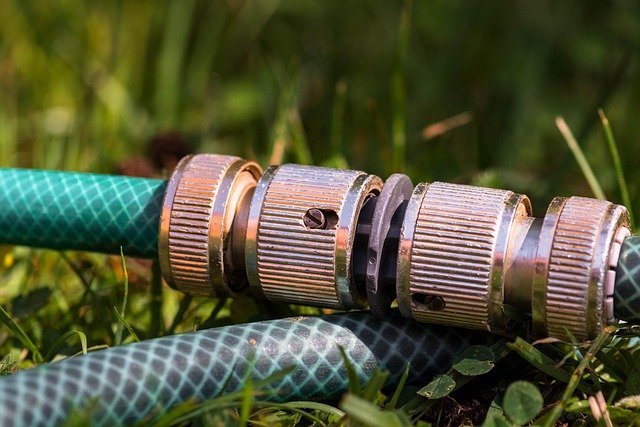
The washer is a flat rubber or synthetic ring inside the female coupling. It compresses against the face of the faucet or attachment fitting when you tighten the connection, creating the seal that keeps water from leaking out.
A missing, flattened, cracked, or hardened washer is one of the most common causes of a leak at the faucet connection. The threads may appear fine, but the connection will still drip or spray without a working washer.
Credit: pixabay.com
How to Check and Replace a Washer
- Turn off the faucet and remove the hose.
- Look inside the female coupling for the washer.
- Use a small flat tool or your fingers to remove a damaged washer carefully.
- Press in a replacement hose washer of the proper size.
- Reconnect the hose hand-tight and test for leaks.
Do not rely on overtightening to stop a leak. Excess force can damage the washer, strip threads, crack a plastic fitting, or make the hose difficult to remove later.
Male Coupling: The Attachment-End Connector
The male coupling is the externally threaded fitting at the opposite end of the hose. It connects to a spray nozzle, sprinkler, irrigation timer, hose-end filter, shutoff valve, or a second hose.
The male coupling does not usually contain a washer because the female fitting on the attachment provides the seal. If water leaks where a nozzle or sprinkler connects, inspect the washer inside the accessory’s female connector first.
Protecting Male Threads
Male threads can become bent, worn, or clogged with dirt. When the hose is stored on the ground, the exposed fitting is especially likely to collect soil, mulch, and small stones.
- Rinse dirt from the threads before connecting accessories.
- Start threading gently by hand to avoid cross-threading.
- Do not drag the metal fitting across concrete or gravel.
- Use a hose-end cap if the hose will be stored outdoors for long periods.
Ferrule or Hose Collar: The Connection Between Hose and Fitting
The ferrule, sometimes called a collar or crimp sleeve, is the piece that holds the coupling onto the hose body. On many hoses, it is a metal or plastic sleeve pressed tightly around the end of the hose.
This is a high-stress area because the hose is frequently bent, pulled, twisted, and lifted near its ends. A leak where the fitting joins the hose often indicates a failed ferrule, split hose end, or damaged fitting.
Can a Leaking Hose End Be Repaired?
Often, yes. If the hose body is otherwise in good shape, you can cut away the damaged section and install a hose repair fitting designed for the hose diameter. Repair fittings are available in clamp-on and threaded styles.
Before repairing, shut off the water, disconnect the hose, and drain it. Cut the damaged end squarely with a sharp utility knife or hose cutter, following the repair fitting instructions. If the hose is brittle, cracked in multiple places, or repeatedly leaking, replacement is usually the better option.
Kink Guards and Strain Relief
A kink guard is a flexible sleeve or spring-like section near the coupling. It helps prevent the hose from making a sharp bend immediately behind the fitting. This reduces strain on the hose end and can help the hose last longer.
Kink guards are useful, but they do not eliminate kinks throughout the rest of the hose. A hose can still kink when twisted, pulled around corners, tightly wound, or forced into a small storage space.
To reduce kinking, pull the hose out in a straight line before turning on the water, avoid tight coils, and use a hose reel or hanger sized for the hose length. If a kink forms, turn off the water and straighten the hose rather than trying to force water through it.
Optional Hose-End Parts and Accessories
Some items are not built into the hose itself, but they become part of the watering setup. The right accessory can make watering more convenient and reduce wear on the hose connections.
Spray Nozzle
A spray nozzle attaches to the male coupling and controls the water pattern. Common settings include jet, shower, mist, cone, flat, and soaker-style patterns. A gentle shower pattern is generally better for newly planted flowers and delicate seedlings than a concentrated jet.
When choosing a nozzle, consider grip comfort, trigger style, and whether it includes a durable shutoff. Avoid leaving a pressurized hose with a closed nozzle unattended, especially during hot weather, because pressure can stress weak fittings and hose walls.
Hose-End Shutoff Valve
A hose-end shutoff valve installs between the hose and the nozzle or sprinkler. It allows you to stop the flow at the end of the hose without walking back to the faucet.
This can be useful when switching attachments, but it should not replace shutting off the faucet after watering. Leaving the entire hose pressurized for extended periods increases the chance of leaks and puts unnecessary strain on connections.
Quick-Connect Fittings
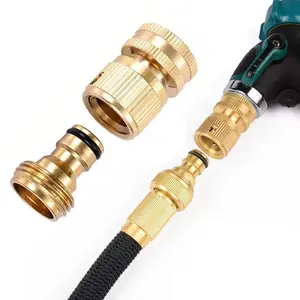
Quick-connect systems use matching adapters that let you attach or remove nozzles and sprinklers with less twisting. They are convenient for gardeners who frequently switch between tools.
The trade-off is that every extra connection creates another possible leak point. Choose compatible fittings from the same system when possible, keep the seals clean, and replace worn O-rings or washers as needed.
Hose Mender and Splicer
A hose mender repairs a damaged end, while a hose splicer joins two cut hose sections. These fittings can extend the life of a hose with one localized problem.
They are most useful when the remaining hose is flexible and undamaged. A repair fitting will not solve widespread cracking, sun damage, severe kinking, or a hose that has become stiff and brittle.
How Garden Hose Connections Work
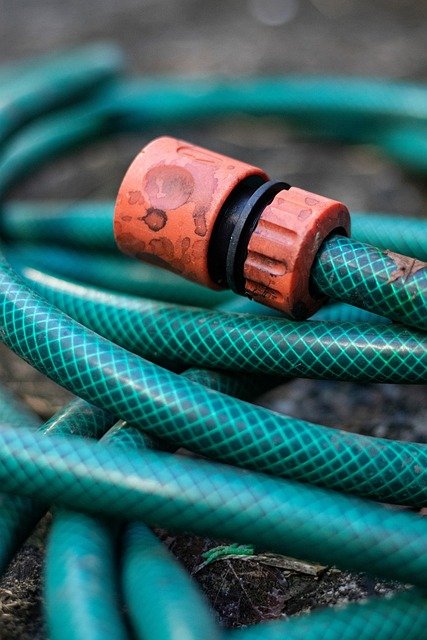
Garden hose connections depend on two things: properly matched threads and a washer that creates a seal. The threads pull the fittings together, but the washer is what normally stops the water.
This explains why thread seal tape is usually not the first solution for a leaking hose connection. If a standard hose fitting leaks, inspect the washer, debris, damaged threads, and alignment before adding anything to the threads.
Credit: pixabay.com
Signs of Cross-Threading
Cross-threading happens when the female coupling is started at an angle and the threads do not line up correctly. It can damage plastic or metal fittings quickly.
- The fitting feels difficult to turn almost immediately.
- The connection sits at an angle instead of straight.
- The threads look scraped, flattened, or uneven.
- The fitting leaks even after a new washer is installed.
If the coupling resists, stop and back it off. Align the fitting straight, turn it backward slightly until the threads seat, then tighten forward by hand.
Tips for Extending Garden Hose Life
Most hose damage comes from sun exposure, constant pressure, sharp bends, abrasion, and freezing temperatures. Simple storage habits can make a noticeable difference.
- Turn off the faucet after each use: Release pressure by opening the nozzle or hose-end valve after shutting off the water.
- Drain before freezing weather: Disconnect the hose, empty it as fully as possible, and store it where trapped water will not freeze.
- Keep it off hot pavement when practical: Heat and sunlight can shorten the life of hose materials over time.
- Use a hose reel, cart, or wall hanger: Proper support prevents crushing, tangling, and tight bends.
- Do not drive over the hose: Tires can damage the hose body and deform fittings.
- Move the hose by the hose, not the nozzle: Pulling on an attached nozzle strains the coupling and ferrule.
- Inspect washers seasonally: Keeping a few replacement washers on hand can prevent many small leaks.
Troubleshooting Common Garden Hose Problems
Credit: shop.tiktok.com
Leak at the Faucet
First, check whether the female coupling has a washer and whether it is cracked, flattened, or misplaced. Clean grit from the washer and faucet face, then reconnect the hose straight and hand-tight. If the faucet itself leaks around its handle or from the spout when no hose is attached, the issue may be with the faucet rather than the hose.
Leak at the Nozzle or Sprinkler
Inspect the washer inside the nozzle, sprinkler, timer, or other accessory. Also check the hose’s male threads for dents or cross-thread damage. If the accessory is cracked or its connector is loose, replacing that accessory may be more practical than repairing it.
Low Water Pressure at the Hose End
Low flow can result from a partially closed faucet, a kink, a crushed hose, a clogged nozzle screen, or a restrictive attachment. Disconnect the nozzle and briefly test water flow from the bare hose end. If flow improves, clean or replace the attachment. If it does not, inspect the hose for kinks and check the faucet’s flow.
Water Sprays From the Hose Body
A small puncture may be repairable with a product designed for hose repair, but a split, bulging area, or multiple leaks usually means the hose is nearing the end of its service life. Turn off the water before examining damage. Never try to patch a hose while it is pressurized.
Frequently Asked Questions
What is the standard diameter of a garden hose?
Many residential garden hoses are commonly sold in diameters such as 1/2 inch, 5/8 inch, and 3/4 inch. A larger inside diameter can carry more water, but actual flow also depends on hose length, water pressure, kinks, and the attachment being used.
Why does my hose keep kinking even when it is new?
New hoses can retain a tight coil shape from packaging, especially in cool weather. Lay the hose out straight in warm conditions, avoid twisting it while pulling it out, and store it in broad loops. Lightweight hoses and hoses with less reinforcement may kink more easily than heavier-duty designs.
Can I connect two garden hoses together?
Yes. The male end of one hose connects to the female end of another hose. Make sure the second hose has a good washer, and keep in mind that adding length can reduce water flow, particularly with narrow hoses, long runs, or pressure-demanding sprinklers.
Should I leave a garden hose connected during winter?
In areas that experience freezing temperatures, it is best to disconnect, drain, and store the hose before hard freezes. If your faucet is not frost-free or has not been properly winterized, leaving a hose attached can contribute to freeze damage in the faucet or connected plumbing.
How do I know when it is better to replace a hose instead of repairing it?
Replace the hose when it has widespread cracks, repeated leaks, brittle material, severe kinking, damaged fittings at both ends, or bulges that suggest weakened internal layers. A single damaged end or one clean puncture can often justify a repair, but repeated failures usually make replacement the safer and less frustrating choice.