
Patio container gardening makes it possible to grow flowers, herbs, vegetables, and small shrubs even when you do not have a traditional yard or garden bed. A few well-chosen pots can soften a bare concrete space, add privacy, attract pollinators, and provide fresh ingredients steps from the kitchen.
The key is to match each plant with the right container, sunlight, and watering routine. A container garden has less soil than an in-ground bed, so it dries out faster and gives roots less room for error. Thoughtful planning makes it far easier to keep plants healthy through the season.
Whether you have a sunny apartment balcony, a shaded porch, or a compact backyard patio, these patio container gardening ideas can help you create a beautiful, manageable small-space garden.
Start With Your Patio’s Growing Conditions
Before buying plants or pots, spend a few days observing the space. The amount and timing of direct sunlight are more important than the patio’s size. A small sunny patio can grow a surprising amount of food and color, while a larger shaded patio needs plants selected for lower light.
Measure the sunlight, not just the square footage
- Full sun: At least six hours of direct sun most days. This suits tomatoes, peppers, basil, lavender, petunias, zinnias, and many flowering annuals.
- Part sun or part shade: Roughly three to six hours of direct sun, often with afternoon shade. Good choices include lettuce, parsley, coleus, begonias, ferns, and many leafy greens.
- Shade: Less than three hours of direct sun. Choose plants grown mainly for foliage or shade-tolerant flowers, such as caladiums, hostas, impatiens, and certain ferns.
Sun conditions can change during the year as the sun angle shifts or nearby trees leaf out. Heat also matters. A south- or west-facing patio surrounded by brick, stucco, or concrete may become much hotter than a garden bed, particularly in summer. Plants in dark containers heat up even faster.
Check practical limits before arranging containers
Patio container gardening should work with the way you use the outdoor space. Leave room for doors, chairs, grills, walkways, and drainage. Avoid placing heavy pots where they block exits or create tripping hazards. If you garden on a balcony, confirm weight limits with the building owner or manager before adding large containers filled with wet soil.
Also note wind exposure. Windy patios dry plants quickly, snap tall stems, and can topple lightweight pots. Use broad, stable containers, group pots together for shelter, and stake tall plants if needed. Avoid putting containers where runoff may stain surfaces or drain toward a doorway.
Choose Containers That Help Plants Thrive
A beautiful pot is useful only if it supports healthy roots. The best container size, material, and shape depend on the plant, the local climate, and how often you can water.
Use containers with drainage holes
Most outdoor plants need drainage holes. Without them, excess water remains around the roots and can lead to root rot, especially after heavy rain. If a decorative pot has no hole, use it as a cachepot: keep the plant in a slightly smaller nursery pot with drainage and remove it to water when necessary.
Do not create a gravel layer at the bottom of a pot as a substitute for drainage. It reduces the amount of soil available to roots and does not solve the problem of a container without holes.
Size pots for mature roots
Small pots are easy to move, but they hold little moisture and restrict root growth. Larger containers generally give plants more stable soil temperatures and make watering less demanding. Choose a pot based on the mature size of the plant rather than the size it was when purchased.
| Plant type | Container needs | Useful patio placement |
|---|---|---|
| Herbs and leafy greens | Moderate-depth pots, window boxes, or troughs with good drainage | Near the kitchen where harvesting is convenient |
| Annual flowers | Medium pots, hanging baskets, and mixed planters | Edges, steps, tables, and seating areas |
| Tomatoes, peppers, eggplant | Large, deep containers with support for taller varieties | Sunniest location with easy access for watering |
| Dwarf shrubs and small trees | Large, heavy, frost-resistant containers | Anchor points, corners, or privacy screens |
| Trailing plants | Hanging baskets, tall pots, or railing planters secured safely | Raised locations where stems can spill downward |
Consider container materials
- Plastic or resin: Lightweight, affordable, and slower to dry than porous materials. They are practical for large planters that may need to be moved.
- Terra cotta: Classic and breathable, but porous clay dries quickly in hot or windy weather. Unglazed pots can also crack in freezing conditions if left outdoors.
- Glazed ceramic: Available in many colors and usually holds moisture better than unglazed clay. Large pots can be very heavy.
- Metal: Modern and durable, but it may heat up quickly in direct sun. Use caution around roots in very hot locations.
- Wood: Natural-looking and well suited to raised planters. Choose rot-resistant materials or a container designed for outdoor use.
Pot feet, risers, or small blocks can improve drainage and reduce stains on a patio. Use stable supports that will not shift under the container’s weight.
Use a Quality Potting Mix, Not Garden Soil
Container plants need a lightweight growing medium that drains well while holding enough moisture for roots. Use a packaged potting mix labeled for containers. These mixes are usually made from materials that create air pockets around roots and resist compaction better than soil dug from the yard.
Garden soil is often too dense for pots. It can compact, drain poorly, and carry weed seeds or plant pathogens. A raised-bed mix is not always the same as a container mix, so read the package before using it in planters.
Credit: cozylittlehouse.com
Refresh containers between seasons
At the end of a growing season, remove dead annuals and as much old root material as possible. Potting mix can sometimes be reused for ornamental containers if it is still loose and disease-free, but it benefits from being refreshed with new mix and compost. For containers that held diseased plants or had severe pest problems, discard the old growing medium rather than moving it to another pot.
Clean empty pots with a brush and water before replanting. This simple step removes old soil, algae, and insects that may be hiding around the rim or drainage holes.
Easy Patio Container Gardening Design Ideas
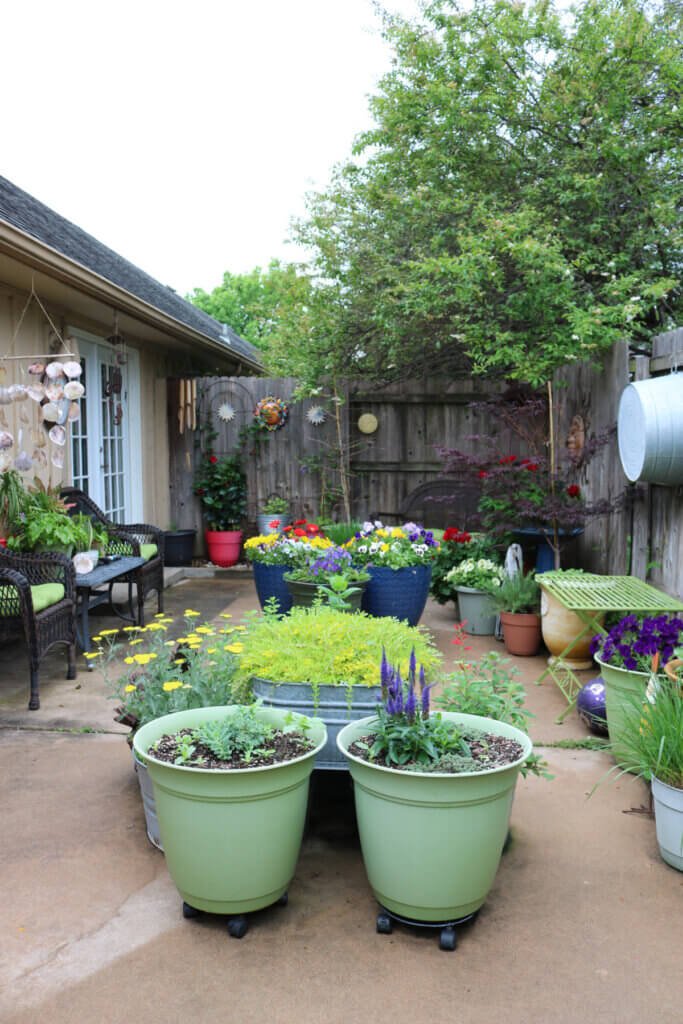
A small patio looks more intentional when containers are grouped and repeated rather than scattered randomly. Think of pots as movable landscape beds: create layers, vary heights, and use a limited color palette so the space feels connected.
Create a layered focal point
Place one large container in a visible corner or beside a patio entrance. Fill it with a taller centerpiece plant, medium-height plants around it, and trailing plants near the edge. This design approach is often described as “thriller, filler, spiller,” but the plants should share the same sun and water needs.
For a sunny arrangement, a compact ornamental grass or upright flowering plant can provide height, mounding annuals can fill the middle, and trailing flowers or sweet potato vine can soften the rim. In shade, a fern, caladium, or upright coleus can serve as the focal point with begonias and trailing foliage around it.
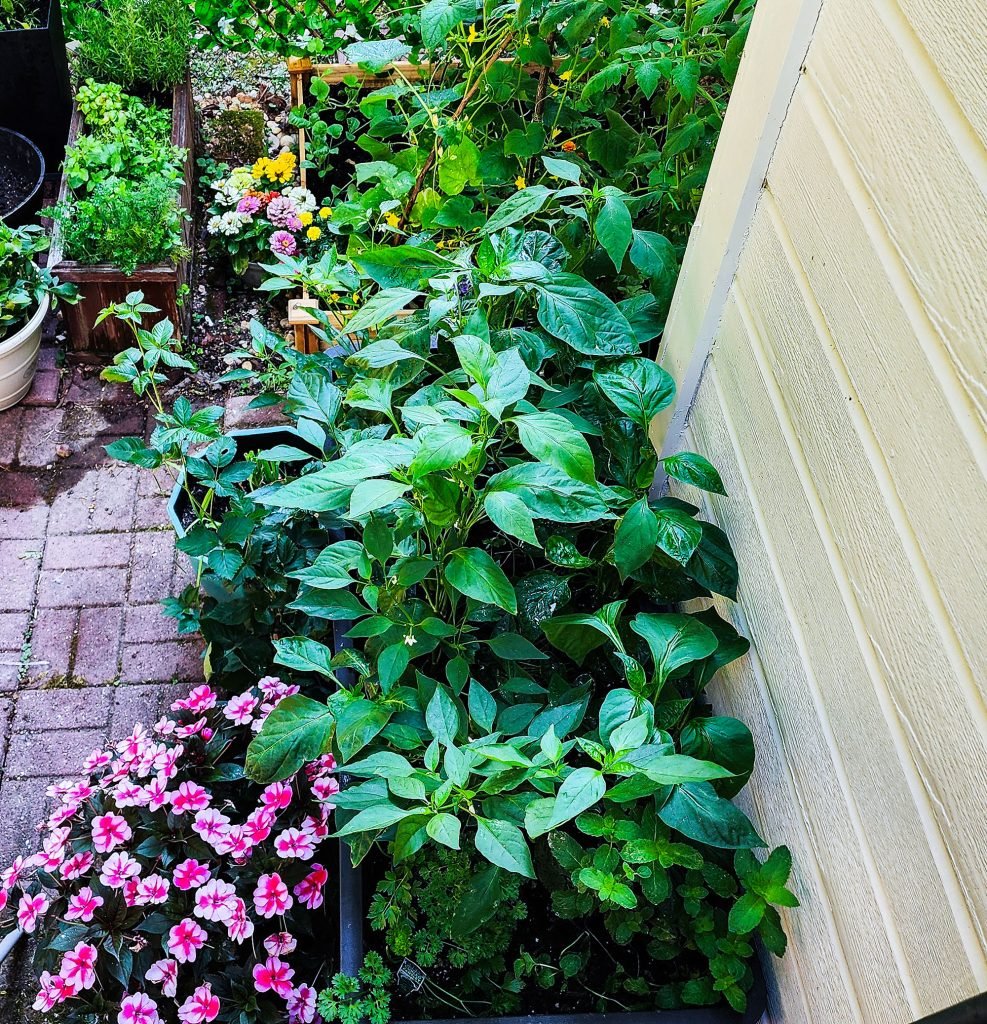
Build a kitchen garden near the door
Edible containers are most useful when they are close enough to harvest often. A row of herbs near the back door may be more productive than a larger vegetable container placed at the far end of the yard.
Good choices for patio pots include:
- Basil, parsley, chives, cilantro, thyme, oregano, and mint
- Leaf lettuce, arugula, spinach, and Swiss chard
- Radishes and compact carrot varieties in sufficiently deep containers
- Patio or dwarf tomatoes, peppers, and bush beans in full sun
- Strawberries in pots, baskets, or strawberry planters
Mint is vigorous and is often best kept in its own container so it does not crowd out less aggressive herbs. Tomatoes and peppers need strong light, steady moisture, and enough container volume to support mature roots. Select compact varieties bred for containers when space is limited, and add cages or stakes at planting time so you do not damage roots later.
Use vertical space without crowding the floor
Vertical gardening can make a small patio more productive, but structures must be stable and suited to the surface. Trellises, wall-mounted planters, shelves, and hanging baskets all add growing space while preserving room for seating.
Use a trellis in a large, stable pot for climbing plants such as compact cucumbers, pole beans, or flowering vines. Make sure the container is heavy enough that the mature plant and trellis will not blow over. Follow local building rules and obtain permission before mounting anything to shared walls, railings, or exterior siding.
Make a simple privacy screen
For patios that face neighbors or a street, a line of tall containers can create a softer boundary. Narrow upright evergreens, clumping ornamental grasses, bamboo alternatives that do not spread aggressively, or trellised vines can work depending on climate and sunlight.
Research a plant’s mature size and winter hardiness before using it as a long-term screen. A shrub that survives in the ground may be less cold-hardy in an exposed container because its roots are above ground. In cold-winter regions, choose containers rated for freezing conditions and protect or overwinter plants as needed.
Repeat colors for a calm, polished look
A small space can look cluttered when every pot, plant, and flower color is different. Choose two or three main colors, then repeat them in several containers. You might pair blue and white flowers with silver foliage, or use warm shades such as yellow, orange, and red near a seating area.
Foliage counts as color, too. Lime green, burgundy, silver, and variegated leaves can provide interest long after individual flowers fade. This is especially helpful for shady patios where flowers may be less abundant.
Water Container Plants According to Conditions
Watering is the most frequent task in patio container gardening. Containers can dry out quickly because their roots are surrounded by a relatively small amount of growing medium, and patios often reflect heat. However, frequent shallow watering is not always the answer.
Check moisture by inserting a finger into the potting mix near the plant’s root zone. Water when the upper portion of the mix has dried to an appropriate depth for that plant, rather than watering on a rigid schedule. Many established containers need thorough watering when dry, allowing water to flow from the drainage holes. Empty standing water from saucers after a reasonable drainage period so roots do not remain submerged.

Credit: reddit.com
Conditions that increase watering needs
- Hot temperatures, low humidity, and strong wind
- Small containers and hanging baskets
- Plants with dense foliage, flowers, or developing fruit
- Porous terra-cotta containers
- Patios with reflected heat from walls, pavement, or windows
Water early in the day when possible. This gives foliage time to dry and helps plants handle afternoon heat. A watering can works well for a few containers; a hose with a gentle watering wand is easier for a larger collection. Drip irrigation can reduce daily work, but check emitters regularly because a clogged or displaced emitter can leave one pot dry.
Feed Plants Without Overfertilizing
Regular watering gradually leaches nutrients from containers. Annual flowers, vegetables, and herbs often benefit from fertilizer during active growth, but too much fertilizer can damage roots, produce weak growth, or reduce flowering and fruiting.
Start with a potting mix that contains nutrients, then use a fertilizer appropriate for the plants you are growing. Slow-release products and water-soluble fertilizers work differently, so follow the current product label for application timing and amounts. Do not assume that more fertilizer will correct a struggling plant; wilting, yellow leaves, or poor growth can also result from heat, pests, root crowding, poor drainage, or insufficient light.
Keep Patio Plants Attractive Through the Season
Small, regular tasks prevent a container garden from becoming overwhelming. Walk through the patio every few days to look for dry soil, spent flowers, insects, broken stems, or containers that have shifted after wind or rain.
Simple maintenance habits
- Remove faded flowers from plants that respond well to deadheading.
- Harvest herbs and leafy greens regularly to encourage fresh growth.
- Turn containers occasionally if plants lean strongly toward the light.
- Pinch back leggy annuals when appropriate to encourage branching.
- Inspect leaf undersides for aphids, mites, or other small pests.
- Remove fallen leaves and spent plant material from the soil surface.
If one plant declines, do not assume the entire planter needs treatment. Look first at the roots, soil moisture, sun exposure, and signs of pests. Remove severely diseased plants promptly, and avoid splashing soil onto leaves when watering. When using any pesticide, fungicide, or other garden chemical, select a product labeled for the specific plant and problem, then follow all label directions and precautions around children, pets, pollinators, and edible crops.
Plan for Seasonal Changes
One advantage of containers is flexibility. You can move pots to follow the sun, replace tired annuals, or change a patio display as the seasons shift. In many parts of the United States, cool-season crops and flowers thrive in spring and fall, while heat-loving flowers and vegetables take over in summer.
Frost timing varies widely by region and even within a neighborhood. Wait until frost risk has passed before setting out tender warm-season plants, and be ready to protect or move containers when an early fall frost is forecast. Local Cooperative Extension resources can help with planting windows for your county.
Credit: beautifuleatsandthings.com
Overwintering containers in cold climates
Perennials, shrubs, and small trees are more exposed in pots than in the ground. Roots can be damaged by repeated freezing and thawing, especially in small containers. Move suitable plants to a sheltered location, group pots together, insulate containers where practical, or overwinter tender plants indoors if they have the light and conditions they need.
Do not bring pest-infested plants indoors without inspecting and treating the problem first. For plants that will remain outside, make sure pots can tolerate winter weather and are not sitting where ice may block drainage holes.
FAQ
How many plants should go in one patio container?
The answer depends on the container’s size and the mature width of each plant. A planter can look full at planting without being packed tightly. Leave enough room for roots and air circulation, and expect many annuals to fill out as the season progresses.
Can I grow flowers and vegetables in the same pot?
Yes, if the plants need similar sunlight, water, and fertilizer. For example, a sunny large container might combine a compact tomato with basil and a trailing edible or ornamental plant. Avoid pairing vigorous plants with slow-growing crops that may become shaded or crowded.
What can I grow on a patio that gets only morning sun?
Morning sun is often ideal for leafy greens, many herbs, begonias, coleus, impatiens, and other part-sun plants. Observe how many hours of direct sun the patio receives, since summer morning light can still be strong enough for some flowering plants.
Do self-watering planters eliminate the need to check soil moisture?
No. They can extend the time between waterings, but reservoirs still run dry and different plants use water at different rates. Check the reservoir and the potting mix regularly, especially during hot weather or while new plants are establishing roots.
How do I stop squirrels or birds from digging in containers?
Cover exposed soil with a light layer of mulch, smooth stones too large to swallow, or a plant-safe physical barrier secured around the pot. Keep fallen fruit and birdseed cleaned up nearby, since food sources can attract repeated visits. Avoid materials that prevent water from reaching the soil or create a hazard for wildlife.