
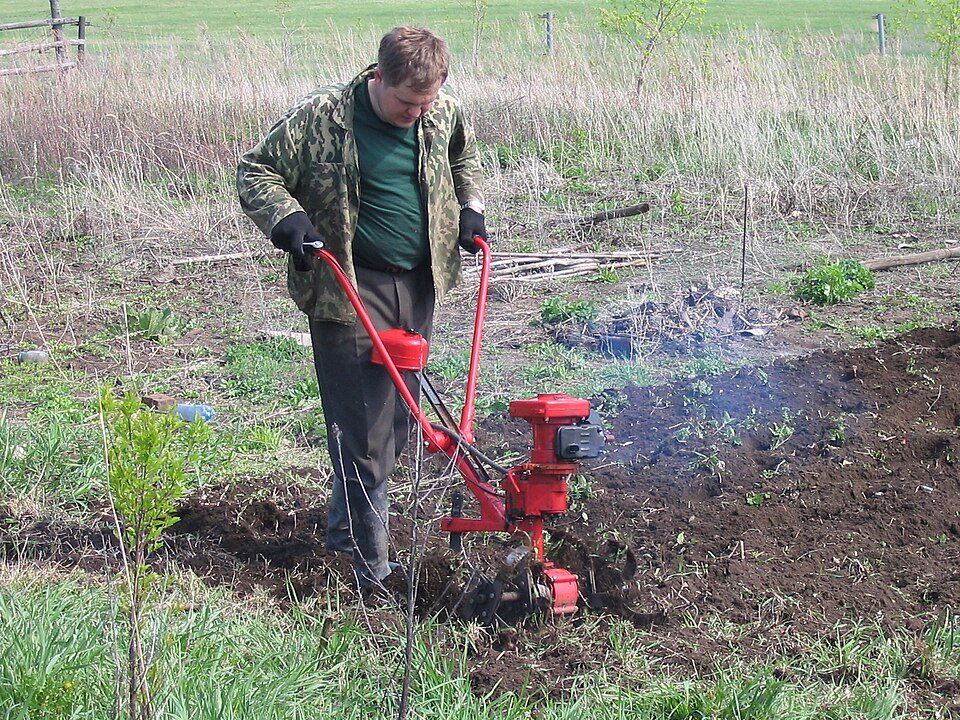
A gas-powered garden tiller is designed to break up, loosen, and mix soil using rotating metal tines driven by a small engine. It can save substantial time when creating a new garden bed, working compacted ground, incorporating compost, or preparing a large vegetable plot for planting.
The right machine depends less on engine size alone than on the soil, garden size, working depth, and how often you will use it. A lightweight cultivator can refresh an established bed, while a full-size rear-tine tiller is better suited to hard, uncultivated soil and larger gardens.
Gas engines provide mobility and sustained working power without relying on an outlet or battery runtime. They also bring noise, fuel storage, routine maintenance, and important safety responsibilities. This guide explains where a gas tiller fits, what to look for, and how to use one without damaging your soil or equipment.
Related reading: tillers and cultivators compared and vegetable garden planting ideas.
What a Gas-Powered Garden Tiller Does
A garden tiller uses spinning tines to dig into the ground and move soil. Depending on the design and depth setting, it can break sod, loosen compacted soil, chop plant residue, blend in organic matter, and prepare an even seedbed.
Tillers are most useful when the job would be exhausting or slow with a shovel and garden fork. They are not automatically the best tool for every bed, however. Repeated deep tilling can disrupt soil structure, damage earthworm habitat, bring buried weed seeds to the surface, and create a compacted layer beneath the working depth in some soils.
For established garden beds, use the shallowest effective depth and till only when there is a clear purpose, such as incorporating a substantial amount of compost or preparing ground that has become compacted. Mulch, cover crops, hand tools, and broadforks may be better choices for routine soil care in smaller or no-till gardens.
Garden Tiller vs. Cultivator: Know the Difference
The terms cultivator tiller are often used interchangeably in casual conversation, but the machines are built for different levels of work. A cultivator is generally smaller and intended for light, shallow soil work. A tiller is heavier and more capable of breaking new ground.
| Feature | Garden Cultivator | Garden Tiller |
|---|---|---|
| Typical task | Loosening topsoil, weeding between rows, mixing amendments | Breaking ground, preparing new beds, deep soil preparation |
| Working depth | Usually shallow | Can work significantly deeper, depending on the machine and soil |
| Weight and handling | Lighter and easier to maneuver | Heavier, with greater traction and digging force |
| Best garden size | Small beds and established gardens | Medium to large plots or difficult soil |
| Performance in sod or clay | Often limited | Better suited, especially with a rear-tine design |
A small gas cultivator can be a practical choice for gardeners who mainly maintain raised beds, flower borders, or already-loose vegetable rows. It is easier to store and transport, but it may bounce across dry clay, stall in roots, or struggle to penetrate turf.
A true tiller has more weight, stronger digging action, and a wider or deeper tilling ability. That added capability is useful, but it also makes the machine more physically demanding to turn, load, store, and control.
Common Types of Gas-Powered Tillers
Mini Tillers and Compact Cultivators
Compact models are the smallest gas-powered soil tools. Many use narrow tine assemblies and are intended for maintaining garden beds rather than reclaiming a lawn. Their lighter weight makes them easier to carry into fenced gardens or use around established plantings.
Choose this category when you need to mix compost into the upper few inches of soil, cultivate between wider rows, or refresh a small bed in spring. Do not expect a compact machine to reliably cut through mature sod, thick roots, rocky ground, or heavily compacted subsoil.
Front-Tine Tillers
On a front-tine tiller, the tines are located ahead of the wheels. The tines pull the machine forward as they dig, so the operator must guide and restrain it. This design is common for small and medium gardens because it offers more capability than a mini cultivator without the bulk of a large rear-tine model.
Front-tine tillers can work well in previously cultivated soil and moderately firm ground. They can be more tiring in tough soil because the machine may lurch, bounce, or pull to one side when it strikes roots, rocks, or hard clods.
Rear-Tine Tillers
Rear-tine tillers place the tines behind the wheels. Their larger size, heavier frame, and driven wheels generally provide better traction and more controlled digging. These machines are commonly used for new gardens, larger vegetable plots, and hard or previously unworked ground.
Some rear-tine tillers use forward-rotating tines, while others use counter-rotating tines. Forward rotation can be useful for cultivating and general garden preparation. Counter-rotating tines tend to bite aggressively into compacted soil and sod, but they may leave a rougher finish that needs a later pass.
Because rear-tine machines are heavy, they are best for gardeners with enough storage space and a practical way to move the equipment. Consider the path from your shed or garage to the garden, including gates, steps, slopes, and soft ground.
When a Gas Tiller Is Worth Using
A gas-powered tiller is most valuable when the area is large enough or the soil difficult enough that hand digging would be inefficient. Typical uses include:
- Converting a section of lawn into a new vegetable or flower garden.
- Breaking up a compacted area after construction, provided buried utilities and debris have been addressed first.
- Mixing compost or other approved soil amendments into a new in-ground bed.
- Preparing a large annual vegetable garden before planting.
- Working cover crop residue into soil when that approach fits your garden plan.
- Refreshing pathways or bare-soil growing areas that have become crusted or compacted.
Tilling is less suitable close to trees and shrubs. Their feeder roots often extend well beyond the visible canopy, and deep tilling can cut those roots. Avoid running a tiller over shallow roots, drip lines, landscape lighting wires, irrigation tubing, or areas where underground utilities may be present.
Before expanding a garden, contact your local utility-marking service if the work could reach buried lines. Also inspect the surface for wire, fencing fragments, irrigation parts, large rocks, and construction debris. A tiller tine can throw debris with considerable force or suffer expensive damage if it catches metal.

What to Look For Before Buying a Gas-Powered Tiller
Match Tine Width to the Garden
Wider tilling widths cover open ground faster, which is useful in a large rectangular plot. Narrower widths are easier to control in small beds and around permanent paths. A machine that is too wide may be frustrating in a compact backyard garden, especially where turns are tight.
Some tillers have adjustable outer tines or removable tine sections. This can add flexibility, but check the manufacturer’s instructions before changing the setup. Use the configuration intended for the task and make sure all retaining hardware is correctly installed.
Consider Realistic Working Depth
Deep tilling is not always better. Most annual vegetables benefit from loose, well-drained soil, but excessively deep or repeated tilling can degrade structure over time. Look for a machine that can work to the depth you need, then set it shallow for routine maintenance.
New garden ground often requires several passes rather than one aggressive attempt. A first pass at a shallow depth helps remove surface vegetation and identify obstacles. Subsequent passes can gradually deepen the worked layer if soil conditions allow.
Engine Power and Torque Matter More Than Marketing Language
Manufacturers may describe engines using different measurements, so direct comparisons can be difficult. Rather than relying on one advertised number, consider the tiller’s intended soil conditions, overall machine weight, tine design, transmission, and published manual.
For hard clay, sod, or a large plot, a heavier machine with a robust drive system is generally more useful than a small unit with a similar-looking engine label. For light soil and occasional bed maintenance, extra size and power may only make the machine harder to handle.
Wheel Drive and Maneuverability
Driven wheels help move a heavier tiller through soil and reduce the effort needed to keep it advancing. Reverse capability can be convenient for repositioning, but it should be used carefully and only as directed by the manufacturer. Never pull a running tiller toward your body or stand where the machine could move into you.
Check whether the handlebars adjust to your height and whether the controls are comfortable to hold. A machine that is awkward to steer can become tiring long before the garden is finished.
Tine Direction and Soil Conditions
Tine rotation affects how the tiller behaves in the ground. Counter-rotating tines can be highly effective for initial ground breaking, while forward-rotating tines may be easier for routine cultivation and creating a smoother bed. Neither is universally better; the right choice depends on whether you are reclaiming tough ground or maintaining an established garden.
Rocky soil deserves special caution. Even a powerful machine cannot make rocks disappear, and impacts can bend or damage tines. Remove visible stones first, work slowly, and consider whether a garden fork, rock rake, or raised bed would be a better long-term solution.
Storage, Transport, and Maintenance Access
A gas tiller needs dry storage and enough room for safe refueling and maintenance. Before purchasing, think through where it will sit, how you will move it, and whether you can load it into a vehicle if service is needed.
Also look at practical service items: access to the air filter, oil drain, spark plug, belts, cables, and tines. Exact maintenance intervals and fuel requirements vary by engine and model, so use the owner’s manual rather than assuming all tillers need the same service routine.
How to Prepare Soil With a Tiller
Good tilling starts before the engine does. Soil moisture, debris removal, and a sensible plan matter as much as the machine itself.
- Mark the garden area. Lay out the bed and identify any irrigation, edging, tree roots, buried lines, or permanent plants that need protection.
- Clear surface hazards. Remove rocks, wire, hoses, stakes, plastic, branches, and thick woody debris. Mow or cut tall weeds and grass as low as practical.
- Check soil moisture. Soil should be damp enough to crumble but not wet enough to form sticky clods. If a squeezed handful smears like mud, wait for it to dry. Tilling wet soil can create dense clumps and compaction.
- Make a shallow first pass. Begin with the depth control set conservatively. Move steadily and let the tines work rather than forcing the machine.
- Remove exposed roots and debris. Stop the engine and disconnect the spark plug wire or otherwise follow the manual’s safety procedure before clearing tangled material. Never clear tines while the engine is running.
- Make additional passes only as needed. Change direction on later passes if that helps break clods and level the bed. Avoid pulverizing soil into powder, particularly in clay-heavy ground.
- Add amendments thoughtfully. Spread finished compost or other appropriate amendments, then incorporate them lightly if needed. Soil test results and local Cooperative Extension guidance can help determine whether fertilizer or lime is actually necessary.
- Finish the bed by hand. Rake the surface level, remove remaining rocks and roots, and create planting rows or beds without stepping repeatedly on the prepared soil.
Operating Safety for Gas Tillers
A tiller can pull itself forward, throw debris, and cause severe injuries if clothing or body parts contact the rotating tines. Read the equipment manual before first use, including the starting, stopping, transport, and emergency procedures for your specific model.
- Wear sturdy closed-toe boots, long pants, gloves, eye protection, and hearing protection.
- Keep children, pets, and bystanders well away from the work area.
- Do not operate on steep slopes, unstable ground, or near drop-offs where control could be lost.
- Use extra caution when turning, backing, crossing paths, or working near fences and buildings.
- Stop the engine before inspecting the tines, adjusting components, removing debris, or moving the machine over a non-soil surface.
- Refuel outdoors with the engine off and cool. Clean up spilled fuel and keep gasoline away from ignition sources.
- Do not bypass guards, shields, controls, or safety interlocks.
If a tiller suddenly becomes difficult to control, release the drive control according to the manual and stop the engine. Do not try to muscle a machine through a root, rock, or concrete edge. Back away, inspect the area safely, and remove the obstruction if possible.
Fuel, Starting, and Routine Care
Gas tillers commonly use either a four-cycle engine or a two-cycle engine. The fuel and oil requirements are not interchangeable. A four-cycle engine typically has separate engine oil, while a two-cycle engine uses a specific fuel-and-oil mixture. Confirm the correct fuel type, oil specification, and storage procedure in the manufacturer’s documentation.
Fresh fuel is important, especially for seasonal equipment. Old gasoline can contribute to hard starting, poor running, and carburetor problems. If you will not use the tiller for an extended period, follow the manual’s storage instructions, which may include using an appropriate fuel stabilizer or preparing the fuel system in a particular way.
Basic Maintenance Tasks
Most owners can handle basic checks, provided they follow the manual and work with the engine off, cool, and disconnected from its ignition source where applicable.
- Check engine oil on models that require it.
- Inspect the air filter and clean or replace it as directed.
- Look for loose fasteners, worn belts, damaged cables, and leaking fuel lines.
- Remove soil and plant material from the tines after use.
- Inspect tines for bends, cracks, or excessive wear.
- Check tire condition and wheel hardware on larger tillers.
- Use the recommended spark plug service procedure and replacement part.
Have a qualified equipment technician inspect fuel leaks, transmission problems, damaged safety controls, major vibration, or bent shafts. Tines and drivetrain components are under heavy load, and incorrect repairs can make the machine unsafe.
Common Mistakes That Make Tilling Harder
Tilling Soil That Is Too Wet
Wet soil can stick to the tines, form hard clods after drying, and compact under the tiller’s wheels. Wait until the soil crumbles instead of smearing in your hand.
Trying to Break New Ground in One Pass
Deep, fast tilling through turf can strain the equipment and leave a rough, uneven bed. Start shallow, clear debris, and make gradual passes. For thick sod, covering the area with opaque material for a season or removing sod first may reduce the workload.
Using a Tiller Too Close to Plants
Rotating tines can sever crop roots and damage trunks or stems. Use a hoe, hand cultivator, or careful hand weeding near established vegetables, perennials, shrubs, and trees.
Over-Tilling Every Season
Soil does not need to be repeatedly pulverized to grow productive plants. Limit tilling to situations where it solves a real problem. Adding compost on the surface, maintaining mulch, avoiding traffic in beds, and growing cover crops can support soil health with less disturbance.
FAQ
Can a gas-powered tiller remove an existing lawn?
It can help break up turf, particularly a heavier rear-tine model, but it may take several shallow passes and cleanup afterward. Remove surface obstacles first, expect roots and clumps of sod, and avoid tilling when soil is wet. In some situations, sod removal or smothering may be less disruptive.
How large should a garden be before buying a tiller?
There is no single minimum size. A tiller makes the most sense when you regularly prepare enough in-ground soil that hand tools become inefficient, or when you need to reclaim difficult ground. For a few small raised beds, a garden fork and hand cultivator may be more practical.
Will a tiller work in rocky soil?
It may work in lightly rocky soil after larger stones are removed, but frequent rock impacts reduce efficiency and can damage tines. Work slowly, stop when the machine strikes an obstruction, and consider alternatives for ground with many embedded rocks.
Is a rear-tine tiller easier to use than a front-tine model?
Rear-tine tillers often provide better traction and control in hard soil because of their weight and wheel drive. However, they are heavier and less convenient in tight spaces. A front-tine machine may be easier to store and maneuver in a small established garden.
What should I do if tiller tines become tangled with roots or weeds?
Shut the engine off, wait for all moving parts to stop, and follow the manufacturer’s procedure for disconnecting ignition or power before clearing the tines. Use gloves and a suitable hand tool if needed; never reach into tines while the engine is running or capable of starting.
Featured photo: AlbertCahalan / Wikimedia Commons (public domain).
