
Creating enough space for a garden is less about the size of your yard and more about how well you use the area you have. A productive garden can fit into a sunny border, a side yard, raised beds, containers, or even a small patio. The right layout helps plants receive adequate light, air circulation, water, and room for mature growth.
Before buying plants or building beds, assess your available space honestly. Look at sunlight patterns, drainage, access to water, nearby trees, and how you want to use the garden. A small, organized planting area is usually easier to maintain and more rewarding than a large garden that becomes crowded or difficult to reach.
This guide explains how to plan garden space, choose a practical layout, avoid common crowding problems, and make room for the tools and maintenance tasks that keep a garden healthy through the seasons.
Related reading: raised bed gardening tips and planning a beginner vegetable garden.
Start With a Realistic Garden Space Assessment
Measure the area you are considering, but do not stop at square footage. A garden site also needs to work for the plants and for the person maintaining it. A narrow strip along a fence may have enough room for a row of vegetables, but it may be too shaded by afternoon or difficult to water evenly.
Walk through the area at different times of day before settling on a plan. Take note of what changes from morning to evening and after rainfall.
Check sunlight before choosing plants
Sun exposure is one of the most important limits on garden space. Many fruiting vegetables, including tomatoes, peppers, cucumbers, squash, and beans, generally perform best with at least six hours of direct sun. Leafy greens, herbs, and some ornamental plants can often tolerate less sun, especially in hot climates.
- Full sun: Usually six or more hours of direct sunlight.
- Partial sun or partial shade: Roughly four to six hours of direct sun, or filtered light for part of the day.
- Shade: Less than four hours of direct sunlight or mostly dappled light.
A site that receives full sun in spring may become shadier in summer as nearby trees leaf out. Buildings, fences, and shrubs can also cast longer shadows than expected. Mapping sunlight before planting reduces the chance of putting high-light crops where they will struggle.
Look at soil, slope, and drainage
Garden space must drain well enough to support plant roots. Water that puddles for long periods after rain can lead to weak growth, root disease, and compacted soil. On the other hand, a steep or sandy site may dry out quickly and need more thoughtful irrigation and mulch.
If your soil is heavy clay, compacted, rocky, or poorly drained, raised beds or large containers may create a more manageable growing area. Raised beds are not automatically better for every garden, but they can provide a clear boundary, reduce foot traffic on planting soil, and make it easier to improve the growing mix over time.
Plan for access, not just planting area
Every garden needs paths. If you cannot comfortably reach the center of a bed, you may compact the soil by stepping into it or neglect plants that are hard to access. A bed that is reachable from both sides can usually be kept narrower than one placed against a wall or fence.
Leave enough room for:
- Walking, kneeling, and carrying harvest baskets or yard waste.
- Moving a wheelbarrow, hose, mower, or garden cart where needed.
- Opening gates and accessing fences, spigots, sheds, or utility equipment.
- Plant growth that may spread over path edges later in the season.
Choose a Garden Layout That Fits the Yard
The best layout depends on your space, budget, mobility, and what you want to grow. A formal grid is not required. The goal is to create planting areas that are easy to manage without sacrificing the needs of individual plants.
In-ground beds
In-ground beds work well where existing soil is reasonably suitable and the garden area is large enough to shape into permanent or seasonal plots. They are often the most economical option because they require fewer materials than framed raised beds.
Keep traffic on designated paths rather than walking over planting soil. Repeated foot traffic presses soil particles together, reducing pore space for air, water movement, and roots. If the soil is compacted, improve it gradually with organic matter and avoid working it when it is excessively wet.
Raised beds
Raised beds make efficient use of a small garden because they define the growing area and help prevent soil compaction. They are especially useful on poor native soil, in yards with drainage challenges, or where a gardener wants a more organized appearance.
Do not make raised beds so wide that the middle becomes hard to reach. Place taller crops where they will not block light from shorter plants. In many U.S. gardens, locating trellises and tall plants on the north side of a bed helps reduce shading, though the ideal arrangement can vary with site conditions.
Containers and vertical growing spaces
Containers can turn patios, driveways, balconies, and small sunny corners into useful garden space. They are well suited to herbs, compact vegetables, annual flowers, and plants that benefit from controlled soil conditions. However, container plants generally dry out faster than plants in the ground, particularly in hot, windy weather.
Vertical supports can also expand a garden without increasing its footprint. Trellises, cages, arches, and sturdy fencing can support crops such as pole beans, peas, indeterminate tomatoes, cucumbers, and some small fruits. Use supports that can handle the mature plant and crop weight, and secure them before plants become large.
Use overlooked spaces carefully
Small spaces can be surprisingly productive when their limitations are understood. Consider:
- Sunny strips beside a driveway for drought-tolerant ornamentals or herbs.
- Fence lines for trellised crops, provided the fence receives enough sun and can support the load.
- Unused lawn corners for a compact pollinator bed or vegetable plot.
- Patios and decks for containers, keeping drainage and weight limits in mind.
- Front-yard beds for edible landscaping where local rules and neighborhood conditions allow it.
Avoid placing edible gardens where runoff from treated lawns, driveways, or busy roads could contaminate the soil or splash onto crops. If you have concerns about past land use, lead exposure, or soil contamination, consider a soil test and use raised beds with clean growing media where appropriate.
Match Plant Spacing to Mature Size
One of the most common garden planning mistakes is planting based on how small seedlings look at the nursery. Plants need space for their mature roots, stems, leaves, and airflow. Crowding can increase competition for moisture and nutrients, make harvesting harder, and create damp conditions that encourage some plant diseases.
Use the spacing information on seed packets and plant tags as a starting point. It is based on the specific variety and growing method, so it is more reliable than a universal spacing rule. Intensive planting can work in carefully managed raised beds, but it still requires attention to light, fertility, watering, and airflow.
| Plant type | Space-planning consideration | Common layout approach |
|---|---|---|
| Leafy greens and herbs | Usually compact, but may bolt or spread as they mature | Edges, containers, succession plantings, and partial-shade areas |
| Tomatoes and peppers | Need sun, airflow, support, and room for harvest access | Rows or beds with cages, stakes, or trellises |
| Vining crops | Can occupy substantial ground space unless trained upward | Trellises, arches, or bed edges |
| Squash and pumpkins | Large leaves and sprawling vines can shade nearby crops | Outer bed edges or a dedicated patch |
| Shrubs and small trees | Need room for long-term canopy and root development | Permanent landscape zones away from structures and utility lines |

Use succession planting to make more of a small space
A garden bed does not have to hold the same crop all year. In many regions, gardeners can grow a cool-season crop early, replace it with a warm-season crop after frost danger passes, and plant another cool-season crop later. The timing depends on local climate, the crop, and the length of the growing season.
For example, a bed used for spring lettuce may later hold bush beans or peppers. When summer plants are removed, it may be suitable for fall greens, radishes, or cover crops. This approach can increase harvests without expanding the physical garden.
Make Space for Watering and Garden Maintenance
A well-designed garden includes room for the work that happens after planting. Hoses, irrigation lines, mulch, compost, pruning, pest monitoring, and harvesting all require access. Ignoring these practical needs can turn a beautiful layout into a frustrating one.
Plan a simple watering system
Place water-demanding plants where you can reach them without dragging a hose through delicate beds. A nearby spigot, rain barrel where allowed and practical, or properly installed drip irrigation can reduce the effort required to keep plants watered.
Drip irrigation and soaker-style systems can deliver water close to the soil, which may reduce evaporation and avoid wetting foliage as much as overhead watering. Coverage still needs to be checked regularly. Clogged emitters, leaks, uneven pressure, and changes in plant size can leave some plants too dry while others receive too much water.
Water needs vary with weather, soil type, plant size, container material, mulch, and growth stage. Check the soil rather than following a rigid calendar. Newly planted transplants and containers often need closer attention than established in-ground plants.
Choose sprayers based on the job
A sprayer can be useful for applying certain labeled garden products, foliar fertilizers, soaps, or targeted weed treatments, but it should not be a default solution for every garden problem. Start with accurate plant or pest identification and use cultural controls, hand removal, pruning, barriers, or improved watering practices when those options fit.
The best garden pump sprayer is not necessarily the largest one. A small hand sprayer may be enough for containers and a few problem plants, while a backpack or larger pump model can be more practical for extensive beds. When choosing a sprayer garden pump, consider tank capacity, comfortable carrying weight, nozzle options, seal quality, and whether replacement parts are available.
- Use separate, clearly labeled equipment for herbicides when possible.
- Never use a sprayer for edible crops if it has residue from a product not labeled for that use.
- Mix and apply products only as directed on the current label.
- Avoid spraying in wind or when drift could reach desirable plants, pollinators, pets, children, or waterways.
- Clean equipment according to the product label and manufacturer instructions after use.
Leave a home for supplies and compost
Even small gardens benefit from a nearby storage plan. Keep hand tools, gloves, plant ties, mulch, labels, and harvest containers where they are easy to find. A compact weather-resistant storage box may be enough for a patio garden, while a larger yard may support a shed or dedicated tool area.
Compost can also be part of the space plan. A compost bin should be convenient enough to use but not block access or sit where it creates drainage issues. Follow local rules for composting food scraps, especially if rodents or other wildlife are common in your area.
Manage Trees and Shrubs Near the Garden
Existing trees can provide welcome summer shade, wind protection, and habitat, but they can also compete with garden plants for light and moisture. Roots from mature trees may extend far beyond the visible canopy, making nearby vegetable beds dry out faster or grow unevenly.
Before removing a tree, consider whether selective pruning, relocating the garden, or choosing shade-tolerant plants would solve the problem. Large tree removal and structural pruning can be hazardous. Contact a qualified arborist when limbs are near power lines, structures, or too large to prune safely from the ground.
Use the right pruning tool for the branch
An anvil tree pruner is designed with a sharp blade that closes against a flat surface, or anvil. This design can be useful for cutting dry, dead, or hard woody stems. It can crush softer live plant tissue more than a bypass-style pruner, which cuts with two blades passing each other like scissors.
For healthy green branches, many gardeners prefer bypass pruners or bypass loppers because they usually make a cleaner cut. Select the tool based on branch diameter, plant type, and the condition of the wood. Do not force any hand pruner beyond its rated cutting capacity, and avoid working overhead from a ladder unless you have the equipment and training to do so safely.
Keep blades sharp and clean between plants, particularly when disease is suspected. Shut down and disconnect powered equipment before clearing jams, changing blades, or performing maintenance. For major limbs, damaged trees, or branches above shoulder height, professional service is often the safer choice.
Common Garden Space Mistakes to Avoid
A garden can feel crowded even when it appears spacious on planting day. Most layout problems come from underestimating mature plant size or overlooking routine maintenance needs.
- Planting too close together: Crowding restricts airflow and makes it harder to inspect leaves, harvest crops, and remove weeds.
- Ignoring shade changes: Tree growth and seasonal sun angles can change the amount of usable light.
- Building beds without paths: Reaching across wide beds leads to soil compaction and neglected plants.
- Putting tall plants in the wrong place: Corn, trellises, sunflowers, and tall tomatoes can shade lower crops.
- Forgetting irrigation access: A garden that is difficult to water is more likely to suffer during hot or dry periods.
- Using every inch for plants: Storage, compost, work surfaces, and maneuvering room make a garden more sustainable.
- Expanding too quickly: Start with an area you can weed, water, and harvest consistently, then add space over time.
Create a Garden That Can Grow With You
The most useful garden space is one that suits your current time, energy, and goals. A beginner may be better served by a few containers and one manageable bed than a large plot. Once you understand your site’s sun, water, and soil conditions, you can expand with more confidence.
Build flexibility into the layout. Use movable containers, temporary trellises, and beds that can be divided into smaller planting zones. Keep notes on which areas stay wet, which crops outgrow their spots, and where shade becomes a problem. Those observations are often more valuable than copying a generic garden plan.
Good garden design gives plants room to thrive while making routine care simple. Start with sunlight, drainage, access, and mature plant size, then choose the layout and tools that fit your property rather than forcing your property to fit someone else’s garden.
Frequently Asked Questions
How much yard space do I need for a beginner vegetable garden?
A beginner can start with a small bed, several containers, or a narrow sunny strip rather than committing to a large plot. Choose an area you can easily water and reach, then grow a few crops your household will actually use. Expanding after one successful season is usually easier than maintaining an oversized first garden.
Can I put a garden under a mature tree?
You can grow some shade-tolerant ornamentals, ferns, and certain leafy crops under or near a tree, but vegetables that need full sun may not produce well. Tree roots can also compete strongly for water and nutrients. Avoid damaging major roots when digging, and do not pile soil or mulch against the tree trunk.
Should garden paths be covered with mulch or gravel?
Both can work. Organic mulch is softer underfoot and can be replenished as it breaks down, while gravel is more durable but may be harder to remove or reshape later. Choose a material that suits drainage, budget, maintenance preferences, and whether you need to move a cart or wheelbarrow through the path.
What is the easiest way to add garden space on a patio?
Use containers, fabric grow bags, vertical supports, and railing or wall-mounted planters that are securely installed. Select containers with drainage holes, use a quality potting mix rather than garden soil, and confirm that the patio or balcony can safely support the combined weight of wet containers, plants, and people.
When should I move an overcrowded perennial?
The best time depends on the plant and your region, but many perennials are moved during cooler weather when they are not actively flowering or under heat stress. Water the plant before and after transplanting, preserve as much of the root system as practical, and avoid transplanting during drought, extreme heat, or frozen soil conditions.
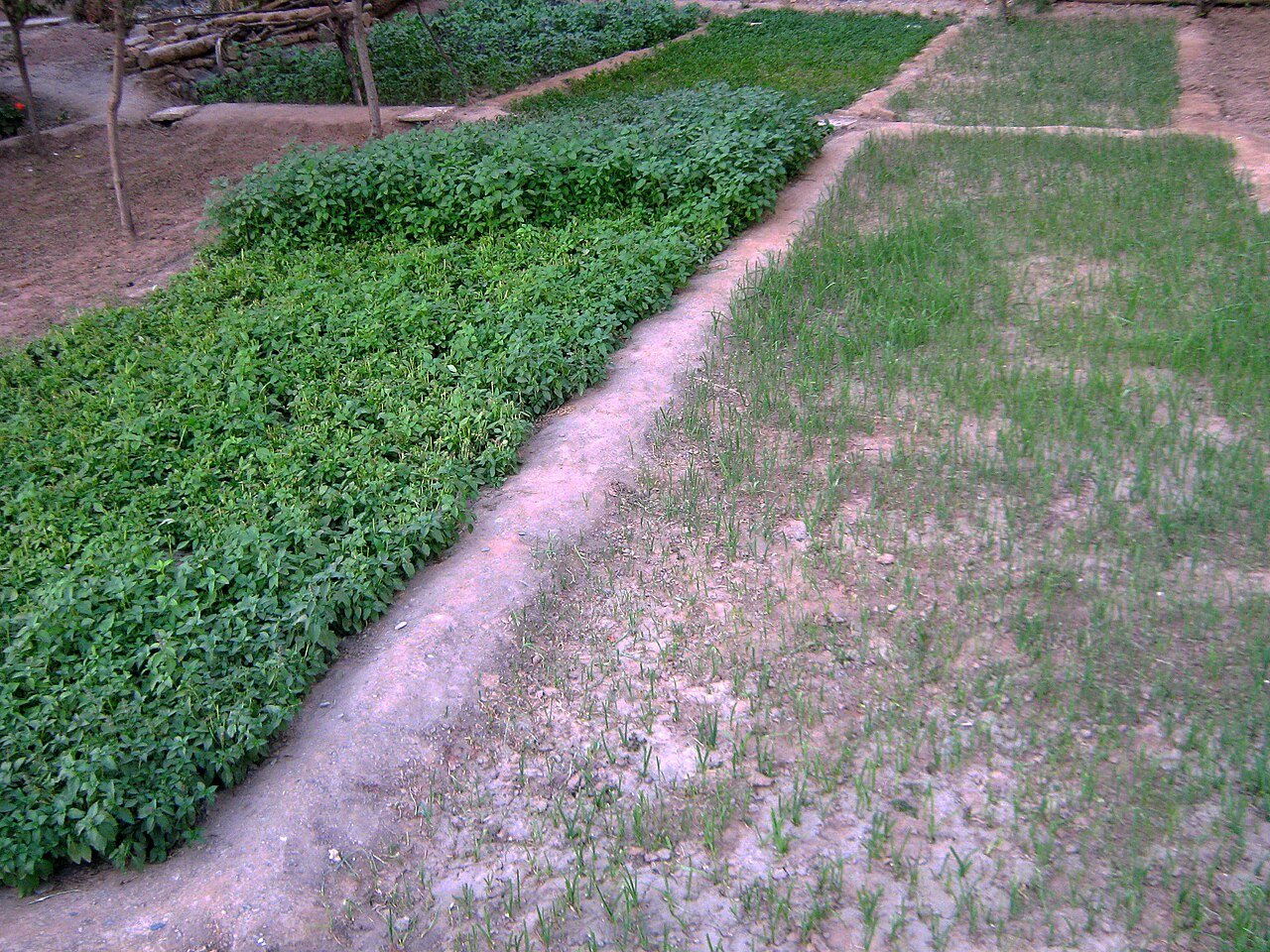
Featured photo: Almapayokels / Wikimedia Commons (CC0; resized and locally hosted).
