
The best time to mow a lawn is determined by grass height, growth rate, weather, and turf condition rather than a fixed day of the week. This page focuses on when to mow. For mowing technique, blade care, and pattern, use the separate how-to-mow guide.
Related reading: how to mow a lawn correctly and lawn mower maintenance checklist.
Use Grass Height as the Main Trigger
Follow the one-third rule: mow when the grass is tall enough that removing about one-third of the blade will return it to the desired height. Do not wait until the lawn becomes extremely tall and then scalp it in one cut.
| Target height | Mow at about |
|---|---|
| 2 inches | 3 inches |
| 2.5 inches | 3.75 inches |
| 3 inches | 4.5 inches |
| 4 inches | 6 inches |
Wait Until the Grass Is Dry
Avoid mowing immediately after rain, irrigation, or heavy dew. Wet grass clumps, tears more easily, and can leave ruts when soil is soft. Mow once the blades are dry and the ground is firm enough that mower wheels will not sink.
Best Time of Day to Mow
Late morning is often a practical choice because morning dew has dried but the hottest part of the day has not arrived. Early evening can also work when the lawn is dry and temperatures are moderate.
Avoid mowing during extreme midday heat, thunderstorms, strong wind, or poor visibility.

Adjust Mowing Frequency by Season
Spring
Cool-season lawns may grow rapidly and need more frequent mowing. Let actual height determine the schedule.
Summer
Warm-season turf may grow quickly, while cool-season lawns can slow during heat or drought. Extend the interval when growth slows.
Fall
Cool-season grass often resumes active growth. Continue mowing while the lawn is still growing rather than stopping based only on the calendar.
Winter
Most dormant lawns need little or no mowing. Do not mow frost-covered, frozen, or saturated turf.
When Not to Mow
- Right after rain or irrigation.
- When frost is on the grass.
- During severe drought stress or dormancy unless a light cut is truly needed.
- When newly seeded grass is not yet rooted.
- Immediately after a lawn product if its label requires a waiting period.
- When the ground is too soft for mower traffic.
Special Timing for New Grass
Newly seeded turf should not be mowed until seedlings are rooted enough to resist pulling and have grown above the intended mowing height. New sod should be allowed to root into the soil before the first mow.
FAQ
Can I mow the day after rain?
Yes, once grass blades are dry and the soil is firm enough to avoid ruts.
Should I mow during a heat wave?
Only if needed. Raise the mowing height, avoid the hottest part of the day, and do not cut drought-stressed turf aggressively.
How often should I mow?
There is no universal interval. Mow according to growth and the one-third rule.
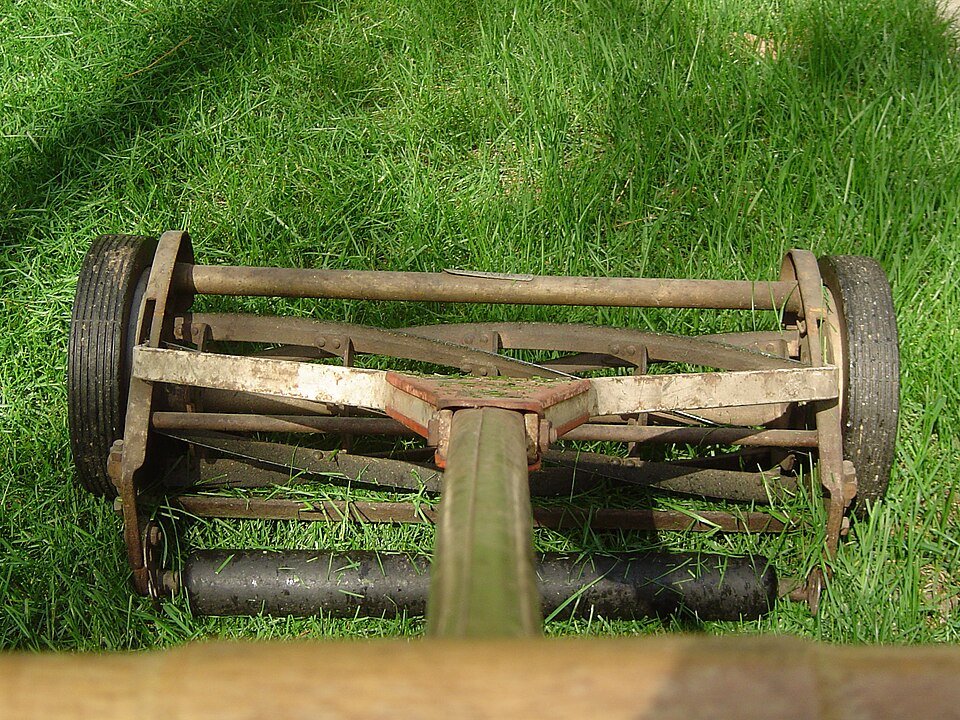
Featured photo: Shixart1985 / Wikimedia Commons (CC BY 2.0; resized and locally hosted).
