
A leaf blower and mulcher can make fall cleanup faster, especially when leaves collect on lawns, patios, driveways, flower beds, and around shrubs. Many models do more than blow debris into piles: they can vacuum dry leaves and shred them into smaller pieces for easier disposal or composting.
The best choice depends on how you plan to use it. A lightweight cordless leaf vacuum mulcher may be ideal for routine cleanup around a small suburban yard, while a corded or gas-powered unit may better suit larger properties with heavy leaf drop. Understanding airflow, vacuum performance, mulching systems, and practical limitations will help you choose a tool that fits the job.
It is also important to use these machines safely. Leaf blowers and mulchers can move rocks, sticks, dust, and other debris at high speed, and vacuum tubes can clog when leaves are wet or mixed with twigs.
Related reading: cordless leaf vacuums and how to compost shredded leaves.
What Is a Leaf Blower and Mulcher?
A leaf blower and mulcher is a yard tool designed to move leaves and light debris with a stream of air, collect leaves through a vacuum tube, and chop them into smaller pieces. Some units perform all three jobs, while others are blowers only.
Combination models usually have a blower tube for clearing surfaces and a separate vacuum tube for collecting leaves. When set to vacuum mode, the machine pulls leaves into an internal impeller. The impeller breaks up the material before sending it into an attached collection bag.
These tools are especially useful for dry leaves on hard surfaces, thin layers of leaves on turf, and cleanup around landscape beds. They are less effective for heavy, soggy leaf mats, large sticks, pine cones, gravel, and damp debris packed into tight corners.
How the Three Main Functions Work
Blower mode
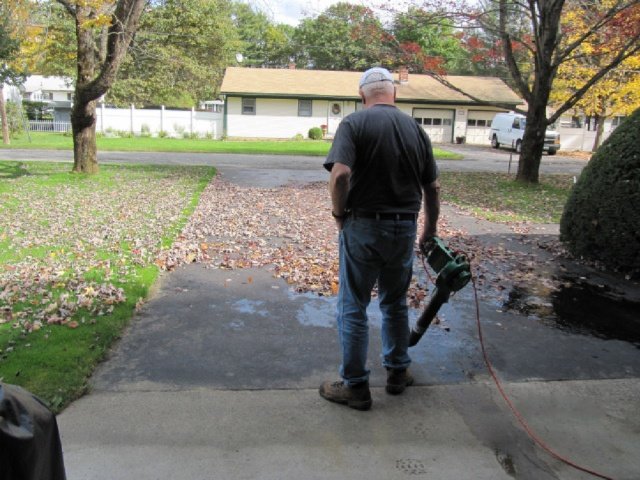
Blower mode uses a high-speed air stream to push leaves, grass clippings, and loose debris into piles or away from walkways. It is useful for clearing driveways, decks, patios, garages, and mulched beds without raking every surface by hand.
Blowing works best when leaves are dry and the work area is reasonably clear of stones, toys, loose mulch, and branches. Rather than using maximum power everywhere, start with a low or medium setting. Lower airflow gives you more control and reduces the chance of scattering mulch or damaging delicate plants.
Vacuum mode
In vacuum mode, the machine draws leaves through a wide intake tube and into a collection bag. This is often more convenient than raking and bagging when leaves are dry, loose, and spread across a small or medium-size area.
A leaf vacuum cordless model can be particularly convenient for spot cleanup because there is no extension cord to manage. However, runtime may be limited when vacuuming at high power, especially in dense leaf cover.
Mulching mode
Mulching happens inside the tool as the impeller shreds leaves before they reach the collection bag. Shredded leaves take up less space than whole leaves, so you may make fewer trips to the yard-waste bin or compost pile.
Mulched leaves can also be useful in the landscape. They can be added in modest layers to a compost pile or used around ornamental plants, provided they are not piled tightly against stems or tree trunks. If leaves came from plants with significant disease problems, local extension guidance may help determine whether composting is appropriate.
Why Mulching Leaves Is Useful
Leaves are bulky. A mulching system reduces that volume by chopping leaves into smaller pieces, making collection and transport easier. The actual reduction varies by leaf type, moisture level, machine design, and how much debris is mixed into the pile, so advertised reduction ratios should be treated as ideal-condition estimates rather than guarantees.
Shredded leaves can be easier to manage in several ways:
- They fit more efficiently into yard-waste bags or collection containers.
- They break down faster in a well-managed compost pile than intact leaves.
- They can be used as a light organic mulch around many non-lawn landscape plants.
- They are less likely to blow around than whole, dry leaves.
- They can be mixed with nitrogen-rich compost materials, such as fresh grass clippings, in balanced amounts.
Do not assume every leaf belongs in the mulcher. Thick, leathery leaves, wet piles, seed pods, twigs, and pine cones can slow the work and may clog or wear the machine. Avoid vacuuming stones, metal objects, pet waste, or anything that could damage the impeller or create a sanitation issue.
Where a Leaf Blower and Mulcher Works Best
These tools are most effective as part of a cleanup routine, not necessarily as a replacement for every rake, mower, or garden tool. They perform best when used for the jobs they are designed to handle.
Hard surfaces and outdoor living areas
Blower mode is useful on driveways, sidewalks, patios, decks, porches, and garage floors. A controlled air stream can clear leaves from cracks and edges faster than a rake. Use care near gravel, loose pavers, decorative stones, and outdoor furniture, since airflow can send debris where you do not want it.
Lawns with light to moderate leaf cover
A blower can gather scattered leaves into manageable rows or piles before bagging, mulching, or composting them. A vacuum function can help with dry leaves near fences, shrubs, and garden borders.
For a lawn covered by a thin, dry layer of leaves, a mulching mower may be more efficient than vacuuming every leaf. It can chop the leaves and return them to the turf, where small pieces often settle between grass blades. This approach works best when leaf pieces do not smother the lawn or form a thick mat.
Landscape beds and tight spaces
A leaf vacuum mulcher can be useful around shrubs and borders where raking is awkward. Use a lower speed around bark mulch, pea gravel, and newly planted areas. Vacuuming too aggressively can pull in mulch, stones, or small plant labels along with the leaves.
Seasonal spot cleanup
A cordless leaf vacuum mulcher is often a practical option for quick cleanup after a windy day. It can handle leaves around entryways, small patios, and short sidewalks without the setup involved with a corded tool or the maintenance needs of a gas engine.
Types of Leaf Blowers and Mulchers
| Type | Best For | Main Advantages | Important Limitations |
|---|---|---|---|
| Corded electric | Small to medium yards with outdoor power access | Consistent power, no battery charging, typically lower maintenance | Extension cord limits range and requires careful handling |
| Battery-powered cordless | Small to medium properties and quick cleanup | Portable, quieter than many gas models, no cord or fuel mixing | Runtime and power depend on battery capacity, condition, and task load |
| Gas-powered | Large properties and frequent heavy-duty blowing | Longer working range and no cord dependence | Higher noise, emissions, fuel storage, engine maintenance, and weight |
| Dedicated blower | Moving leaves and debris into piles | Often simpler and easier to handle | Does not collect or shred leaves |
| Blower-vacuum-mulcher combo | Homeowners who want one tool for several cleanup tasks | Can blow, collect, and reduce leaf volume | Conversion and bag-emptying add time; wet debris can clog the system |

What to Look For Before Buying
Air volume and air speed
Leaf blowers are commonly described using air volume and air speed. Air volume is often measured in cubic feet per minute, while air speed may be listed in miles per hour. Neither number alone tells the whole story.
Higher air volume generally helps move larger amounts of loose leaves, while air speed can help dislodge debris from cracks and corners. Nozzle design, motor performance, balance, and speed control also affect real-world handling. For ordinary residential leaves, controllable airflow is often more useful than simply choosing the highest advertised number.
Variable-speed control
Variable-speed settings are worth prioritizing. High speed can move a broad pile across a driveway, but lower power is safer and more precise around flower beds, mulch, vehicles, windows, and landscape stones.
A speed lock or cruise-control feature may also reduce hand fatigue during longer sessions. For vacuuming, variable speed can help you match suction to the debris without constantly grabbing mulch or clogging the intake.
Vacuum tube design and conversion process
Look closely at how the tool changes from blower to vacuum mode. Some units require swapping tubes and attaching a collection bag. Others use a more integrated design. Neither is automatically better, but a complicated conversion process can be frustrating if you expect to switch modes frequently.
A wider vacuum inlet may collect broad leaves more easily, while a narrow intake can be more precise around landscape beds. Check that the tube shape will be practical for the surfaces you plan to clean.
Collection bag capacity and comfort
A larger bag reduces how often you stop to empty it, but it can become heavy quickly. Consider the bag’s opening, zipper or closure design, shoulder strap, and how easy it is to remove from the machine.
A well-designed bag should direct weight comfortably and allow simple emptying into a compost bin, paper yard-waste bag, or other approved local disposal container. Fine leaf dust can escape from some bags, so a dust mask and eye protection may be appropriate for dry, dusty cleanup.
Battery platform and runtime
When considering a cordless leaf vacuum mulcher, evaluate the entire battery system rather than the tool alone. If you already own batteries from the same manufacturer’s outdoor equipment line, a compatible tool may be more convenient.
Battery runtime is affected by battery capacity, tool speed, leaf density, temperature, battery age, and whether you are blowing or vacuuming. Vacuuming and mulching dense leaves can use more power than light blowing. A spare compatible battery can be more useful than relying on one battery for a large fall cleanup session.
Weight and handling
Check the tool’s operating weight with the battery, collection bag, and tubes installed. A lightweight blower may feel substantially different once the bag starts filling with shredded leaves.
Consider where you will use it. Sloped yards, large decks, stairs, and tight planting beds all favor a unit that is balanced and easy to control. If possible, choose a design with a comfortable grip and an adjustable shoulder strap for vacuum work.
Noise and local restrictions
Leaf blower noise affects neighbors, pets, and your own hearing. Gas models are often louder than electric options, but every tool should be operated with hearing protection when noise exposure is significant.
Some cities, homeowner associations, and communities limit the use of certain blower types or restrict operating hours. Check local rules before buying a gas leaf blower or using any blower early in the morning or late in the evening.
Corded vs. Cordless Leaf Vacuum Mulchers
A corded electric leaf vacuum mulcher provides steady power for as long as it remains connected to a suitable outlet. It can be a strong option for a compact property where most cleanup happens within safe extension-cord reach. Use only an outdoor-rated extension cord sized appropriately for the tool and follow the manufacturer’s instructions.
A cordless leaf vacuum offers greater freedom of movement. It is easier to use far from the house, around vehicles, and across a yard with obstacles. The trade-off is limited runtime, the need to charge batteries, and potentially reduced working time when leaves are thick or damp.
- Choose corded electric if you have a smaller yard, access to outlets, and long cleanup sessions in one area.
- Choose cordless if portability, quick use, and cord-free movement matter more than unlimited runtime.
- Choose gas only if the property size, workload, and local rules justify its added maintenance, noise, and fuel handling.
How to Use a Leaf Blower and Mulcher Effectively
- Check the area first. Remove sticks, rocks, toys, hoses, and other objects that could become projectiles or damage the impeller.
- Wait for dry conditions when possible. Dry leaves are easier to blow, vacuum, and shred. Wet leaves tend to stick together and clog tubes.
- Blow leaves into manageable sections. Work with the wind instead of against it. Create smaller piles rather than trying to move the entire yard’s leaves at once.
- Use lower power near plants and mulch. Increase power only when needed. This improves control and helps keep soil, stones, and mulch in place.
- Vacuum slowly. Do not force a thick pile into the intake. Feed leaves in gradually to reduce clogging and avoid overloading the collection bag.
- Empty the bag before it becomes too heavy. A packed bag can strain your shoulders, reduce airflow, and make the machine harder to handle.
- Store leaves responsibly. Compost them, use approved municipal yard-waste collection, or apply a suitable amount as mulch where appropriate.
Common Problems and How to Avoid Them
Wet leaves clogging the vacuum
Wet, matted leaves are one of the most common causes of poor vacuum performance. If possible, allow leaves to dry before collecting them. For heavy wet piles, use a rake or scoop first rather than forcing the material through the machine.
If the unit clogs, shut it off, disconnect power or remove the battery, and allow hot components to cool before inspecting it. Follow the manufacturer’s manual for clearing procedures. Never put your hands inside a tube, fan housing, or impeller area while the tool is connected to power.
The blower scatters leaves instead of forming a pile
This usually happens when airflow is too high, wind direction is ignored, or the user is standing too close to the debris. Start farther back, use a lower setting, and direct leaves at a shallow angle rather than blasting straight down into the pile.
The vacuum picks up mulch and stones
Reduce speed, lift the intake slightly above the ground, and avoid vacuuming directly over loose decorative material. In heavily mulched beds, hand collection or a rake may be more appropriate than vacuuming.
The bag fills with dust but few leaves
Dry debris, old mulch, soil particles, and deteriorated leaves can create dust. Wear eye protection and a well-fitting dust mask when conditions are dusty. Avoid working in strong wind, and clean or replace filters only as directed by the manufacturer.
Basic Maintenance for Better Performance
Regular maintenance keeps a leaf blower and mulcher safer, easier to use, and less likely to lose performance during peak leaf season. Always turn the tool off, disconnect electrical power or remove the battery, and let hot parts cool before cleaning or servicing it.
- Remove leaves and dust from the intake, tubes, bag, and exterior after use.
- Inspect vacuum tubes and collection bags for cracks, holes, worn seams, or loose connections.
- Check that guards, covers, and latches are installed correctly before operation.
- Keep battery contacts clean and store batteries according to the manufacturer’s instructions.
- For gas units, follow the owner’s manual for fuel, air filter, spark plug, and seasonal storage requirements.
- Replace damaged parts with manufacturer-approved components when exact fit and safety matter.
Do not bypass safety switches, guards, or tube interlocks to make a tool easier to use. Those parts help prevent contact with moving components and should be repaired if damaged.
When a Leaf Blower and Mulcher Is Not the Best Tool
Even a capable blower-vacuum-mulcher has limits. A rake remains useful for wet leaves, thick leaf layers, and areas where suction could remove mulch or pull loose soil from around plants. A mower with a mulching blade may be more efficient for dry leaves spread thinly across a lawn.
For large properties with extensive tree cover, a walk-behind leaf vacuum, lawn sweeper, tarp, or professional cleanup service may save time. If debris includes branches, pine cones, or woody material, use a tool designed for that material rather than trying to force it through a leaf vacuum.
Frequently Asked Questions
Can shredded leaves be left on the lawn?
Finely shredded leaves can often remain on a lawn when they form a light layer that does not block sunlight or trap moisture against the grass. If leaf pieces are clumping, covering turf heavily, or matting after rain, collect or redistribute them instead.
Can a leaf vacuum mulcher handle pine needles?
Many models can collect dry pine needles, but results vary with the machine, needle length, moisture, and mixed debris. Pine needles may pass through differently than broad leaves and can sometimes collect in tubes or bags, so check the owner’s manual and clean the tool afterward.
Should I wear safety glasses when using a leaf blower?
Yes. Safety glasses help protect your eyes from dust, grit, small stones, and fragments moved by airflow. Hearing protection and sturdy closed-toe shoes are also sensible for most leaf cleanup tasks.
Is it okay to use a leaf blower near a vegetable garden?
Use low airflow and avoid blowing soil, mulch, or debris onto edible plants. Do not use a blower to move treated lawn clippings, pet waste, or unknown debris into a food-growing area. Hand cleanup is often safer around young seedlings and delicate crops.
How should a leaf blower and mulcher be stored for winter?
Clean out leaves and dust, inspect the bag and tubes, and store the tool in a dry location. Remove batteries from cordless models and follow the manufacturer’s storage guidance. For gas equipment, follow the manual’s fuel-storage and seasonal maintenance instructions rather than leaving fuel in the machine without preparation.
Featured photo: Tony Webster / Wikimedia Commons (CC BY-SA 2.0; resized and locally hosted).
.jpg)