
An anvil tree pruner is a specialized cutting tool designed mainly for removing dead, dry, or woody branches that are too high to reach comfortably from the ground. Its cutting blade closes against a flat metal surface called an anvil, concentrating force on tough material. Many versions mount the cutting head on a pole and use a pull rope to operate the blade from below.
The right tool can make seasonal cleanup, deadwood removal, and light canopy maintenance safer and more manageable. The wrong one can crush healthy stems, leave rough wounds, or encourage unsafe overreaching. Choosing an anvil pruner starts with understanding what it cuts well—and where a bypass-style pruner or a professional arborist is the better choice.
This guide explains how anvil tree pruners work, what features matter when buying one, how to use one properly, and how to avoid common pruning mistakes around trees and large shrubs.
Related reading: bypass pruning shears for living stems and gardening hand tools.
What Is an Anvil Tree Pruner?
An anvil tree pruner has a sharpened upper blade that closes down onto a broad, flat surface. The blade slices into the branch while the anvil supports it from below. This design creates substantial cutting force, which makes anvil tools useful for brittle, dry, or dead wood.
Most anvil tree pruners are pole pruners. They typically include a cutting head at the top of an extendable or fixed-length pole, plus a rope, chain, or lever that pulls the cutting blade closed. Some also include a pruning saw for branches that exceed the cutting capacity of the pruner head.
Because the cut is made by compressing wood against a solid surface, an anvil pruner is usually not the best choice for living branches. Green stems contain moist, flexible tissue that can be pinched or crushed during anvil-style cutting. A cleaner cut is usually better for the tree’s recovery.
Anvil vs. Bypass Pruners: Which Design Fits the Job?
The key decision is whether you are cutting deadwood or healthy living growth. Anvil and bypass designs can look similar, but they work differently and leave different types of cuts.
| Feature | Anvil Tree Pruner | Bypass Tree Pruner |
|---|---|---|
| Cutting action | Blade closes onto a flat anvil surface | Two curved blades pass closely by each other |
| Best for | Dead, dry, brittle, or hard wood | Live branches, green stems, and precise pruning |
| Cut quality on live wood | May crush or damage tissue | Usually cleaner when blades are sharp |
| Cutting force | High force for tough material | More controlled slicing action |
| Typical use | Deadwood cleanup and woody brush | Routine tree, shrub, and garden pruning |
What Are Bypass Pruning Shears?
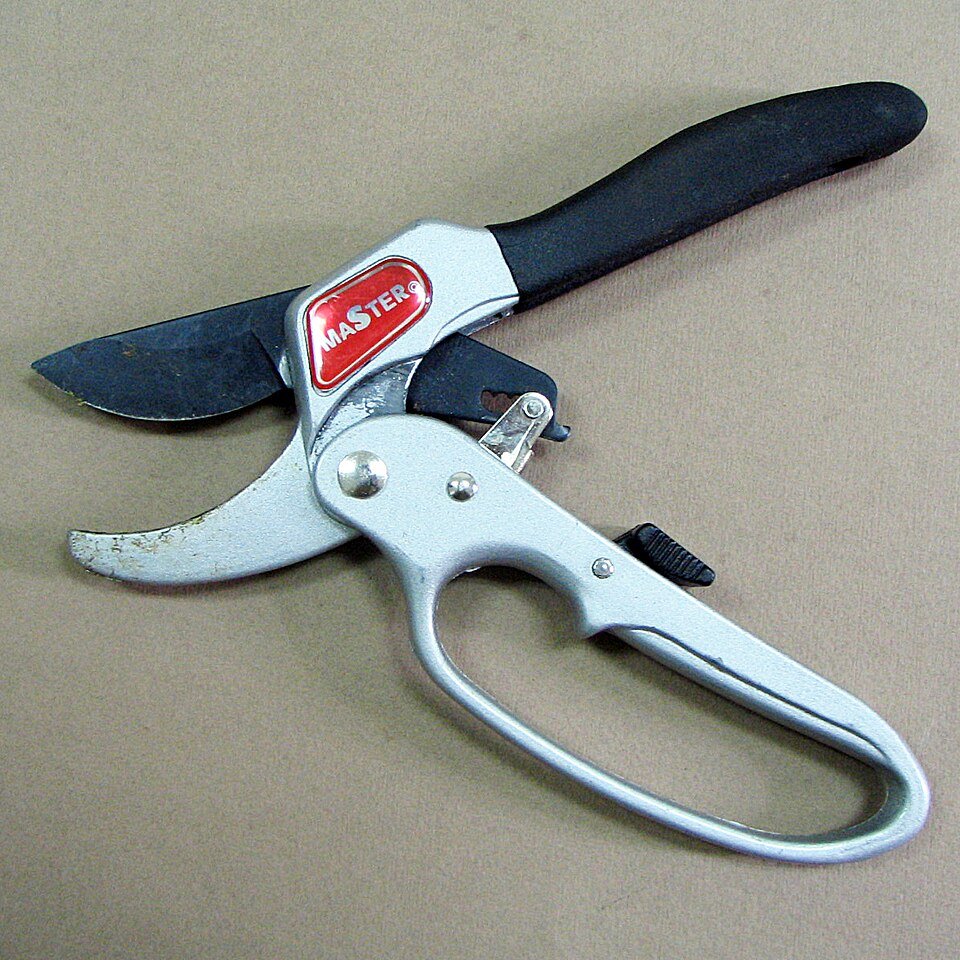
What are bypass pruning shears? They are hand pruners with two blades that move past one another in a scissor-like action. One blade is usually sharpened, while the other supports the stem as the cut is completed. This motion generally produces a cleaner cut than an anvil design, especially on living plant tissue.
Bypass pruning shears are usually the better everyday choice for roses, perennials, fruit trees, young shrubs, and live tree branches within their rated cutting capacity. Larger bypass loppers and bypass pole pruners use the same basic cutting principle for thicker branches.
When readers search for the best bypass pruning shears, the best option depends on hand size, the diameter of the stems being cut, replacement-part availability, grip comfort, and whether the tool is intended for frequent garden use or occasional cleanup. For live wood, sharp, well-aligned bypass blades matter more than a heavy-duty appearance.
When an Anvil Tree Pruner Is the Right Tool
Anvil tree pruners have a useful but narrower role than many homeowners expect. They work best when the material is dry and no longer needs a clean healing cut.
- Removing dead twigs and small dead branches from ornamental trees.
- Cleaning up winter-damaged or drought-killed woody growth after confirming it is dead.
- Cutting dry brush and woody debris during landscape cleanup.
- Removing dead limbs from shrubs when they are within the tool’s safe reach and cutting capacity.
- Maintaining trees that have already been evaluated for larger structural or health concerns.
An anvil pruner can be particularly helpful when dry branches snap easily or resist a bypass blade. However, “dead-looking” does not always mean dead. Branch dieback may result from disease, insect injury, root stress, winter damage, or a watering problem. If a valuable tree has widespread dieback, peeling bark, mushrooms near the trunk, cracks, or large failing limbs, consider consulting a qualified arborist instead of simply pruning symptoms away.
When Not to Use an Anvil Tree Pruner
Avoid using an anvil-style cutter for routine shaping or thinning of healthy trees and shrubs. Crushed tissue can create a rough wound and may slow the plant’s ability to seal the cut naturally.
Use a sharp bypass pruner, bypass lopper, or bypass pole pruner for live branches. Use a pruning saw for branches that are too thick for the pruner head. Forcing a pole pruner through oversized wood can bend the blade, damage the rope mechanism, tear bark, or cause the branch to break unpredictably.
Do not use any pole pruner in these situations:
- Within reach of overhead electrical lines. Keep yourself, the pole, and any cut branches well away from power lines. Contact the utility company or a qualified tree professional when electrical hazards are present.
- On a ladder. Operating a long pole tool while balancing on a ladder creates a serious fall risk.
- Below large, heavy, split, hanging, or storm-damaged limbs.
- Near roofs, vehicles, fences, windows, people, pets, or public walkways where falling branches could cause damage or injury.
- For major crown reduction, large branch removal, or work near the trunk of a mature tree where poor cuts can affect long-term structure.
How to Choose an Anvil Tree Pruner
The best anvil tree pruner for your yard is not necessarily the longest or heaviest model. Consider the branch type, working height, storage space, physical effort required, and whether you truly need a pole tool for the job.

Choose a Suitable Pole Length
Measure the height you need to reach while standing securely on level ground. A longer pole increases reach, but it also increases weight, leverage, and difficulty controlling the cutting head. A very long pole can be tiring and inaccurate, particularly when the tool is extended fully overhead.
Telescoping poles are convenient for storage and allow more flexible reach. Fixed-length poles may feel stiffer and simpler because they have fewer locking points. Whichever style you choose, make sure the locking mechanism is secure and easy to inspect before each use.
Check the Cutting Capacity
Every pruner head has a practical branch-size limit. Check the manufacturer’s stated cutting capacity and stay within it. The capacity is not a target to exceed; wood hardness, dryness, branch angle, and blade condition all affect how easily a branch cuts.
If you routinely encounter branches larger than the pruner is designed to cut, choose a pole saw or have the work evaluated professionally. A saw is often the cleaner and safer option for a thicker branch, but it also requires careful planning for branch weight and fall direction.
Look at Blade and Anvil Construction
A sharp, durable blade is important because dull cutting edges require more pulling force and can leave a ragged cut. Some tools have replaceable blades, anvils, ropes, springs, or cutting-head components. Replaceable wear parts can extend the useful life of a quality tool, especially if you maintain trees regularly.
The anvil surface should be solid and securely mounted. A loose, deeply grooved, or damaged anvil can prevent the blade from meeting the support surface correctly. That reduces cutting performance and can worsen crushing on the branch.
Consider the Pull Mechanism
Many pole pruners use a rope that pulls the blade closed. A smooth, low-friction rope system makes a noticeable difference during repeated cuts. Check whether the rope is easy to replace and whether it stays out of the cutting path when the tool is in use.
Some designs use compound leverage or a geared mechanism to increase cutting force. These can reduce effort on tough deadwood, though the cutting head may be heavier or more complex. Select a mechanism you can operate steadily without yanking or losing control of the pole.
Balance, Grip, and Weight Matter
Overhead pruning is demanding even with a lightweight tool. A pole that feels manageable at waist level may become awkward when held upright for several minutes. If possible, handle the tool before buying and consider:
- How securely the pole feels when extended.
- Whether the grip is comfortable with work gloves.
- How much effort is required to pull the rope.
- Whether the cutting head stays aligned with the target branch.
- How easily the tool can be stored without bending the rope or damaging the blade.
How to Use an Anvil Tree Pruner Safely
Good pruning starts before the first cut. Inspect the tree, identify the branch you intend to remove, and think about where it can fall. A small branch can still strike an eye, catch on another limb, or fall farther than expected.
- Inspect the tool. Check that the blade is sharp, the anvil is secure, the rope is not frayed, and all pole sections are locked. Do not use a damaged or loose tool.
- Wear protective gear. Safety glasses are essential. Wear sturdy shoes and gloves that improve grip without making rope handling difficult. A hard hat is sensible when working beneath overhead branches.
- Clear the work area. Keep children, pets, and bystanders outside the likely fall zone. Move vehicles, patio furniture, and other breakable items if necessary.
- Stand on stable ground. Position yourself to one side of the expected drop zone, not directly beneath the branch. Keep both feet planted and maintain a clear path to step away if needed.
- Position the cutting head. Open the cutting jaw and place the branch deeply in the intended cutting area. Avoid cutting with the very tip of the blade, where control may be poorer.
- Make a controlled pull. Pull the rope steadily rather than jerking it. Watch the branch as it separates, but do not stand underneath it.
- Lower and inspect the tool. Before moving to the next branch, make sure the cutting head has reopened and the rope is not tangled around limbs or hardware.
Never try to catch a falling branch. Let it fall, wait until it stops moving, then collect it. If the branch hangs up in the canopy, do not shake the tree or pull aggressively on the pole. Lower the tool, keep people clear, and reassess the situation.
Where to Make the Cut on a Tree
Even a proper tool can cause problems when cuts are made in the wrong place. For a small branch growing from a larger limb, locate the slightly swollen branch collar near the branch base. The collar contains tissue that helps the tree close the wound.
Cut just outside the branch collar. Do not leave a long stub, but do not cut flush against the trunk or parent limb. A flush cut removes protective tissue and can interfere with natural wound closure.
For dead branches, the correct cut location may be less obvious because bark can be loose or the collar may be less distinct. Remove only the dead portion when practical, and avoid cutting into sound trunk tissue. If you are uncertain whether a branch is dead or where it joins the tree, it is better to pause than to make an irreversible cut.
Use the Right Tool for Branch Weight
A pole pruner works best on relatively small branches. As branch diameter and weight increase, the chance of bark tearing and uncontrolled falling rises. Larger limbs often require a pruning saw and a multi-step cutting method to reduce weight before the final cut.
That work can be unsafe from the ground when limbs are overhead, entangled, damaged, or near structures. Mature-tree pruning is not simply a larger version of shrub trimming. When the branch is substantial, high in the canopy, or capable of damaging property, hire an insured tree-care professional.
Expert Tips for Cleaner, More Effective Pruning
Prune With a Clear Purpose
Before cutting, identify why the branch should come out. Good reasons include removing confirmed deadwood, eliminating broken branches, improving clearance over a path, or addressing a small crossing branch before it rubs. Avoid random thinning just because a tree looks dense from below.
Removing too much live growth at once can stress a tree and trigger excessive weak regrowth in some species. If a tree needs major reshaping, spread the work over time when appropriate or seek professional guidance.
Match Timing to the Tree and the Problem
Dead, broken, or hazardous branches can often be removed when conditions allow safe access. Routine pruning timing depends on the tree species, local climate, flowering habits, and disease concerns. For example, pruning at the wrong time can remove next season’s flowers or increase susceptibility to certain pests and diseases in some regions.
Local Cooperative Extension resources can help with tree-specific timing in your area. Avoid pruning during severe heat, drought stress, or immediately before a major freeze when the work is optional and the tree is already under stress.
Keep Cuts Selective
Use an anvil tree pruner to remove individual dead branches, not to shear the outer canopy. Trees do not benefit from being topped or indiscriminately shortened. Topping creates large wounds and often leads to weakly attached shoots that may create future maintenance problems.
For shrubs, occasional renewal pruning—removing selected old stems near the base—often produces better results than repeatedly cutting every branch to the same height. The correct approach varies by shrub species and its growth habit.
Clean the Tool Between Problem Plants
If you are pruning a tree or shrub with suspected disease, clean visible sap and debris from the blade before moving to another plant. Follow the tool manufacturer’s cleaning guidance and use an appropriate disinfecting method for the situation. Cleaning is especially sensible when working among closely related plants or when disease symptoms are present.
Do not rely on pruning alone to solve a disease problem. Wilting, spotting, dieback, unusual growths, or canopy thinning can have multiple causes. Accurate diagnosis may require a local Extension office, plant diagnostic service, certified arborist, or other qualified professional.
Maintenance That Keeps an Anvil Pruner Working
A clean, sharp pruner cuts more predictably and requires less force. After each use, remove sawdust, sap, and moisture from the blade, anvil, pole, and rope path. Store the tool in a dry location where the blade is protected from accidental contact and corrosion.
- Inspect the cutting blade for dullness, nicks, rust, or bending.
- Check the anvil for grooves, looseness, or damage.
- Examine rope or chain components for fraying, wear, and poor movement.
- Make sure telescoping sections lock firmly before use.
- Lubricate moving points only as directed in the manufacturer’s manual.
- Replace worn components with parts intended for the specific tool when available.
Sharpening should preserve the blade’s original bevel and shape. Removing too much material, changing the blade angle, or filing the anvil surface incorrectly can affect how the tool closes. If the blade no longer aligns with the anvil, the cutting head is bent, or the rope mechanism binds, repair or replacement may be safer than continued use.
Common Anvil Tree Pruner Mistakes to Avoid
- Using it on healthy green branches: Choose bypass cutters for cleaner cuts on living wood.
- Forcing oversized limbs: Respect the tool’s stated cutting capacity and switch to an appropriate saw or professional service.
- Working directly under the branch: Stand to the side and plan for the branch’s fall path.
- Cutting too close to the trunk: Preserve the branch collar rather than making a flush cut.
- Leaving long stubs: Stubs can die back and may not close as effectively as a properly placed cut.
- Ignoring dull blades: Dull cutting edges require extra force and make poor cuts more likely.
- Using a ladder with a pole pruner: Gain reach with the right equipment or professional help, not by combining unstable tools.
- Pruning near utility lines: Treat overhead lines as a professional or utility-company safety issue.
Frequently Asked Questions
Can an anvil tree pruner cut fresh branches?
It can physically cut some fresh branches, but it is generally not the preferred choice. The anvil action can compress living tissue, so a sharp bypass pruner or bypass lopper is usually better for green wood.
Is a pole saw better than an anvil pole pruner?
Neither is universally better. An anvil pole pruner is useful for smaller dead branches within its rated capacity. A pole saw is more appropriate for branches that are too thick for the pruner head, but it requires greater care because branch weight and cutting forces are higher.
How can I tell whether a branch is dead before pruning?
Dead branches often have brittle twigs, no healthy buds during the growing season, dry interior wood, or bark that is loose or missing. These signs are not always conclusive, especially after drought or winter injury. If the branch’s condition is unclear on a valuable tree, seek local expert advice.
Should I seal a pruning cut with tree wound paint?
In most routine situations, wound paint is not needed. Proper cut placement, a clean cutting tool, and preserving the branch collar are more important. Special circumstances may exist for particular pests or diseases, so local arborist or Extension guidance can be useful.
How often should I inspect a pole pruner rope?
Inspect it before each pruning session and after any time it snags, slips, or feels rough during operation. Replace a rope that is frayed, stretched, damaged, or no longer moves smoothly through the tool’s mechanism.
Featured photo: StromBer / Wikimedia Commons (CC BY-SA 3.0; resized).
