
A garden hose nozzle sprayer controls how water leaves the hose, making everyday outdoor tasks easier and more efficient. The right nozzle can gently soak new plantings, rinse muddy tools, wash a patio, or deliver a stronger stream for hard surfaces without repeatedly changing attachments.
Although it is a small hose accessory, a nozzle has a major effect on watering accuracy, water waste, hand comfort, and the life of your hose connection. Choosing one starts with matching its spray patterns, construction, and controls to the jobs you actually do in the yard.
This guide explains the common types of garden hose nozzle sprayers, practical uses, important buying features, care tips, and problems that can affect spray performance.
Related reading: other garden hose accessories and soaker hoses for slower root-zone watering.
What a Garden Hose Nozzle Sprayer Does
A garden hose nozzle sprayer attaches to the threaded end of a standard garden hose and shapes the water flow. It can turn a full stream of water into a soft shower, wide fan, cone, mist, or other pattern suited to a particular task.
Most nozzles work by restricting and directing water through an adjustable opening or a set of small ports. The amount of pressure available at the nozzle depends on the water supply, hose diameter and length, elevation changes, restrictions in the hose, and the condition of the spigot and fittings. A nozzle cannot create more water pressure than the system supplies, but its design can make available flow more useful for a specific job.
For homeowners, the biggest benefit is control. Instead of using one harsh stream for everything, you can choose a pattern that reaches hanging baskets, protects loose soil, or cleans a wheelbarrow more effectively.
Common Uses Around the Yard and Garden
Different spray patterns are not just convenience features. They help prevent avoidable damage to plants, reduce runoff, and make cleaning tasks faster.
Watering flower beds and established plants
A shower or gentle rain pattern is usually the most useful choice for established annuals, perennials, shrubs, and mixed flower beds. It distributes water over a wider area and is less likely to compact bare soil or flatten delicate foliage.
Water the soil around the root zone rather than spraying leaves for extended periods. Wet foliage is not always harmful, but regularly soaking leaves late in the day can encourage disease in plants that are prone to fungal problems. Morning watering generally gives foliage time to dry.
Watering vegetable gardens
Vegetable gardens often benefit from a soft shower, especially for larger transplants and established crops. A low-pressure setting can be helpful around lettuce, herbs, seedlings, and freshly planted rows, where a forceful spray may displace soil or damage stems.
For food crops, use a clean nozzle that has not recently been used to apply cleaning products or other non-garden substances. If a hose-end sprayer is used for fertilizer or pest-control products, follow its label and avoid cross-contamination with tools used for routine watering.
Starting seeds and caring for seedlings
A mist setting can moisten the top layer of soil without washing seeds away. However, many outdoor nozzles produce a stronger mist than people expect, particularly when household water pressure is high. Test the pattern on bare soil or your hand first, then hold the nozzle farther away and use a short, controlled spray.
Once seedlings develop deeper roots, shift gradually toward slower, deeper watering. Frequent surface misting alone may encourage shallow roots and can keep the soil surface overly wet.
Reaching containers, baskets, and raised beds
A wand-style nozzle can make it easier to reach containers on porches, hanging baskets, and the back of deep raised beds. The added length reduces the need to stretch over plants or drag a hose through foliage.
For containers, use a shower pattern and water slowly enough for moisture to enter the potting mix. If water runs immediately out of the drainage holes, pause briefly and water again; very dry potting mix can initially repel water.
Rinsing tools, hardscapes, and outdoor equipment
A jet or narrow stream is useful for rinsing soil off shovels, pruners, garden carts, boots, mower decks, and patio furniture. It can also help clear loose debris from cracks in hardscapes.
Use caution around painted surfaces, soft wood, window screens, vehicle finishes, and mortar joints. A concentrated stream can drive water where it does not belong or loosen weak material. Shut down outdoor power equipment, disconnect the power source or remove the battery when appropriate, and let hot components cool before rinsing nearby areas. Never spray directly into electrical components, air intakes, bearings, or fuel-system openings.
Washing pets and outdoor items
A gentle shower may be suitable for washing a dog or rinsing outdoor toys, but water temperature and pressure matter. Test the water first and keep the stream away from a pet’s face and ears. A hose nozzle is not a replacement for a dedicated pet-washing attachment when more precise control is needed.
Garden Hose Nozzle Sprayer Types
Nozzle designs vary in the way they control water and in the kind of work they handle best. The best type depends more on your regular tasks than on the number of advertised spray settings.
| Type | How It Works | Best Uses | Potential Drawbacks |
|---|---|---|---|
| Pistol-grip nozzle | A trigger controls flow; a front dial or head may adjust the pattern. | General watering, rinsing, and quick task changes. | Trigger hand can tire during long watering sessions. |
| Rear-trigger nozzle | A trigger sits behind the grip, often with a lock for continuous flow. | Routine lawn and garden watering. | Grip comfort varies widely by hand size. |
| Turret or multi-pattern nozzle | A rotating dial selects preset spray patterns. | Yards with varied watering and cleanup needs. | Small ports can clog; more moving parts may need cleaning. |
| Fireman-style nozzle | A twist barrel adjusts flow from shutoff to a broad or narrow stream. | High-volume watering, washing, and durable general use. | May offer fewer specialized gentle patterns. |
| Watering wand | A long tube places the spray head beyond the handle. | Hanging baskets, containers, raised beds, and hard-to-reach plants. | Longer models can be awkward in tight spaces. |
| Fan or shower head | A broad face creates a soft, even pattern. | Delicate plants, seedbeds, and broad planting areas. | Usually less useful for cleaning jobs. |

Understanding Spray Patterns
Names vary by manufacturer, and two nozzles marked “shower” may not spray identically. Still, the pattern categories below are useful when comparing models.
Shower or rain
This is a broad, gentle pattern intended for watering plants. It is often the most versatile setting for beds and containers because it covers soil without blasting it apart. Use it close to the ground when possible to reduce evaporation and wind drift.
Full or flood
A full pattern releases a larger volume of water over a relatively wide area. It works well when watering established shrubs, filling a bucket, or wetting a broad root zone. On slopes or compacted soil, apply water in shorter cycles so it can soak in instead of running off.
Flat or fan
A flat spray sends water in a wide, thin fan. It can rinse hard surfaces, wash down tools, and water narrow planting strips. Because it can be forceful near the nozzle, keep it away from tender seedlings and exposed roots.
Cone
A cone pattern expands outward in a circular shape. It is useful for general watering when you want more coverage than a stream provides. Depending on the nozzle and supply pressure, a cone may still be too strong for newly germinated plants.
Mist
Mist breaks water into fine droplets. It can help lightly moisten seed-starting media, cool a patio area briefly, or rinse dust from certain plants. It is not usually the best choice for deep watering because much of the water can drift or evaporate before reaching the soil.
Jet or stream
A jet concentrates water for cleaning and reaching distant spots. It is appropriate for washing mud from hard tools or moving debris, not for watering most garden plants. Avoid pointing it at plant crowns, tender bark, loose mulch, or freshly planted soil.
What to Look For Before Buying
A good garden hose nozzle sprayer should fit your hose, feel comfortable in your hand, and provide patterns you will actually use. More settings do not automatically mean better performance.
Connection quality and compatibility
Most U.S. garden hoses use standard garden-hose threads, but the fit and durability of the nozzle connection still matter. Look for a secure threaded coupling and a replaceable washer or gasket. A worn washer is one of the most common causes of leaks at the hose end.
Brass, metal, and reinforced polymer fittings are common. Metal can offer durability, while quality polymer parts can be lighter and resist some forms of corrosion. Material alone does not guarantee a better nozzle; the quality of the threads, seals, trigger, and internal parts matters just as much.
Flow control at the handle
A thumb control, trigger, or adjustable valve lets you reduce flow without walking back to the spigot. This is valuable when switching from rinsing a pot to watering a plant, or when your water supply is stronger than delicate plants can tolerate.
A lockable trigger can reduce hand strain during longer watering sessions. Check that the lock is easy to release, since a nozzle should not be left spraying unattended.
Comfort and grip
Hold the nozzle if possible before buying. A handle that feels comfortable for a quick rinse may become tiring after watering several beds. Look for a grip that works with your hand size, especially if you have arthritis, reduced grip strength, or regularly wear gardening gloves.
Rear-trigger models often feel natural for frequent use, while thumb-control designs can be easier for some users because they do not require sustained finger pressure. Neither style is universally better.
Spray head design
Choose a simple pattern selector if you mainly need shower, full, and jet settings. A multi-pattern turret is useful for varied work, but it has more small openings and moving parts that may collect mineral deposits or debris.
For plant watering, prioritize a genuinely soft shower pattern over a long list of cleaning-oriented settings. For patio and tool cleanup, a robust adjustable stream may be more important.
Shutoff reliability
A nozzle should shut off fully or nearly fully when released or closed. A small amount of draining after use can be normal, but a constant drip may indicate a damaged internal seal, debris in the valve, or a worn mechanism.
Do not rely on the nozzle as the only shutoff point for a hose left under pressure. Turn off the spigot after use, relieve remaining pressure, and store the hose and nozzle out of harsh weather when possible.
Durability and repairability
Outdoor use exposes hose accessories to sunlight, impacts, freezing temperatures, grit, and mineral-heavy water. A nozzle with replaceable washers and accessible screens can last longer because basic leaks and clogs may be repairable.
Inspect the product information for compatible replacement parts if long-term repairability is important to you. Avoid forcing a stuck adjustment dial or overtightening a nozzle onto the hose; both can damage threads and seals.
Choose a Nozzle for Your Main Job
Rather than searching for one “best” nozzle, start with the task that takes up most of your hose time.
- For flower beds and vegetables: Choose a comfortable nozzle with a soft shower, adjustable flow, and a reliable shutoff.
- For seedlings and delicate plants: Look for a gentle shower or fine pattern, but test it first because water pressure changes the result.
- For containers and hanging baskets: Consider a watering wand with a soft spray head and an easy-to-use flow control.
- For patios, tools, and muddy equipment: A durable adjustable barrel or multi-pattern nozzle with a focused stream is often practical.
- For mixed yard work: A well-built turret nozzle or adjustable fireman-style design offers flexibility without needing several attachments.
- For limited hand strength: Compare thumb controls, trigger resistance, weight, and locking mechanisms before choosing.
Using a Hose Nozzle Without Wasting Water
Efficient watering is less about spraying for a fixed number of minutes and more about placing water where roots can use it. Soil type, weather, plant size, mulch, sun exposure, and recent rainfall all affect how quickly water is needed.
- Check the soil before watering. If the root zone is still moist, delay watering rather than following a rigid schedule.
- Select the gentlest pattern that will do the job. Strong streams often create runoff or soil disturbance without improving root-zone moisture.
- Water near the base of plants. This reduces water lost to wind and keeps unnecessary moisture off foliage.
- Apply water slowly in layers on slopes, clay soil, or dry beds. Pause when puddling starts, then return after water has absorbed.
- Use mulch where appropriate to reduce surface evaporation and limit soil splash. Keep mulch away from tree trunks and avoid piling it against plant crowns.
- Turn off the spigot when finished and release pressure from the hose. This protects fittings and reduces the chance of a hose failure while unattended.
Care and Maintenance Tips
Simple maintenance helps a nozzle spray evenly and prevents frustrating leaks. Most performance issues come from blocked ports, worn washers, or debris caught in the connection.
Clean mineral deposits and debris
If the spray becomes uneven, remove the nozzle from the hose and inspect the inlet screen, if present, and the spray openings. Rinse away grit. Mineral deposits may require a gentle cleaning method suitable for the nozzle material; consult the manufacturer’s instructions before soaking or using cleaners.
Do not poke aggressively into small spray ports with a hard object. That can enlarge or deform the openings and permanently change the spray pattern.
Replace worn washers
A leak at the connection is frequently caused by a flattened, cracked, or missing hose washer. Turn off the water, disconnect the nozzle, and inspect the washer inside the female coupling. Replacing it is often easier and less expensive than replacing the entire nozzle.
Protect it from freezing
Water trapped inside a nozzle can freeze, expand, and crack internal components. Before freezing weather, disconnect the nozzle, drain it, and store it in a protected location. This is especially important in regions with regular winter freezes, but occasional cold snaps can also damage equipment left outdoors.
Prevent thread damage
Start threading the nozzle by hand and turn it gently. If it resists immediately, back it off and realign it. Cross-threaded fittings can leak and may damage both the nozzle and the hose end.
Troubleshooting Common Nozzle Problems
The nozzle leaks where it connects to the hose
First, check the washer inside the nozzle coupling. Make sure it is seated evenly and not cracked. Then inspect the hose threads and nozzle threads for dirt, damage, or cross-threading. Hand-tighten the connection; excessive force can worsen leaks.
The spray pattern is weak or uneven
Look for a kinked hose, partially closed spigot, clogged inlet screen, debris in the spray head, or low water supply. If other outdoor faucets have low flow too, the issue may be upstream of the nozzle. Avoid assuming a nozzle is defective until the hose and water source have been checked.
The trigger sticks or will not shut off
Stop using the nozzle under pressure if it cannot reliably close. Debris, mineral buildup, or a damaged internal seal may be responsible. Disconnect it after turning off the spigot and relieving pressure, then follow the manufacturer’s cleaning or service guidance. Replace the nozzle if the valve remains unreliable.
The nozzle keeps coming loose
Confirm that the hose-end threads are not damaged and that the nozzle is compatible with your hose connection. A missing washer can also prevent a secure seal. If the hose end itself is cracked or distorted, replacing the hose repair fitting may solve the problem.
Frequently Asked Questions
Is a metal garden hose nozzle always better than a plastic one?
No. Metal nozzles may handle impacts well and can feel more substantial, but they can also be heavier and may corrode depending on the materials and storage conditions. A quality reinforced-plastic nozzle can be lightweight and durable. Focus on the valve, seals, threads, comfort, and the patterns you need rather than material alone.
Can a hose nozzle increase my home’s water pressure?
Nozzle settings can concentrate the available water into a narrower stream, which can make it feel more forceful, but they do not increase the pressure supplied by your plumbing system. Low flow may be caused by the hose, spigot, supply conditions, restrictions, or the nozzle itself.
Should I leave a nozzle attached to the hose all season?
You can leave it attached during regular use, but it is better to turn off the spigot and relieve hose pressure after each watering session. Before freezing weather or long periods without use, disconnect, drain, and store the nozzle indoors or in a protected area.
What is the safest spray setting for newly planted flowers?
Use the softest shower-like setting available and direct water at the soil around the plants rather than at the stems and blooms. Start with low flow and watch for soil movement. Newly planted flowers need moisture around their roots, but they can be damaged if water excavates the planting area.
Can I use the same nozzle for watering and cleaning outdoor surfaces?
Yes, if the nozzle has suitable patterns and is kept clean. Use gentle settings for plants and stronger settings only on durable surfaces or tools. If cleaning chemicals are involved, use separate equipment or thoroughly follow product directions to avoid exposing garden plants, pets, or edible crops to residues.
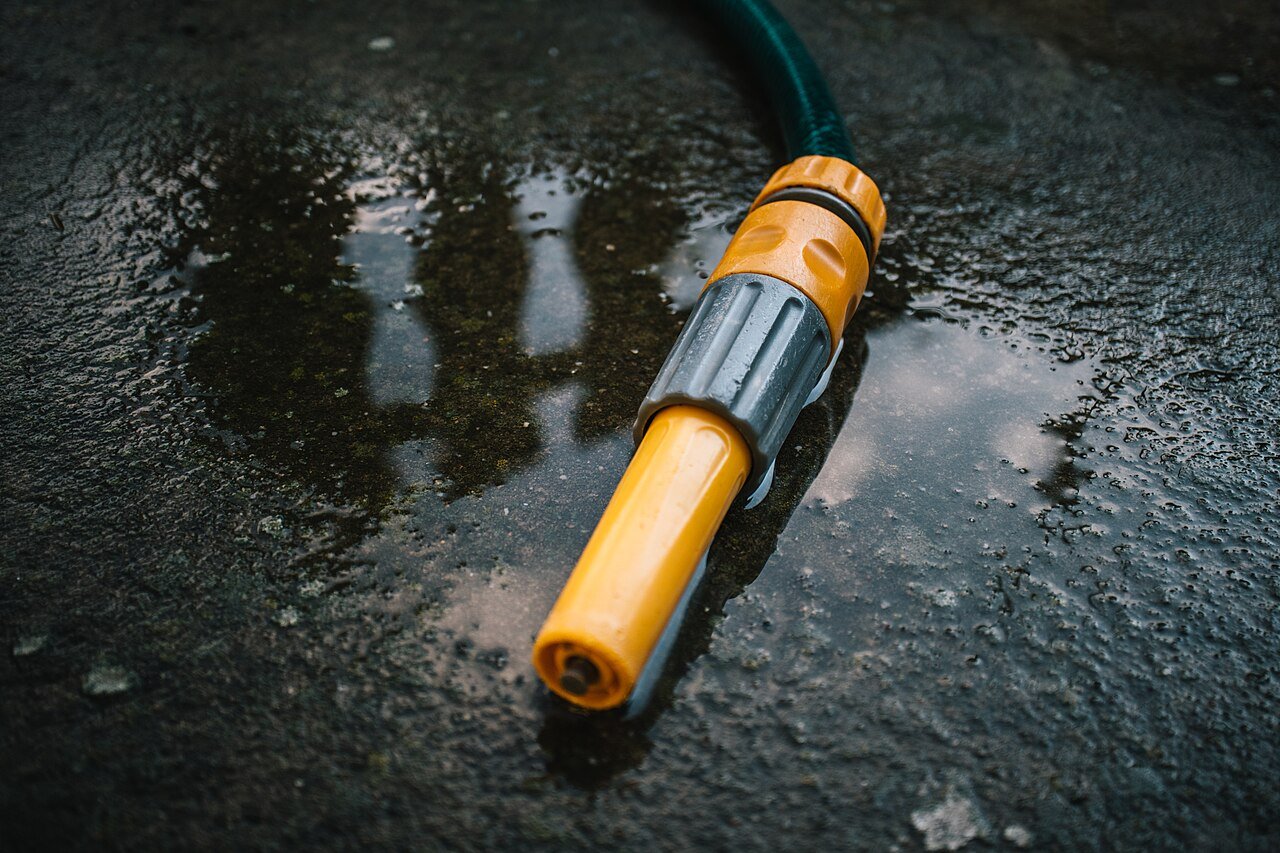
Featured photo: PumpkinSky / Wikimedia Commons (CC BY-SA 4.0, resized and hosted locally).
