
Garden hose accessories turn a basic hose into a more useful watering, cleaning, and irrigation tool. The right nozzle can protect tender plants, a splitter can supply two areas at once, and a timer can reduce wasted water without installing a permanent irrigation system.
Choosing accessories is not only about convenience. Hose size, water pressure, connection type, climate, and the job at hand all affect which parts will work well together. A poorly matched fitting can leak, while a heavy-duty nozzle may be unnecessary for a small container garden.
This guide explains the most useful garden hose accessories, what each one does, and how to buy parts that fit your yard instead of creating another pile of unused equipment in the garage.
Related reading: garden hose nozzle sprayer options and how soaker hoses work.
Start With Your Hose and Watering Needs
Before buying accessories, look at the hose you already own. Most residential garden hoses in the United States use standard garden hose thread, often called GHT. This makes many common nozzles, splitters, timers, and sprinklers interchangeable. However, thread compatibility does not guarantee that every accessory is equally durable or suitable for your water pressure.
Consider how and where you use water outdoors:
- Watering beds and containers: A gentle wand, adjustable nozzle, or soaker hose attachment may be most helpful.
- Watering lawns: A sprinkler, timer, and hose guide can make coverage more consistent.
- Washing vehicles, patios, or tools: Choose a durable nozzle with a stronger spray pattern and comfortable grip.
- Filling pools, bins, or rain barrels: A shutoff valve and timer can help prevent accidental overflow.
- Managing several planting areas: A splitter or multi-outlet manifold may be more useful than moving one hose repeatedly.
Also consider the hose diameter and length. A very long or narrow hose can reduce water flow, especially when feeding a sprinkler or multiple outlets. A multi-way splitter cannot create more water pressure; it only divides the supply that is already available.
Essential Garden Hose Accessories and Their Uses
Spray Nozzles
A hose nozzle controls the shape and force of water coming from the hose. It is one of the most versatile accessories because it can handle routine watering, rinsing, spot cleaning, and washing muddy tools.
Common nozzle styles include:
- Pistol-grip nozzles: Usually have a trigger and adjustable patterns. They are familiar and useful for varied jobs, though the trigger may be tiring during long watering sessions.
- Thumb-control nozzles: Use a lever rather than a trigger. They can be easier to operate one-handed and may offer smoother flow adjustment.
- Fireman-style nozzles: Have a twist barrel that adjusts water flow and pattern. Their simple design is often durable and well suited to washing and general yard work.
- Fan or shower nozzles: Produce softer water for flowers, seedlings, and newly planted beds.
Look for a nozzle with the spray patterns you will actually use. A soft shower is useful for plants, while a flat fan works for rinsing broad surfaces. A concentrated stream can clean hardscape or reach hanging baskets, but it can damage loose soil, young seedlings, and delicate foliage if used too close.
Watering Wands
A watering wand is an extension tube with a shower head at the end. It helps deliver water to the base of plants without stepping into beds or bending over every container. Long-reach wands are especially useful for hanging baskets, raised beds, and plants behind dense border plantings.
For plant care, choose a wand with a gentle shower setting and a shutoff control near the handle. The best length depends on the task: a shorter wand is easier to manage around containers, while a longer one improves reach in deeper beds. Avoid using a forceful setting around bare soil, where it can wash away mulch or expose roots.
Hose Splitters and Manifolds
A hose splitter attaches to a single spigot and creates two or more outlets. This allows one line to serve a sprinkler while another remains available for hand watering. Some models have individual valves so each outlet can be turned on or off independently.
For a simple setup, a two-way splitter is often enough. A manifold with several outlets is more practical when you have multiple hose zones, drip irrigation sections, or soaker hoses. Brass splitters are generally a strong choice for frequent use, while plastic versions may be adequate for lighter seasonal tasks but can become brittle with sun exposure or freezing temperatures.
Do not leave every outlet running at once unless your available flow supports it. If sprinklers become weak when another hose is opened, use the outlets one at a time or redesign the watering schedule.
Shutoff Valves
A shutoff valve attaches near the end of the hose, just before the nozzle or watering tool. It lets you stop water flow without walking back to the spigot. This is convenient when changing attachments, moving a sprinkler, or pausing between containers.
A valve is particularly useful with watering wands and drip adapters because it keeps the hose pressurized while you make small adjustments. Choose a valve with a clear, easy-to-turn handle and sturdy connection points. If water continues dripping from the nozzle after the valve is closed, the problem may be the valve seal, nozzle seal, or washer rather than the hose itself.
Quick-Connect Fittings
Quick-connect systems let you switch from a nozzle to a sprinkler, wand, or other accessory without repeatedly twisting threaded connections. One side attaches to the hose, while matching adapters stay on each tool.
They are useful for gardeners who change attachments often or have limited hand strength. The trade-off is that quick-connect parts add more seals and joints, which means more possible leak points. Select a complete system with matching connectors, and keep spare O-rings or washers on hand if the manufacturer offers them.
Not all quick-connect systems are interchangeable. Buy components designed for the same connection system rather than assuming different brands will lock together securely.
Hose Repair Kits and Replacement Washers
A small leak does not always mean the hose needs replacement. Hose repair kits can replace a damaged male or female hose end, while couplers can join two cut sections together. These repairs work best when the remaining hose is still flexible and in good condition.
Flat rubber washers inside female hose fittings are one of the most common causes of drips at a spigot, nozzle, or splitter. Replacing a worn, cracked, or missing washer is often the first repair to try. Tightening a connection excessively may not stop a leak and can damage threads or crush the washer.
Hose Reels, Carts, and Hangers
Proper storage protects a hose from kinks, punctures, sun damage, and tripping hazards. The best storage accessory depends on hose weight, length, and how far it must travel through the yard.
| Storage Option | Best For | Important Buying Consideration |
|---|---|---|
| Wall-mounted hanger | Short to medium hoses near a spigot | Choose a wide support that does not create a tight bend in the hose. |
| Wall-mounted reel | Organized storage in a fixed location | Check hose capacity and make sure the mounting surface can support the loaded reel. |
| Hose cart | Large yards and heavy, long hoses | Look for stable wheels and a handle that is comfortable to pull over your terrain. |
| Enclosed hose box | Patios and visible garden areas | Make sure it has enough capacity and allows the hose to drain and dry. |
A reel is not automatically better than a hanger. A lightweight hose that is easy to coil may need only a simple wall hanger, while a long, heavy hose is much easier to manage on a cart.
Sprinklers
Hose-end sprinklers provide a practical option for watering lawns, seedbeds, and broad planting areas. Common types include oscillating sprinklers for rectangular spaces, rotary sprinklers for wider areas, and stationary sprinklers for small or irregular patches.
Match the sprinkler pattern to the shape of the area. A sprinkler that throws water onto sidewalks, driveways, or neighboring property wastes water and may create runoff. Set out a few straight-sided containers during the first use to check whether water is reaching the entire target area evenly.
Water early enough for grass and plant foliage to dry during the day when possible. Frequency and runtime should depend on rainfall, soil type, plant needs, slope, and local watering rules. Heavy clay soil may need slower, shorter cycles to reduce runoff, while sandy soil may require a different approach.
Timers and Simple Hose-End Controllers
A hose timer turns water on and off automatically according to its program. It can be connected to a sprinkler, soaker hose, or drip system and is useful for consistent watering when you are busy or away for a short time.
Basic mechanical timers are simple to operate, while battery-powered digital timers allow more detailed scheduling. Some versions support more than one outlet, but each outlet still shares the water supply from the spigot.
Before relying on a timer, test the entire setup while you are home. Check for leaks, loose fittings, overspray, blocked emitters, and puddling. Do not set a timer based on a fixed schedule and forget it; adjust it for rain, heat, seasonal changes, and local restrictions. Remove or winterize timers before freezing weather if the manufacturer recommends it.
Soaker Hoses and Drip Irrigation Adapters
Soaker hoses release water slowly along their length, making them useful for rows, hedges, and established planting beds. Drip irrigation adapters can connect a garden hose to tubing, emitters, and other components designed to deliver water closer to plant roots.
These systems can reduce water loss from wind and evaporation compared with broad overhead spraying, especially in mulched beds. They also keep foliage drier, which can be helpful for plants prone to leaf disease. However, they need occasional inspection because clogs, crushed tubing, shifted lines, and uneven pressure can affect watering results.
Use equipment designed for drip irrigation when building a drip system. Depending on the components, that may include a filter, pressure regulator, backflow protection, and appropriate fittings. Follow the instructions for the specific system rather than mixing parts at random.
Hose Guides and Spike Supports
Hose guides are small stakes or rollers placed along the edge of a bed. They direct the hose around corners so it does not drag through mulch, crush low-growing plants, or catch on shrubs. They are a modest accessory, but they can prevent repeated damage in landscaped areas.
Choose visible, sturdy guides for high-traffic spots. Place them at bed corners and near vulnerable plants where the hose naturally changes direction.
How to Choose Durable Materials
Garden hose accessories are exposed to sun, pressure, moisture, dirt, and frequent handling. Material quality matters most for fittings, valves, splitters, and nozzles that will be used regularly.
- Brass: Commonly used for durable hose fittings and valves. It resists corrosion well and is a sensible choice for frequent connections and outdoor exposure.
- Metal-bodied accessories: Often withstand regular use better than light plastic versions, though construction quality still varies.
- Plastic: Lightweight and usually less expensive. It can work well for light-duty accessories but may crack after prolonged sun exposure, impact, or freezing conditions.
- Rubber washers and O-rings: Small but essential for leak-free connections. Keep replacements available, particularly if you use quick-connect systems.
Weight is also a buying consideration. A solid metal nozzle may last longer, but it can be tiring for someone watering hanging baskets or large container collections. A well-made lighter nozzle may be the better everyday choice.

Buying Tips That Prevent Leaks and Frustration
Check Connection Compatibility
Verify that the accessory is made for standard garden hose connections. A fitting may look similar to a hose connection but use a different thread type, especially if it is intended for plumbing, pressure washers, or irrigation tubing. Forcing mismatched threads can permanently damage both parts.
If you are buying a quick-connect system, purchase enough compatible adapters for every nozzle, wand, sprinkler, and tool you plan to use. Keeping one system throughout the yard is easier than trying to remember which connector fits which attachment.
Choose Controls You Can Use Comfortably
Trigger resistance, grip shape, valve placement, and the effort needed to turn a splitter handle are easy to overlook in a store. They matter after ten minutes of watering. People with arthritis, reduced grip strength, or limited hand mobility may prefer thumb controls, large levers, and quick-connect fittings over stiff trigger nozzles and small valve knobs.
Buy for Your Actual Water Pressure
Homes vary in water pressure and flow, and long hoses, filters, splitters, and uphill runs all reduce performance. A high-output sprinkler may not perform as expected at the far end of a long hose. Likewise, a multi-outlet setup can make every connected device weaker when they run simultaneously.
If your water pressure seems unusually low, first check for a kinked hose, partly closed spigot, clogged nozzle screen, leaking connection, or faulty splitter. If the issue affects indoor fixtures too, it may require a different diagnosis.
Plan for Winter Storage
In areas with freezing winters, disconnect accessories before temperatures stay below freezing. Drain hoses, timers, splitters, nozzles, and wands as thoroughly as practical, then store them in a protected area. Water trapped inside a fitting can freeze, expand, and crack internal parts.
Disconnecting hoses from outdoor spigots is also a sensible cold-weather precaution. Local home construction and frost-proof faucet designs vary, so follow recommendations appropriate to your plumbing setup.
Common Mistakes With Garden Hose Accessories
- Using a jet spray on delicate plants: Strong streams can break stems, compact soil, and dislodge seeds. Use a shower setting near plants.
- Leaving hoses pressurized all the time: Constant pressure puts stress on fittings and makes a small leak more likely to become a larger one.
- Overtightening threaded connections: A good washer and hand-tight connection usually work better than excessive force.
- Dragging hoses across plant beds: Use hose guides or reroute the hose around vulnerable areas.
- Running a timer without checking coverage: A timer automates water delivery, but it cannot detect a broken sprinkler, a detached hose, or runoff down a slope.
- Ignoring worn washers: Replacing a simple washer early is easier than dealing with repeated dripping and damaged fittings.
Basic Care for Longer-Lasting Accessories
After use, turn off the spigot and release pressure from the hose by opening the nozzle or shutoff valve briefly. This reduces strain on seals and makes the hose easier to handle. Coil the hose in broad loops or rewind it evenly on a reel rather than creating tight bends.
Periodically inspect nozzles, splitters, and timers for cracked housings, corroded fittings, worn washers, and mineral buildup. If spray patterns become uneven, remove the nozzle from the hose, check any visible screen or openings, and clean it according to the manufacturer’s instructions. Do not use sharp objects that could enlarge or damage small spray openings.
For outdoor plumbing protection, avoid attaching equipment in a way that could allow contaminated water to flow back toward the household water supply. Many outdoor faucets include an anti-siphon device, but situations vary. Follow local plumbing requirements and use suitable backflow protection when connecting irrigation equipment, chemical applicators, or other specialized devices.
Frequently Asked Questions
Should I choose a metal or plastic garden hose nozzle?
Choose based on how often you use it and how much weight you want to hold. A well-built metal nozzle is often a better fit for frequent washing and regular yard work, while a lighter plastic nozzle can be comfortable for routine watering. In either case, inspect the handle, adjustment mechanism, and fitting quality rather than judging only by the outside material.
Why does my hose connection drip even when it is tight?
The most likely cause is a worn, misplaced, or missing washer inside the female fitting. Turn off the water, remove the attachment, and inspect the washer for cracks or flattening. Also check that the threads are clean and not cross-threaded before reconnecting by hand.
Can one hose splitter run two sprinklers at the same time?
It can, but performance depends on the available water flow, hose length, pressure, and sprinkler type. If either sprinkler produces weak or uneven coverage, run them separately or use a timer to alternate zones instead of operating both outlets together.
Are quick-connect fittings worth using for a small garden?
They can be worthwhile if you regularly switch between a nozzle, watering wand, and sprinkler. For a single hose used with one attachment most of the time, standard threaded connections may be simpler and less expensive. Quick-connect fittings offer the greatest benefit when convenience and reduced twisting matter to you.
How often should garden hose accessories be replaced?
Replace them when they leak persistently after a washer change, develop cracks, no longer control water flow properly, or have damaged threads that prevent a secure connection. Storage habits, sun exposure, water quality, freezing conditions, and how often the equipment is used all affect service life.
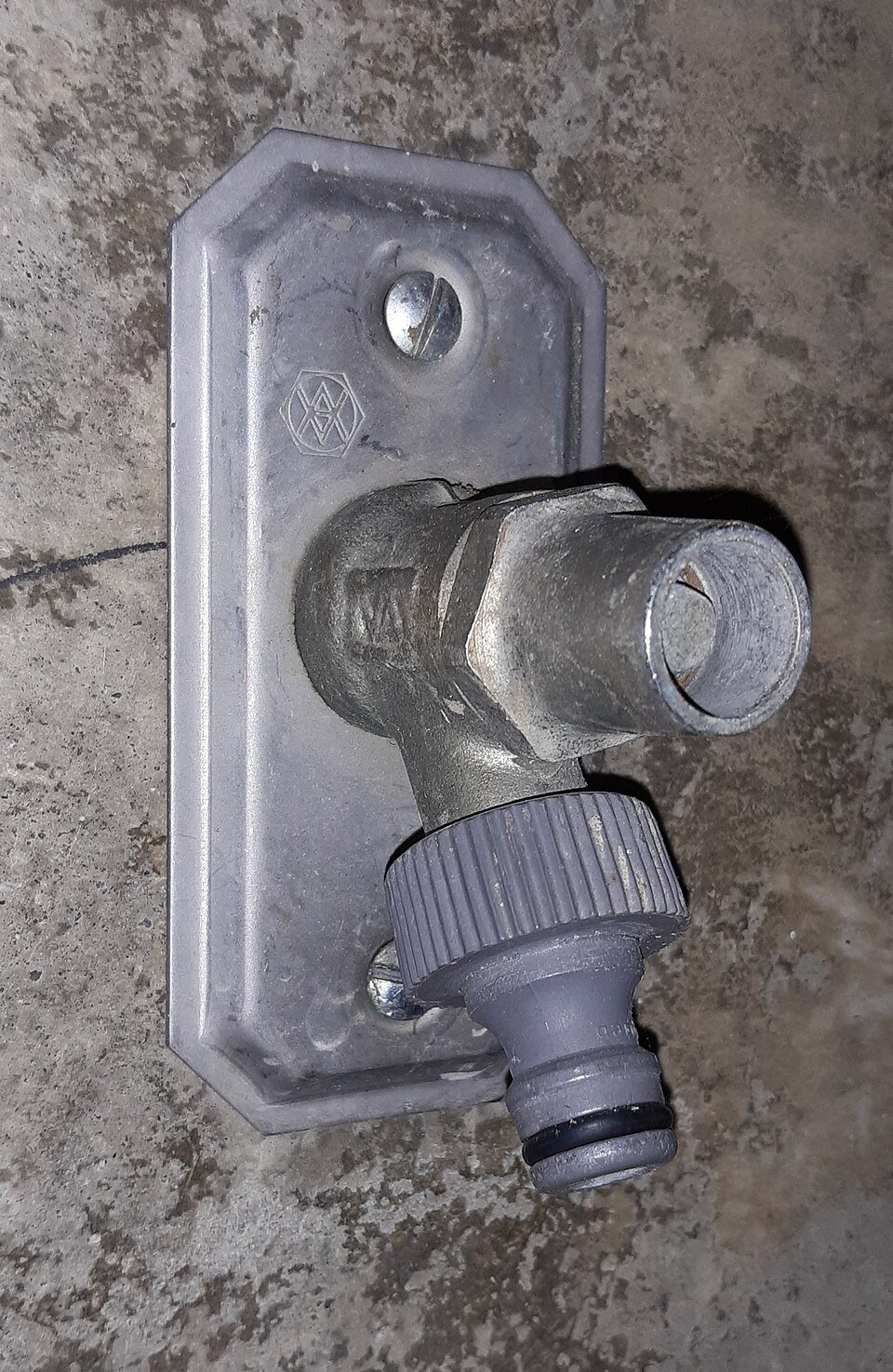
Featured photo: PumpkinSky / Wikimedia Commons (CC BY-SA 4.0, resized and hosted locally).
