
A straight shaft string trimmer is a versatile yard tool designed for cutting grass and weeds where a lawn mower cannot reach. Its long, direct drive shaft gives it better reach under shrubs, along fences, and around landscape beds, while many models have enough power to handle taller grass and light brush.
Although it is not one of the traditional gardening hand tools used for close-detail work, a straight shaft trimmer can make routine lawn and garden maintenance faster. The right model depends on the size of your property, the type of growth you need to cut, your preferred power source, and how comfortably you can handle the tool.
This guide explains what makes a straight shaft trimmer different, where it works best, which features matter, and how to use and maintain it safely.
Related reading: wheeled string trimmer and gardening hand tools.
What Is a Straight Shaft String Trimmer?
A straight shaft string trimmer has a long, rigid shaft that runs directly from the engine or motor to the cutting head. The head spins flexible trimmer line at high speed, cutting grass and weeds through impact rather than with a metal blade.
The straight shaft design usually places the cutting head farther from the user than a curved shaft model. This extra reach can make it easier to trim beneath bushes, around trees, behind sheds, and along sloped or uneven edges. Straight shaft trimmers are commonly available in battery-powered, corded electric, and gas-powered versions.
Many straight shaft models also accept compatible attachments, such as an edger, hedge trimmer, pole saw, cultivator, or brush-cutting head. Attachment capability is useful for homeowners who want one power unit for several seasonal tasks, but compatibility is specific to the manufacturer and product line. Always confirm that an attachment is approved for your trimmer before using it.
Straight Shaft vs. Curved Shaft Trimmers
Both styles cut grass and weeds effectively, but they suit different users and yard conditions. A curved shaft trimmer has a bend near the cutting end, which can make it feel shorter and somewhat lighter in the hands. A straight shaft trimmer is generally the better choice when reach, durability, and heavier-duty trimming are priorities.
| Feature | Straight Shaft Trimmer | Curved Shaft Trimmer |
|---|---|---|
| Reach | Longer reach under shrubs, fences, and obstacles | Often better for close, light trimming in compact spaces |
| Handling | May feel more balanced for taller users or extended reach | May feel easier for some users to maneuver at ground level |
| Typical workload | Light to heavy residential work, depending on power source | Usually light to moderate residential trimming |
| Attachment options | Common on many systems | Less common |
| Durability | Often built for more demanding use | May have more limitations with dense, tall growth |
Neither shaft shape is automatically better for every homeowner. A small, flat lot with regularly maintained grass may not require a heavy straight shaft trimmer. On the other hand, a property with fence lines, drainage swales, tall weeds, brushy edges, or deep planting beds can benefit substantially from the added reach and capability.
Best Uses for a Straight Shaft Trimmer
A string trimmer is a finishing tool, not a substitute for mowing an entire lawn. It is most useful after mowing or when dealing with areas a mower cannot safely or practically reach.
Trimming Lawn Edges
Use the trimmer to clean up grass that remains along sidewalks, driveways, patios, curbs, and garden borders. For a neat edge, keep the cutting head close to level and move steadily. Avoid scraping the line aggressively against concrete, brick, or stone, since hard surfaces wear line quickly.
Some trimmers can be rotated or fitted with an approved edging attachment. A dedicated lawn edger generally creates a more consistent trench-like edge, but a string trimmer can maintain a simple edge between more thorough edging sessions.
Cutting Around Obstacles
Straight shaft trimmers are especially useful around:
- Fence posts and gates
- Tree trunks and shrub bases
- Mailboxes and utility boxes
- Deck supports and retaining-wall edges
- Garden beds and landscape rocks
- Play equipment and outdoor furniture
Work carefully around tree bark. Repeatedly striking a trunk with trimmer line can damage the bark and expose the tree to stress, pests, and disease. Keep a mulch ring or other mower-and-trimmer-free zone around young trees and vulnerable shrubs.
Managing Tall Grass and Weeds
A straight shaft trimmer can cut tall grass and many soft-stemmed weeds, especially when the growth is too thick for a mower or lies along a ditch, fence, or wooded edge. Do not force the tool through dense vegetation in one pass. Start near the top of tall growth, then work downward in shallow passes.
This approach reduces line breakage, prevents the cutting head from bogging down, and makes it easier to see rocks, wire, stumps, and other hazards hidden in the vegetation.
Reaching Under Shrubs and Along Slopes
The extra shaft length can help you reach beneath low branches or trim grass on a bank without leaning too far over the cutting area. However, reach should not encourage unsafe footing. Avoid operating a trimmer on steep, wet, loose, or unstable slopes where you could lose balance.
Choosing the Right Power Source
The best straight shaft string trimmer is not necessarily the most powerful one. It is the model that can handle your normal trimming workload without being unnecessarily heavy, difficult to maintain, or inconvenient to store.

Battery-Powered Straight Shaft Trimmers
Battery trimmers are a practical option for many suburban yards. They start easily, produce no on-site exhaust, and generally require less routine maintenance than gas equipment. They are often well suited to weekly grass trimming, bed edges, and moderate weed growth.
When comparing battery models, focus on the battery platform rather than only the tool itself. If you already own outdoor power equipment that uses a compatible battery system, adding a matching trimmer may simplify charging and reduce the number of batteries you need to keep on hand.
Runtime varies with battery capacity, vegetation density, cutting width, line type, temperature, and how aggressively the trigger is used. A spare battery can be more useful than choosing a larger, heavier tool if your yard requires longer trimming sessions.
Corded Electric Straight Shaft Trimmers
Corded electric trimmers provide steady power without battery charging or fuel mixing. They can work well for small yards with accessible outdoor outlets, especially where trimming is limited to lawn edges and light weeds.
The cord is the main limitation. It can snag on shrubs, furniture, landscape features, and corners, and it restricts how far you can work from the outlet. Use an outdoor-rated extension cord suitable for the tool and keep the cord behind you and away from the cutting head.
Gas-Powered Straight Shaft Trimmers
Gas trimmers are often chosen for larger properties, thick weeds, long fence lines, and frequent heavy use. They offer unrestricted mobility and can provide strong cutting performance, but they are typically louder, heavier, and more maintenance-intensive than electric options.
Gas equipment requires attention to the correct fuel, oil requirements, storage practices, air filter condition, spark plug condition, and seasonal servicing. Follow the manufacturer’s instructions for your specific engine. Do not assume that fuel type, mixing requirements, or storage procedures are the same across models.
Features That Matter Most
Specifications can be useful, but they do not tell the whole story. A trimmer should match the work you actually do and feel manageable during a typical session.
Weight and Balance
A trimmer can seem manageable when lifted briefly in a store but become tiring after twenty minutes of edging. Consider the tool’s fully equipped weight, including the battery or fuel, and how the weight is distributed between the powerhead and cutting end.
A straight shaft model that feels balanced can be easier to control than a lighter model that constantly pulls your arms forward. Taller users may also appreciate the longer reach because it can reduce the need to bend at the waist.
Cutting Swath
The cutting swath is the width the trimmer can cut in one pass. A wider swath can speed up work along long fence lines or open areas, while a narrower head may be easier to control around flowers, trees, and tight landscape beds.
A larger cutting area also may demand more power and consume battery charge or trimmer line faster. For a neat residential lawn, control and balance are often more valuable than maximum width.
Trimmer Line System
Most homeowners will encounter either a bump-feed or automatic-feed head. A bump-feed head releases more line when you tap the spool lightly on the ground while the head is spinning. An automatic system advances line according to its design, often as the tool starts or runs.
Neither system is perfect. Bump-feed heads give the user more control but take practice. Automatic heads can be convenient but may use line faster if they advance too frequently. Before buying, check whether replacement spools are readily available and whether the head can be reloaded with bulk line.
Use only the line diameter and shape approved for the trimmer. Installing line that is too thick can strain the motor or engine, reduce cutting performance, and damage the head.
Handle Design
Straight shaft trimmers commonly use a loop handle, bicycle-style handle, or adjustable auxiliary grip. A comfortable handle should allow you to keep the cutting head near the ground without twisting your wrists or hunching your shoulders.
If possible, adjust the handle before the first use. Your elbows should remain slightly bent, and you should be able to sweep the head from side to side without lifting it excessively.
Attachment Capability
An attachment-ready powerhead can save storage space for homeowners who also need edging, hedge trimming, light pruning, or cultivation. However, attachments increase cost and may make the system heavier or more complex than a dedicated tool.
Choose an attachment system only if you expect to use it. A basic trimmer is often the more practical choice for a small, uncomplicated lawn.
How to Use a Straight Shaft Trimmer Safely
String trimmers can throw stones, sticks, mulch, broken line, and other debris at high speed. The cutting line may look harmless, but it can injure people, damage siding, chip windows, and harm plants.
Prepare the Work Area
- Inspect the area for rocks, wire, toys, hoses, stakes, and other hidden debris.
- Keep children, pets, and bystanders well away from the work zone.
- Do not trim near open windows, parked vehicles, fragile ornaments, or areas where debris could reach people.
- Check for buried irrigation heads, low-voltage landscape wiring, and shallow edging materials before trimming close to beds.
- Wait until grass is reasonably dry when possible. Wet clippings can collect around the guard and cutting head.
Wear Appropriate Protective Gear
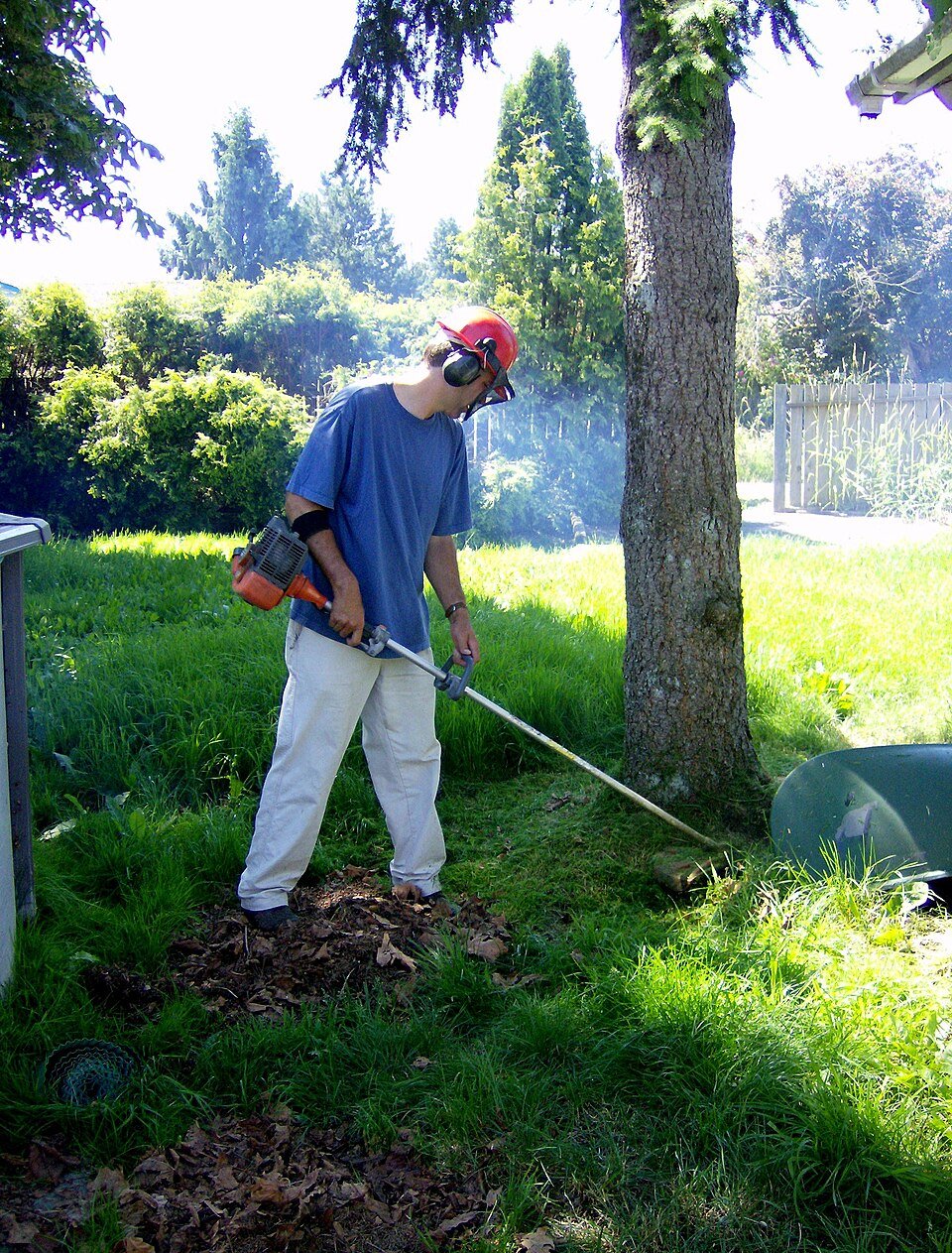
Wear safety glasses or a face shield, closed-toe shoes, long pants, and hearing protection when needed. Gloves can improve grip and protect your hands from vibration, debris, and sharp plant material. Avoid loose clothing, dangling cords, and jewelry that could catch on equipment or branches.
Use Controlled Sweeping Passes
Hold the trimmer with both hands and keep the cutting head near the ground. Move in a controlled side-to-side sweep rather than chopping downward. Let the line do the cutting; forcing the head into heavy growth wears line faster and increases the chance of throwing debris.
Many trimmers rotate so that debris tends to discharge in one direction. Position yourself so clippings and debris are directed away from your body, cars, windows, and desirable plants.
Protect Flowers, Bark, and Hardscape
Trimmer line can strip foliage, scar wood, and cut tender stems almost instantly. Work slowly near ornamental beds, vegetable gardens, and tree trunks. For precise cleanup around delicate plants, hand shears and other gardening hand tools may be safer than a powered trimmer.
Do not use a string trimmer to cut woody brush unless the manufacturer specifically approves the trimmer and cutting attachment for that use. Never install an unapproved metal blade or modify guards and shields.
Maintenance for Reliable Performance
Basic maintenance helps a straight shaft trimmer start more easily, cut efficiently, and last longer. The exact service schedule depends on the power source and manufacturer, so use the owner’s manual as the primary reference.
After Each Use
- Turn the trimmer off and disconnect power or remove the battery before inspecting the head.
- Allow hot engine or motor components to cool before cleaning or storing the tool.
- Remove wrapped grass, string, and debris from the guard and cutting head.
- Check that the debris guard, line cutter, handle, and fasteners are secure and undamaged.
- Inspect the trimmer line and reload it if it is too short, brittle, tangled, or worn.
- Wipe off dirt and plant residue before putting the trimmer away.
Battery and Cord Care
For battery models, keep the battery contacts clean and store batteries in a dry location away from extreme heat, freezing conditions, and direct sun. Use the charger and charging instructions specified by the manufacturer.
For corded tools, inspect the power cord and extension cord before each use. Do not use a cord with damaged insulation, loose connections, or exposed wire. Disconnect the tool from power before clearing jams or changing line.
Gas Trimmer Care
Gas trimmers need additional attention. Check the air filter, fuel system, cutting head, and spark plug according to the manufacturer’s service directions. Use fresh fuel that meets the manual’s requirements, and follow the stated storage procedure when the tool will sit unused for an extended period.
Store gasoline safely in an approved container and keep it away from flames, sparks, pilot lights, and living spaces. If a fuel line leaks, the engine runs poorly, or the trimmer has starting problems that basic maintenance does not resolve, professional service may be safer than repeated troubleshooting.
Common Mistakes to Avoid
A string trimmer is simple to operate, but a few habits can cause poor results, excessive line use, or unnecessary damage.
- Scalping the lawn: Holding the head too low can remove grass crowns and expose soil. Keep the line just high enough to cut unwanted growth.
- Trimming too close to trees: Repeated contact with bark can injure or kill young trees. Maintain a protected mulch ring.
- Using the wrong line: Oversized or unsuitable line can overload the tool. Follow the approved line type and diameter.
- Ignoring debris hazards: A hidden piece of wire or metal can damage the trimmer and become a dangerous projectile.
- Using a trimmer as a mower: Cutting an entire overgrown lawn with a trimmer is slow, tiring, and hard on the equipment. Mow first when practical.
- Skipping equipment checks: A loose guard, damaged spool, worn line cutter, or cracked battery housing should be addressed before use.
String trimmer upkeep is separate from a checklist for lawn mower maintenance, but both tools benefit from the same general habit: clean equipment after use, inspect it before the next session, and follow the manufacturer’s service guidance. Good maintenance lawn mower practices should not be assumed to apply directly to a trimmer, especially where fuel, lubrication, batteries, and cutting components differ.
When a Straight Shaft Trimmer Is the Right Choice
Choose a straight shaft string trimmer if you need extra reach, regularly work around shrubs and fences, have taller grass or moderate weeds at property edges, or want access to compatible attachments. It is also a sensible option for taller users who find shorter curved shafts uncomfortable.
A lighter curved shaft or compact battery trimmer may be enough for a small, neatly maintained yard with limited edging. The best choice is the one that you can control comfortably, maintain properly, and use safely for the growth conditions on your property.
Frequently Asked Questions
Can a straight shaft trimmer cut thick brush?
Most standard string heads are intended for grass and weeds, not thick woody brush. Some trimmers accept manufacturer-approved brush-cutting attachments, but only use an attachment specifically rated for your model and follow all guard, handle, and safety requirements.
Why does my trimmer line keep breaking?
Line often breaks because it repeatedly strikes concrete, rocks, fencing, or thick woody stems. It can also become brittle with age or break when the wrong diameter is installed. Use fresh, approved line and keep the head slightly away from hard surfaces.
Is a straight shaft trimmer harder to control than a curved shaft model?
Not necessarily. Straight shaft models are longer, but many users find them well balanced and easier to reach with. Handle adjustment, total weight, and your height matter more than shaft shape alone.
Should trimmer line be soaked in water before use?
Some users soak certain nylon trimmer lines to improve flexibility, but it is not a universal requirement. Follow the line and trimmer manufacturer’s guidance. Proper storage in a sealed container away from heat and direct sunlight is usually more important.
How close can I trim near a vegetable garden?
Leave a buffer so spinning line and thrown debris cannot strike edible plants, stems, irrigation tubing, or mulch-covered soil. For close work around vegetables, hand pulling, shears, or a hoe usually provides better control than a powered trimmer.
Featured photo: Andrewa / Wikimedia Commons (CC BY-SA 4.0; resized by WordPress).
