
Gardening hand tools make routine yard work faster, cleaner, and easier on your plants. The right trowel, pruners, hoe, or rake helps you work accurately in tight spaces where large tools would damage roots, stems, or nearby landscaping.
A good tool collection does not need to be large. Most home gardeners can handle planting, weeding, pruning, soil preparation, and container care with a small set of durable, well-chosen tools. The key is matching each tool to the job, your garden’s soil, and your comfort needs.
This guide explains the most useful gardening hand tools, what each one does, which features matter when buying, and how to keep your tools working well season after season.
Related reading: bypass pruning shears for clean cuts and essential garden tools for beginners.
Essential Gardening Hand Tools and Their Uses
Hand tools are designed for close, controlled work. They are especially useful in flower beds, vegetable gardens, raised beds, containers, and around shrubs where precision matters. Start with the tools you will use most often rather than buying a large prepackaged set with items that may sit unused.
Hand trowel
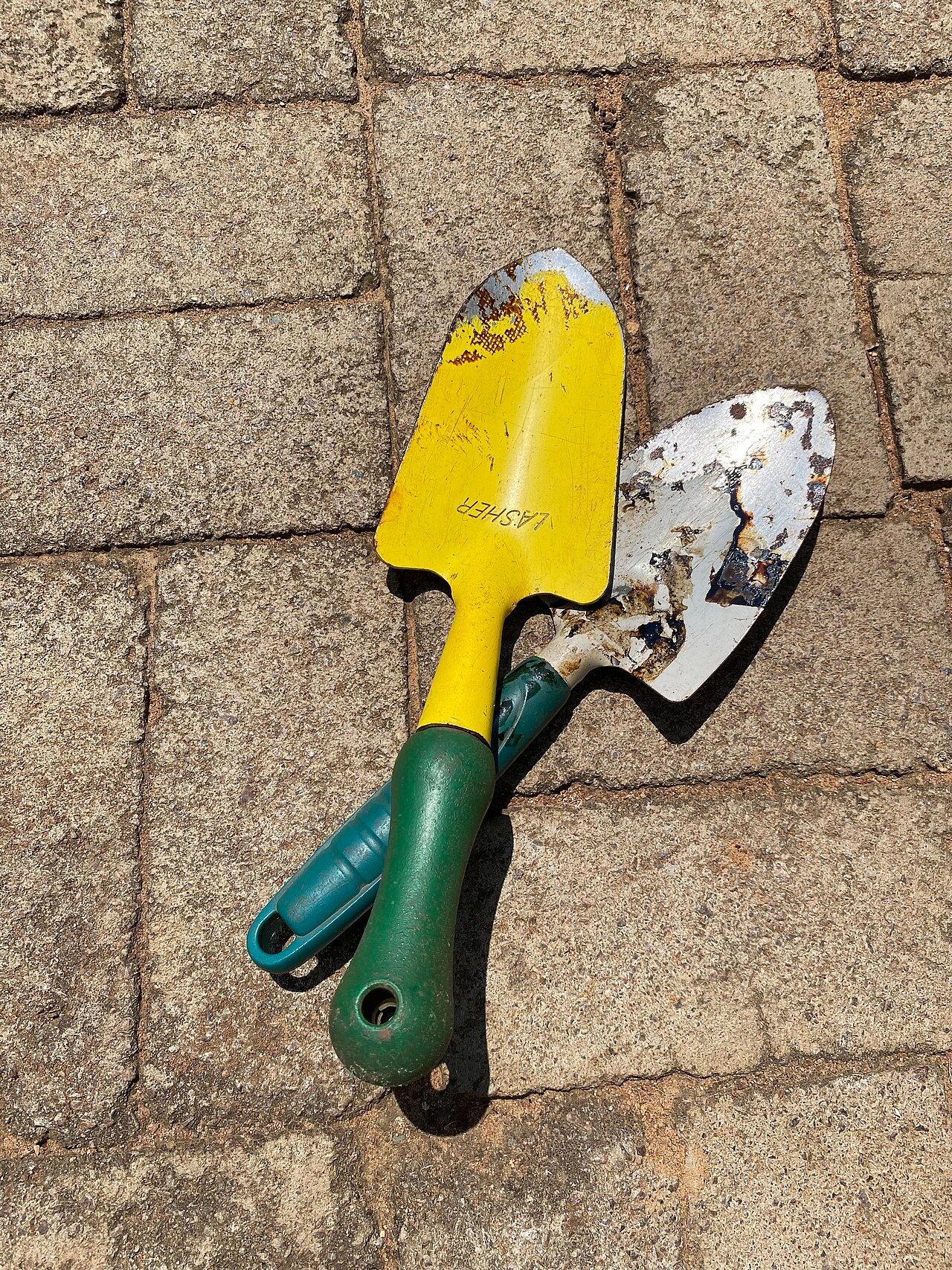
A hand trowel is one of the most versatile gardening tools. It has a small scoop-shaped blade and a short handle, making it useful for digging planting holes, transplanting seedlings, mixing soil amendments, and filling pots.
Choose a trowel with a strong blade that does not flex easily when working in ordinary garden soil. A narrow blade is useful for bulbs, small transplants, and compact spaces. A wider blade moves more soil and compost with each scoop.
- Best for: Planting annuals, herbs, vegetable starts, bulbs, and small perennials.
- Useful feature: Depth markings can help when planting bulbs or setting transplants at a consistent depth.
- Watch for: Thin, poorly attached blades that can bend or loosen at the handle.
Hand fork or cultivator
A hand fork, often called a cultivator, usually has three short, curved tines. It loosens the soil surface, breaks up small clods, incorporates compost, and pulls shallow-rooted weeds. It is not a substitute for a digging fork in a large bed, but it is excellent for small areas and containers.
Use it gently around established plants. Deep or aggressive cultivation can cut feeder roots, bring dormant weed seeds to the surface, and dry out the top layer of soil.
- Best for: Loosening potting mix, refreshing the surface of garden beds, and working amendments into open soil.
- Useful feature: Thick, rounded tines resist bending better in heavier soil.
- Watch for: Using it near plant crowns or large roots.
Hand weeder
A hand weeder has a narrow blade, forked tip, or notched head designed to reach into soil beside a weed and lift its root. Different designs suit different weeds. Forked weeders can work well on taprooted weeds, while narrow blade weeders are useful between closely spaced plants.
The best time to weed is often after rain or irrigation, when the soil is moist enough for roots to release. Pulling weeds before they flower or set seed reduces future work.
- Best for: Dandelions, plantain, crabgrass clumps, and young weeds in beds or along edges.
- Useful feature: A fulcrum point or angled shaft can provide leverage for stubborn roots.
- Watch for: Disturbing a large area of soil while removing one weed.
Garden hoe
A garden hoe handles larger weeding and soil-preparation jobs than a hand weeder. However, “hoe” describes several different designs, and the best option depends on how you garden.
- Draw hoe: A classic flat blade pulled toward you. It is useful for shaping rows, moving soil, and chopping larger weeds.
- Stirrup or oscillating hoe: A loop-shaped blade that cuts weeds just below the soil surface on both the push and pull stroke. It works best on small weeds in open beds.
- Collinear hoe: A thin, sharp blade for shallow, precise weeding in cultivated rows.
- Winged weeder: A wider blade that slices through young weeds over a larger area.
Use a hoe when weeds are tiny rather than waiting until they are mature. Shallow cutting is usually more effective than deep chopping because it removes weeds without bringing more seeds to the surface.
Bypass pruners
Bypass pruners are the standard choice for cutting live stems. Their two curved blades pass each other like scissors, producing a relatively clean cut that is easier on healthy plant tissue. They are useful for deadheading flowers, harvesting herbs, trimming small branches, and cutting back many perennials.
Pruners have a practical cutting limit. Do not force them through woody stems that are too thick for the tool; that can damage the blades, spring, pivot, or your hand. For thicker branches, use loppers or a pruning saw sized for the task.
- Best for: Live stems, flowers, small shrub growth, and light harvesting.
- Useful feature: A replaceable blade, sap groove, or adjustable pivot can extend the tool’s working life.
- Watch for: Dull blades, which crush stems instead of cutting them cleanly.
Anvil pruners
Anvil pruners use one sharpened blade that closes onto a flat surface. They can be helpful for dry, dead, or brittle wood, but they tend to crush softer live stems more than bypass pruners. For most general home garden tasks, bypass pruners are the more flexible first purchase.
Snips and floral scissors
Garden snips are smaller than pruners and are made for detailed work. They are useful for harvesting herbs, cutting flowers, deadheading delicate plants, and trimming thin stems in crowded beds. Their narrow tips can reach into plants more easily than standard pruners.
Keep snips clean when moving between plants, especially if you suspect disease. Plant pathogens can sometimes spread on contaminated cutting surfaces.
Hand rake
A hand rake is a compact version of a leaf or shrub rake. It helps clear fallen leaves, spent blooms, loose mulch, and small debris from between plants. It is particularly useful in containers, rock gardens, around low-growing groundcovers, and beneath shrubs.
Look for flexible but resilient tines. Very stiff tines can snag roots or catch on drip irrigation tubing, while overly thin tines may bend easily.
Soil knife
A soil knife is a multi-purpose garden tool with a sturdy, usually serrated blade. It can cut through roots, divide small perennials, open potting soil bags, transplant seedlings, remove weeds, and measure planting depth if it has markings.
It is a useful all-around tool for gardeners who prefer to carry fewer items, but it should be treated as a cutting tool. Use a sheath when available, keep it away from children, and avoid leaving it hidden in mulch or soil.
Hori hori knife
A hori hori is a Japanese-style soil knife with a strong blade, often serrated on one side and smooth on the other. It can handle many of the same tasks as a soil knife, including digging, weeding, dividing, and transplanting. Its sturdy construction makes it especially helpful in established beds with roots or compacted soil.
Because a hori hori is sharp and pointed, it is not the best choice for every gardener or every task. A standard trowel may be safer and more efficient for routine planting in loose soil.
Tools for Digging, Edging, and Moving Soil
Some garden jobs need more leverage than a small hand trowel can provide. These tools are larger, but they remain important for planting shrubs, renewing beds, moving compost, and managing lawn or garden edges.

Spade
A garden spade has a flat, straight-edged blade. It is useful for making clean bed edges, cutting through turf, digging straight-sided holes, dividing perennials, and moving soil in controlled amounts. A spade is often easier to use precisely than a round-point shovel.
Shovel
A round-point shovel has a curved, pointed blade for digging into loose soil, compost, and mulch. It is better suited to digging and lifting than to crisp edging. If you are planting a tree or shrub, choose a shovel that feels stable underfoot and has a handle length you can control comfortably.
For any major planting project, call 811 or use your local utility-marking service before digging where buried utilities may be present. This is especially important near homes, fences, lighting, irrigation lines, and property boundaries.
Digging fork
A digging fork has strong, upright tines and is useful for loosening compacted garden soil, lifting clumps of perennials, turning compost, and harvesting root crops. It often works better than a shovel in dense or rocky soil because the tines can move between stones and roots.
A border fork is a smaller version designed for narrower beds and gardeners who find a full-size digging fork too heavy or awkward.
Edging tool
A manual edging tool creates a clean separation between lawn and beds. It usually has a half-moon blade that slices vertically through turf. This helps prevent grass from creeping into flower beds and gives borders a more maintained appearance.
Edging is primarily an appearance and maintenance task. Avoid cutting so deeply that you damage roots of nearby shrubs, trees, or perennials.
How to Choose Gardening Hand Tools
The best gardening hand tools are not necessarily the most expensive or the ones with the largest set of features. Durability, comfort, balance, and suitability for your soil matter more than brand names or decorative finishes.
Choose materials that fit the work
Stainless steel is commonly valued for corrosion resistance and easier cleanup. Carbon steel can be strong and sharp, but it needs more careful drying and occasional oiling to prevent rust. Forged steel tools are often more durable than thin stamped-metal tools, especially for digging or prying work.
Wood handles can feel comfortable and can sometimes be sanded or refinished. Fiberglass, plastic, and composite handles may require less maintenance and can be weather-resistant, but quality varies. Whatever material you choose, inspect the connection between the handle and the metal head. A loose joint is frustrating and can become unsafe.
Match the tool to your soil
Soil conditions can change what “durable enough” means. Loose, amended raised-bed soil is forgiving, while compacted clay, rocky ground, or soil filled with old roots demands heavier construction.
- For loose soil and containers, lightweight trowels and cultivators may be sufficient.
- For clay or stony ground, select thick steel blades and reinforced handle connections.
- For sandy soil, broad scoops and shovels can move material efficiently, though sharp points may not be as necessary.
- For established beds, narrow tools reduce disturbance around roots and closely spaced plants.
Prioritize handle comfort and grip
Handle shape affects control and fatigue. A grip that feels comfortable in the store may become uncomfortable after an hour of planting or weeding, so consider the type of work you do most. Larger handles can be easier for gardeners with limited grip strength, while slim handles may offer better control for detailed work.
Ergonomic features can help, but they are not identical for every hand. Look for a secure grip, a balanced tool head, and an angle that lets you keep your wrist in a fairly neutral position. If you have arthritis, tendon pain, or reduced hand strength, ratcheting pruners, padded grips, and lightweight tools may be worth considering.
Consider tool weight and length
Lightweight tools reduce fatigue, but extremely light tools may flex or break during demanding work. The goal is a tool that feels solid without being unnecessarily heavy.
Long-handled tools reduce bending and can make weeding or cultivating more comfortable. Short-handled tools provide better control in raised beds and containers. Many gardeners benefit from owning both a hand tool for detail work and a long-handled version for open beds.
Look for replaceable parts when practical
Quality pruners may have replaceable blades, springs, and handles. This can be valuable because pruners wear out at their cutting edge long before the rest of the tool necessarily fails. For simple trowels and forks, a one-piece construction with a solid tang or securely attached handle is generally more important than replaceable parts.
A Practical Starter Tool Kit for Most Home Gardens
If you are building a collection from scratch, begin with tools that cover the most common tasks. You can add specialized tools when your garden or routine makes them worthwhile.
| Tool | Primary Jobs | Who Benefits Most |
|---|---|---|
| Hand trowel | Planting, transplanting, potting | Every gardener |
| Bypass pruners | Trimming live stems and deadheading | Flower, shrub, and vegetable gardeners |
| Hand weeder | Removing rooted weeds | Gardeners with beds, paths, or lawn edges |
| Hand fork | Loosening surface soil and mixing amendments | Container and raised-bed gardeners |
| Garden hose nozzle or watering wand | Watering new plants and containers | Gardeners without drip irrigation |
| Spade or shovel | Digging, edging, and moving soil | In-ground garden and landscape gardeners |
A gardener with only containers may need little beyond a trowel, snips, hand fork, watering tool, and gloves. A homeowner maintaining shrubs, perennial borders, and in-ground vegetable beds will likely benefit from pruners, a hoe, a digging tool, and a hand rake as well.
Buying Tips That Can Prevent Common Regrets
Do not buy a large set only for the tool bag
Preassembled tool sets can be convenient, but some include low-quality duplicates or specialized pieces that are rarely used. Compare the construction of each included item rather than assuming a larger set offers better value.
A better approach is to buy a few frequently used tools individually, then add tools as specific tasks arise. For example, buy a soil knife only if you regularly divide perennials, work around roots, or want a multi-purpose digging and cutting tool.
Inspect the blade-to-handle connection
For trowels, forks, and hoes, the joint between the head and handle receives most of the stress. A blade that extends well into the handle, known as a tang, is generally more reliable than a shallow connection held by a small fastener.
For long-handled tools, check that the socket and handle feel secure. Avoid tools that rattle, twist noticeably, or show cracks near the joint.
Test pruner action before buying
Pruners should open and close smoothly without excessive side-to-side blade movement. The lock should be easy to operate but should not release unexpectedly. Springs and handles should feel secure, and the tool should fit your dominant hand comfortably.
Left-handed gardeners should consider tools made specifically for left-handed use if standard pruners feel awkward or force the wrist into an uncomfortable angle.
Think about storage before choosing materials
Even excellent tools deteriorate when left in wet grass, exposed soil, or outdoor weather. If your storage is a dry shed, garage, or covered tool area, most materials can last well with basic care. If tools may be exposed to humidity, choose corrosion-resistant materials and be especially diligent about drying them after use.
Tool Care and Maintenance
Cleaning tools after use is one of the simplest ways to extend their service life. Soil holds moisture, and moist soil left on metal encourages corrosion. Sap and plant residue can also make cutting tools stick or spread disease between plants.
- Brush or rinse off loose soil after each use.
- Dry metal surfaces before storing tools.
- Remove sticky sap from pruners and snips with a suitable cleaner following the product directions.
- Sharpen cutting edges when they begin tearing plant material or require excessive force.
- Apply a light protective oil to clean metal parts when storing tools for an extended period.
- Store tools off the ground in a dry location.
Keep pruner blades sharp, but do not attempt complicated repairs if the pivot is damaged, the blade is badly bent, or the tool does not lock safely. Replacement parts or professional sharpening may be the safer choice depending on the tool.
Using Garden Tools Safely
Gardening hand tools are simple, but cuts, punctures, strains, and eye injuries can still happen. Wear gloves appropriate for the job, especially when working with thorny plants, sharp tools, rough materials, or soil that may contain hidden debris.
- Carry sharp tools with the blade pointed down and away from your body.
- Cut away from your hands and legs when using pruners, snips, or soil knives.
- Keep tools out of paths, grass, and mulch where someone could step on them.
- Use your legs and body position, not a twisted back, when lifting soil or compost.
- Wear eye protection when cutting woody stems that can snap or when working beneath shrubs.
- Clean and put away tools before taking breaks, particularly if children or pets use the yard.
For high branches, large tree limbs, or work near overhead power lines, do not try to extend the reach of ordinary hand tools. A qualified arborist or tree-care professional is the safer option when the work exceeds ground-level pruning.
Frequently Asked Questions
What is the single most useful gardening hand tool?
A hand trowel is usually the most useful first tool because it handles planting, transplanting, potting, and small soil-moving jobs. Add bypass pruners next if you grow flowers, herbs, shrubs, or vegetables that need regular trimming.
Are stainless steel garden tools better than carbon steel tools?
Stainless steel is typically easier to maintain because it resists rust well. Carbon steel can be strong and hold a sharp edge, but it needs prompt cleaning, drying, and occasional oiling. Either can be a good choice when the tool is well made and stored properly.
Should I use a hoe in a mulched flower bed?
Usually, no. A hoe works best on bare or lightly covered soil where it can slice young weeds near the surface. In mulched beds, hand-pulling or a narrow hand weeder is often more effective and less likely to scatter mulch or damage desired plants.
How often should garden pruners be sharpened?
Sharpen pruners when cuts begin to look crushed or ragged, when the tool requires extra force, or after heavy seasonal use. The exact schedule depends on how often you prune and whether you cut woody stems or dirty material.
Can I leave garden tools outside between uses?
Leaving tools outside shortens their life by exposing metal, wood, and moving parts to moisture and sun. Even weather-resistant tools last longer when cleaned and stored in a dry garage, shed, or covered storage area.
Featured photo: Lesekreis / Wikimedia Commons (CC0; resized).
