
Choosing between liquid vs granular lawn fertilizer comes down to how quickly you need results, how evenly you can apply the product, and how much ongoing maintenance your lawn needs. Neither form is automatically better for every yard. The right choice depends on your grass type, season, soil, weather, and the condition of the turf.
Liquid fertilizer is typically fast acting and easy to combine with a regular lawn-care routine. Granular fertilizer is often better for longer feeding periods and larger areas where slow, steady growth is the goal. Many homeowners get the best results by using each type for the jobs it handles best.
Before buying either product, identify your grass type and make sure it is actively growing. Cool-season lawns and warm-season lawns have different peak fertilizing seasons, and applying nutrients at the wrong time can encourage weak growth, increase disease pressure, or waste product.
Liquid vs Granular Lawn Fertilizer at a Glance
| Factor | Liquid Fertilizer | Granular Fertilizer |
|---|---|---|
| Speed of visible response | Usually faster, especially when nutrients are readily available | Often slower, particularly with slow-release products |
| Duration of feeding | Usually shorter | Often longer with slow-release nitrogen |
| Application method | Sprayer and water are required | Usually applied with a broadcast or drop spreader |
| Coverage consistency | Good when spraying is calibrated and overlap is controlled | Good when the spreader is calibrated and walking speed is steady |
| Convenience for large lawns | Can require repeated refilling and spraying | Often more practical for broad, open areas |
| Best use | Quick correction, regular light feeding, targeted applications | Seasonal feeding and sustained nutrition |
| Common risk | Uneven spray coverage or leaf burn from improper mixing | Striping, missed areas, or burn from uneven spreading or excess product |
How Liquid Lawn Fertilizer Works
Liquid lawn fertilizer is mixed with water or sold in a ready-to-spray form. It is applied through a hose-end sprayer, backpack sprayer, pump sprayer, or other compatible application equipment. The nutrients reach the lawn through the soil and, in some cases, through the leaf surface as well.
Because the nutrients are already dissolved, liquid fertilizer can become available to the grass relatively quickly. That fast response makes it useful when a lawn needs a modest boost during active growth or when a soil test and visual symptoms point to a nutrient issue that needs attention.
Advantages of liquid fertilizer
- Fast green-up: Liquid products can produce a quicker visible response than many slow-release granular fertilizers.
- Easy targeted application: You can treat a thin or pale section without applying fertilizer across the entire property.
- Flexible feeding: Some lawn-care routines use lighter, more frequent applications rather than fewer heavy feedings.
- Compatible with some soil amendments: Depending on the product label, liquid applications may be used alongside certain micronutrients or soil-conditioning products.
- Useful for small lawns: A homeowner with a compact yard may find a handheld or backpack sprayer easier to manage than storing a large spreader.
Limitations of liquid fertilizer
The main drawback is that liquid feeding generally does not last as long as a granular product designed for slow nutrient release. A lawn may need additional applications during the growing season, depending on the product, grass type, soil, rainfall, and maintenance goals.
Application accuracy also matters. Spraying too lightly can leave the lawn underfed, while too much overlap can create darker bands or stress the turf. Wind can carry spray onto garden beds, shrubs, patios, and other surfaces. Avoid spraying when wind is likely to cause drift, and follow label directions for nearby desirable plants.
Liquid fertilizer also requires more equipment care. Sprayers need to be clean, properly calibrated, and free of clogged nozzles. If a fertilizer is mixed incorrectly or applied during hot, drought-stressed weather, leaf injury is more likely.
How Granular Lawn Fertilizer Works
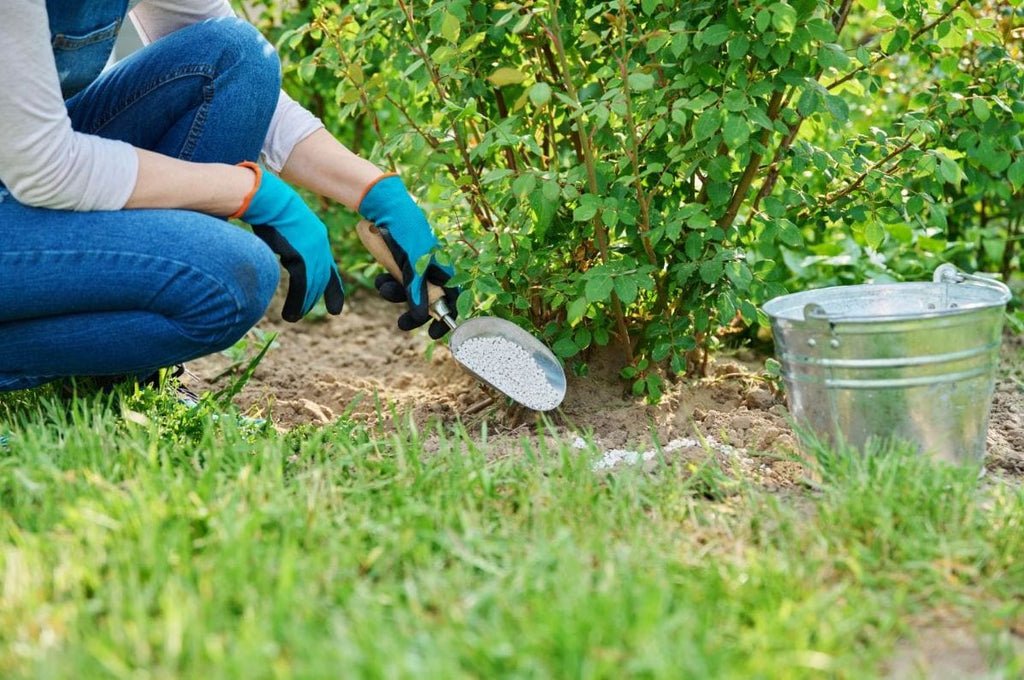
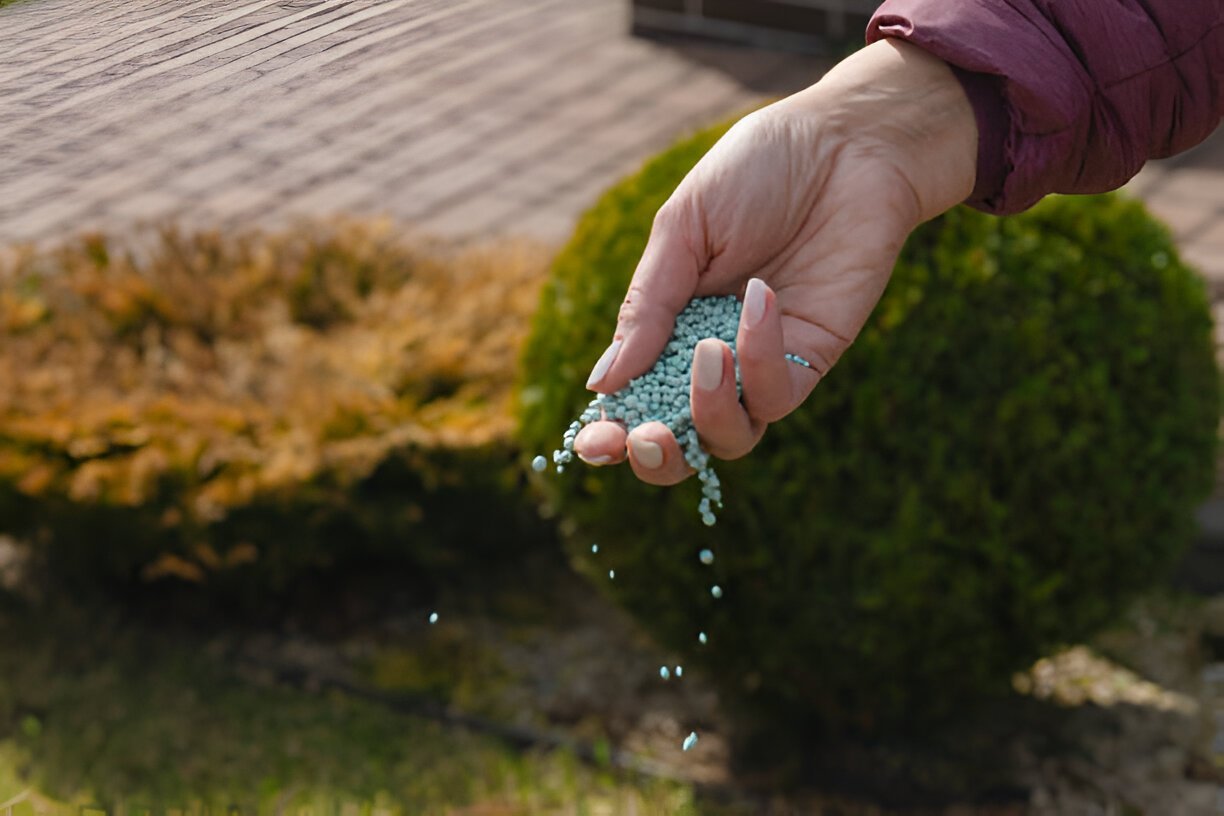
Granular fertilizer consists of dry particles spread over the lawn. Some granules release nutrients quickly after watering, while others are coated or formulated to release nutrients gradually over time. The fertilizer must move into the soil and dissolve before roots can take up the nutrients.
Granular products are commonly used for broad seasonal applications because they are efficient to distribute across larger lawns. A properly calibrated broadcast spreader can cover an open yard much faster than a small sprayer.
Advantages of granular fertilizer
- Longer-lasting nutrition: Slow-release granular products can feed turf over an extended period rather than producing a short burst of growth.
- Practical for larger properties: A spreader is often the simplest way to fertilize a large, open lawn.
- Less frequent application: Longer feeding periods can reduce the number of fertilizer sessions needed during the growing season.
- Good for planned seasonal care: Granular fertilizer fits well into a routine built around spring, summer, or fall lawn needs.
- Simple storage: Unopened or securely sealed bags are generally straightforward to store in a dry location away from children, pets, and moisture.
Limitations of granular fertilizer
Granular fertilizer usually needs watering in unless rain is expected and the product label says rainfall is suitable. Granules left on dry grass blades or hard surfaces may not reach the soil as intended. Sweep or blow stray granules off sidewalks, driveways, and patios and back onto the lawn rather than allowing them to wash into storm drains.
Uneven spreading is another common problem. Overlap, missed passes, sharp turns, and a spreader opening that is set incorrectly can leave streaks in the lawn. Drop spreaders offer precise edge control but can create obvious stripes if the passes do not line up. Broadcast spreaders cover more ground quickly but can throw granules into beds, pavement, or waterways if used carelessly.
Slow-release fertilizer is not always the best choice when the lawn needs an immediate response. It is designed for steady feeding, not a rapid cosmetic change.
The Most Important Difference: Fast Feeding vs Steady Feeding
The clearest distinction in the liquid fertilizer vs granular fertilizer decision is nutrient timing. Liquid products generally provide nutrients more quickly, while slow-release granular products supply nutrition over a longer period.
Fast feeding can be helpful when grass is actively growing but looks slightly pale after heavy rain, frequent mowing, or other stress. However, fast growth is not always healthy growth. Overfeeding can lead to excessive mowing, weak succulent growth, greater disease risk, and nutrient runoff.
Steady feeding is often easier on the lawn when the goal is consistent color and density over time. A slow-release granular fertilizer can be especially useful for established turf that is otherwise healthy and simply needs routine nutrition.
It is also important to remember that fertilizer cannot solve every lawn problem. Thin grass, yellowing, bare patches, and poor growth may be linked to compacted soil, poor drainage, shallow roots, incorrect mowing height, insects, disease, shade, drought, or an unsuitable grass type. Adding fertilizer to a lawn with the wrong underlying problem can make the situation worse.
Credit: lawnsynergy.com
Which Fertilizer Is Better for Your Lawn?
When comparing granular vs liquid fertilizer, consider the condition of the lawn and the way you prefer to maintain it.
Choose liquid fertilizer when speed and flexibility matter
Liquid fertilizer may be the better fit if you want to correct a minor nutrient deficiency quickly, feed a small lawn, or apply light nutrients as part of a frequent lawn-care program. It can also be helpful for spot treatment where a broad granular application would be unnecessary.
It is best suited to homeowners who are comfortable measuring products accurately, maintaining a sprayer, and walking the lawn in consistent passes. It is also useful when you can watch the weather closely and apply during calm conditions.
Choose granular fertilizer when you want extended feeding
Granular fertilizer is often the stronger choice for routine feeding of established lawns, especially larger yards. A slow-release formula can support gradual, even growth with fewer applications, provided it is spread correctly and watered as directed.
It can be especially convenient for homeowners who already own a reliable spreader and prefer a seasonal maintenance schedule rather than more frequent spray applications.
Use both forms when they serve different purposes
There is no rule requiring you to choose only one type. A lawn may benefit from slow-release granular fertilizer as the foundation of a seasonal plan, with liquid fertilizer used only when a specific need arises. The key is to account for all nutrient applications so you do not apply more fertilizer than the turf needs.
Do not layer multiple fertilizer products simply because the lawn is not improving quickly. Give the grass time to respond, check the product analysis, and look for non-nutrient causes before adding more nitrogen.
Match Fertilizer Timing to Grass Type and Climate
Fertilizer works best when grass is actively growing and able to use the nutrients. The ideal schedule varies across the United States because lawns contain different grass species and face different seasonal conditions.
Cool-season lawns
Cool-season grasses, such as Kentucky bluegrass, perennial ryegrass, tall fescue, and fine fescue, grow most actively during cooler parts of the year. In many regions, fall is the most important feeding period because the grass can recover from summer stress and strengthen its root system before winter.
Spring feeding may be appropriate, but heavy nitrogen applications too early can push excessive leaf growth before the lawn has developed strong roots. Summer fertilization should be approached cautiously, particularly during heat and drought.
Warm-season lawns
Warm-season grasses, including bermudagrass, zoysiagrass, St. Augustinegrass, centipedegrass, and bahiagrass, are most active in warm weather. They are generally fertilized after spring green-up, during the growing season, rather than while they are dormant or just emerging from dormancy.
Each species has different nutrient needs. For example, centipedegrass often performs poorly when overfertilized, while actively growing bermudagrass may require a more intensive maintenance program. Use local Cooperative Extension guidance and a soil test to refine your approach.
Read the Fertilizer Label Before Comparing Products
The form of fertilizer matters, but the nutrient analysis matters just as much. Fertilizer labels display three numbers representing the percentage by weight of nitrogen, phosphate, and potash. These are commonly referred to as the N-P-K analysis.
Nitrogen supports green leaf growth and is the nutrient most commonly needed by lawns. Phosphorus supports root development but may be restricted in some areas because it can contribute to water pollution. Potassium supports general plant functions and stress tolerance. A soil test is the best way to determine whether your soil actually needs phosphorus, potassium, lime, sulfur, or micronutrients.
Also look for information about nutrient release. A granular fertilizer may contain quick-release nitrogen, slow-release nitrogen, or a combination. A liquid product may also vary in how quickly its nutrients become available. Do not assume every liquid fertilizer acts the same way or every granular bag provides long-term feeding.
Credit: lawnsynergy.com
Application Mistakes That Cause Lawn Problems
Both liquid and granular products can damage turf or create uneven color when used incorrectly. Avoid these common mistakes.
- Fertilizing stressed grass: Avoid feeding a severely drought-stressed, heat-stressed, flooded, diseased, or dormant lawn unless qualified local guidance recommends otherwise.
- Applying before heavy rain: A strong storm can move fertilizer off the lawn before the grass uses it, increasing runoff risk.
- Ignoring spreader or sprayer calibration: Equipment settings vary by product and model. Use the current fertilizer label and your equipment manual rather than relying on a setting used for another product.
- Overlapping passes: Excess fertilizer often shows up as dark stripes, burned grass, or uneven growth.
- Skipping cleanup: Remove fertilizer from pavement and other hard surfaces promptly. Keep it out of gutters, drains, ponds, streams, and wells.
- Using fertilizer as a cure-all: Diagnose shade, compaction, irrigation problems, pests, and disease before assuming nutrients are the answer.
- Applying near water without care: Follow all label restrictions and local rules near waterways, drainage areas, and sensitive landscapes.
How to Apply Each Type More Evenly
Applying liquid fertilizer
- Choose a calm day when the grass is dry enough for even spraying and is not under severe weather stress.
- Read the label for mixing, application, watering, and safety directions.
- Measure the lawn area so you know how much finished spray is needed.
- Calibrate the sprayer with water first if you are unsure how quickly it applies liquid.
- Walk at a steady pace and use consistent, slightly overlapping passes only as needed for complete coverage.
- Keep spray off ornamental plants unless the product label specifically permits that use.
- Clean the sprayer after use according to the manufacturer’s directions.
Applying granular fertilizer
- Measure the lawn area, excluding house footprints, patios, driveways, and planting beds.
- Check the product label for the correct spreader setting and application instructions.
- Fill the spreader on a hard surface where spilled granules can be collected, not directly on the lawn.
- Apply around the perimeter first if appropriate for your spreader, then make straight, evenly spaced passes.
- Close the spreader hopper before stopping or turning to avoid dumping excess granules.
- Sweep up granules that land on pavement and return them to the lawn if suitable.
- Water the lawn if the label calls for watering in.
Cost, Storage, and Equipment Considerations
Product cost is not always easy to compare by container price alone. A liquid concentrate may seem inexpensive but cover a limited area after mixing, while a bag of granular fertilizer may cover more lawn but require a spreader. Compare the labeled coverage and the number of applications your lawn is likely to need rather than focusing only on the price at checkout.
For equipment, a hose-end sprayer is convenient for some small or medium lawns but may be less precise than a calibrated backpack or pump sprayer. A backpack sprayer provides more control but requires more walking and refilling. Granular fertilizer generally requires a broadcast or drop spreader, and spreader quality can make a noticeable difference in application consistency.
Store fertilizer in its original labeled container in a dry, secure place. Keep products away from children, pets, animal feed, seed, and moisture. Do not store liquid fertilizer where it can freeze unless the manufacturer states that freezing will not damage the product.

Credit: lawnsynergy.com
A Practical Decision for Most Homeowners
For a healthy, established lawn, slow-release granular fertilizer is often the easiest option for routine seasonal feeding. It delivers nutrients gradually and is efficient for larger areas. Liquid fertilizer is often more useful when you want faster results, more frequent light feeding, or the ability to treat selected areas.
The better choice is the one you can apply accurately, at the right time, and only when your lawn truly needs nutrients. Start with a soil test when possible, follow the product label, and adjust your lawn-care plan for the grass species, weather, and local conditions.
Frequently Asked Questions
Can liquid fertilizer burn a lawn?
Yes. Liquid fertilizer can injure grass if it is mixed too strongly, applied too heavily, sprayed unevenly, or used on heat- or drought-stressed turf. Follow the product label carefully, avoid applying during stressful weather, and do not assume that more fertilizer will produce better results.
Does granular fertilizer need to be watered in?
Many granular fertilizers should be watered in so nutrients move off the grass blades and into the soil. However, instructions vary by product. Some labels may allow expected rainfall to provide the needed water, while others have specific watering directions. Always follow the label for the fertilizer you are using.
Is a soil test necessary before fertilizing a lawn?
A soil test is not required for every application, but it is one of the best ways to avoid guesswork. It can identify pH issues and show whether phosphorus, potassium, or other nutrients are needed. This is especially valuable for lawns that repeatedly perform poorly despite regular fertilizer use.
Can I fertilize newly seeded grass with liquid or granular products?
Newly seeded lawns have different needs from established turf. A starter fertilizer may be appropriate only if a soil test, local guidance, and the product label support it. Avoid applying standard high-nitrogen lawn fertilizer to new seedlings unless it is specifically labeled and suitable for that use.
What should I do if fertilizer spills on a driveway or sidewalk?
Sweep or collect the material promptly and place it back on the lawn only if it is clean and appropriate to do so. Do not hose fertilizer into the street, gutter, or storm drain. Keeping nutrients off hard surfaces helps protect local waterways and prevents unintended runoff.