
Cool-season grasses are turf and forage grasses that grow most actively during the cooler parts of the year, especially spring and fall. They are the primary lawn grasses in northern states and many transition-zone areas, where summers are not consistently hot and winters are cold.
If you are asking what are cool season grasses, the short answer is that they prefer moderate temperatures, stay greener longer into fall, and can tolerate freezing winter weather better than warm-season turf. Their growth slows during summer heat, so successful care depends heavily on grass type, location, soil, and watering practices.
This guide explains how cool-season grasses work, how to identify them, where they grow best, and how to establish and maintain a healthy lawn without treating every yard in the United States the same way.
What Makes a Grass Cool-Season?
Cool-season grasses use a growth pattern that is well suited to mild spring and fall conditions. Most grow best when daytime temperatures are moderate and soil is warming or cooling, rather than during prolonged summer heat.
They are generally adapted to northern climates, higher elevations, coastal regions with mild summers, and parts of the transition zone. In these areas, cool-season lawns often remain green for much of the year, provided they receive adequate moisture and are not stressed by disease, drought, or excessive traffic.
Cool-season turf may become semi-dormant during hot, dry weather. A dormant lawn can look gray-green, tan, or dull brown, but dormancy is not always permanent damage. However, repeated drought, compacted soil, insect pressure, disease, or heat stress can weaken turf and create thin areas.
How cool-season and warm-season grasses differ
| Characteristic | Cool-Season Grasses | Warm-Season Grasses |
|---|---|---|
| Most active growth | Spring and fall | Late spring through summer |
| Best climate fit | Cold winters and moderate summers | Warm summers and mild winters |
| Winter appearance | Usually remains green until severe cold or snow cover | Often turns tan or dormant after frost |
| Summer behavior | Can slow down or go dormant in heat and drought | Usually thrives in heat when watered appropriately |
| Typical planting period | Late summer to fall in many northern areas | Late spring to early summer in warm regions |
The transition zone, which includes portions of the central and mid-Atlantic United States, can be challenging for both types. Cool-season grass may struggle through hot summers there, while warm-season grass may suffer winter injury or have a long dormant season. The best choice depends on local weather patterns, sunlight, irrigation options, and how much lawn care you want to provide.
Common Types of Cool-Season Lawn Grasses
Not all cool-season grasses look or perform alike. Some spread aggressively to repair wear, while others grow in clumps and need periodic overseeding. Many home lawns contain a blend of several grass species because blending can improve appearance and reduce the chance that one problem damages the entire lawn.
Kentucky bluegrass
Kentucky bluegrass is a fine- to medium-textured turfgrass known for its dense appearance and blue-green color. It spreads by underground stems called rhizomes, allowing it to fill small gaps over time when conditions are favorable.
This grass is common in northern lawns with full sun to light shade. It creates an attractive turf surface, but it may need supplemental water during extended summer dryness. It also benefits from proper mowing, soil care, and disease-aware watering practices.
Perennial ryegrass
Perennial ryegrass is one of the most widely used perennial cool season grasses for home lawns, athletic fields, and quick lawn repairs. It germinates relatively quickly compared with many other turf species, which makes it useful in seed blends and overseeding projects.
It has a medium to fine texture and can provide a deep green lawn. Perennial ryegrass generally forms bunches rather than spreading extensively by rhizomes, so bare spots may not fill in as readily as they do with Kentucky bluegrass. It performs well in areas with moderate temperatures but can be sensitive to persistent heat, drought, and some turf diseases.
Tall fescue
Tall fescue has broader blades and a coarser texture than Kentucky bluegrass or fine fescue. Modern turf-type tall fescues can look much finer than older pasture-type varieties, and they are widely used in northern and transition-zone lawns.
Its deep root potential can help it tolerate dry periods better than some other cool-season lawn grasses, although no turf should be expected to thrive indefinitely without water during severe drought. Tall fescue is a bunch-type grass, so overseeding is often needed to maintain density after damage, thinning, or disease.
Fine fescues
Fine fescues include several species, such as creeping red fescue, chewings fescue, hard fescue, and sheep fescue. These grasses have narrow, fine blades and are valued for their ability to handle shade and lower-fertility soils better than many other turfgrasses.
They are often included in shade mixes, low-maintenance lawn mixes, and naturalized areas. Fine fescues usually do not tolerate frequent heavy traffic or close, repeated mowing as well as a well-managed Kentucky bluegrass or tall fescue lawn.
Annual ryegrass
Annual ryegrass is sometimes confused with perennial ryegrass, but it is not a long-term lawn grass. It is used for temporary cover, erosion control, or quick short-term green-up. It typically dies after completing its life cycle, so it should not be selected when the goal is a durable permanent lawn.
Where Cool-Season Grasses Grow Best
Cool-season grasses are most reliable in the northern United States, including the Northeast, Upper Midwest, Pacific Northwest, and many higher-elevation regions. They can also work in some transition-zone lawns, especially where summers are not intensely hot or where irrigation and soil management are available.
Climate matters, but it is not the only factor. A north-facing yard, tree shade, heavy clay soil, sandy soil, reflected heat from pavement, and local rainfall can all change how a grass performs on a particular property.
- Full-sun lawns: Kentucky bluegrass, tall fescue, and perennial ryegrass may be suitable depending on local conditions.
- Partly shaded lawns: Fine fescue blends and some tall fescue varieties are often more practical than a bluegrass-dominant lawn.
- High-traffic areas: Kentucky bluegrass blends and perennial ryegrass mixes can offer good wear recovery, while tall fescue may be useful where drought tolerance is more important.
- Lower-maintenance areas: Fine fescues may fit where a softer, less intensely managed lawn is acceptable.
- Hot transition-zone properties: Turf-type tall fescue is often considered because it may handle summer stress better than Kentucky bluegrass, though site conditions still matter.
Before choosing seed, check recommendations from your local Cooperative Extension office. Regional trials can show which grass species and cultivars handle your area’s heat, cold, disease pressures, and soil conditions most consistently.
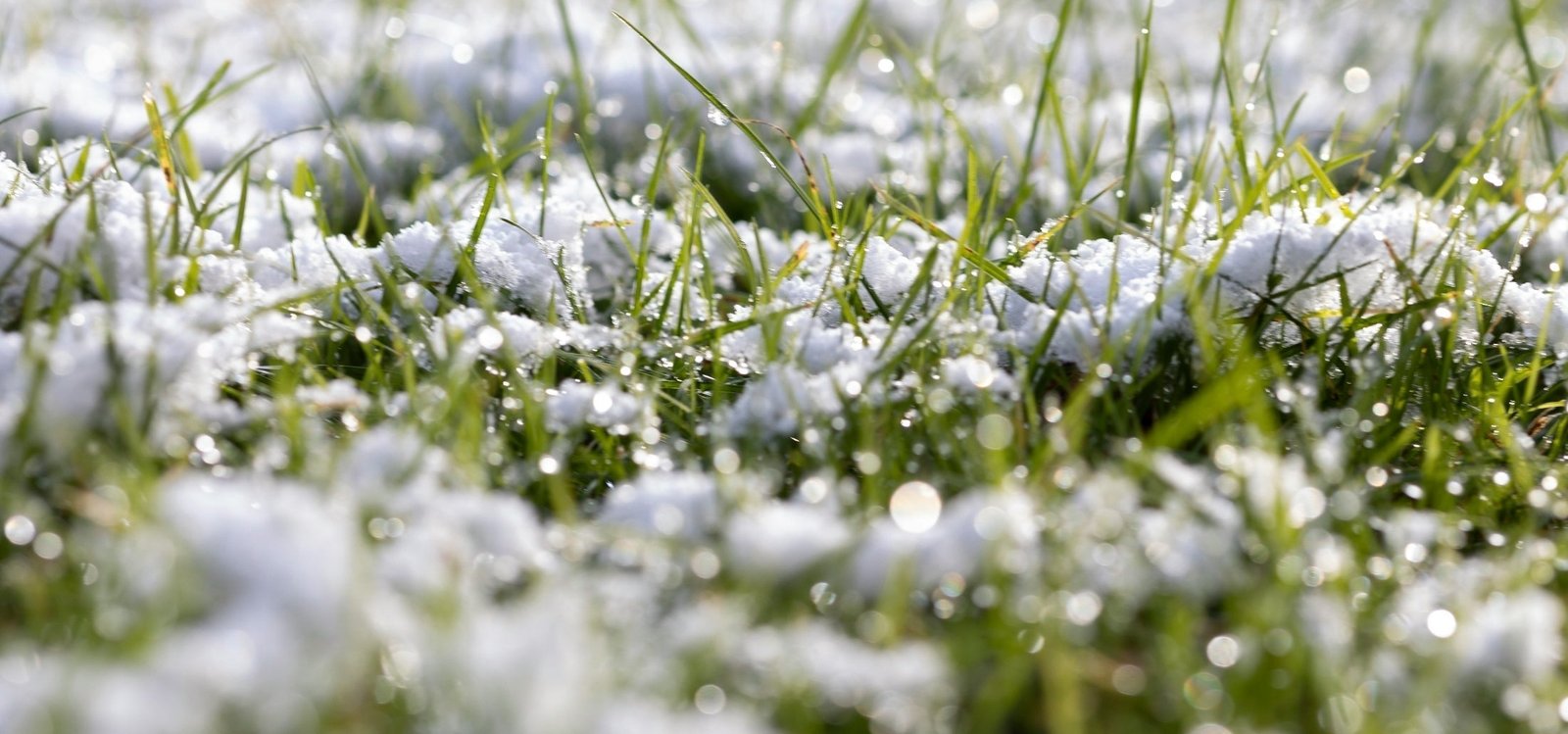
Credit: growtrax.com
Cool Season Grasses Identification: What to Look For
Cool season grasses identification can be difficult from color alone. Leaf width, growth habit, ligules, auricles, seed heads, roots, and the way the grass spreads are more useful clues. A single lawn can contain several grass types, weeds, and patches that react differently to heat or shade.
Start with the growth habit
Look at how the grass occupies the ground. Kentucky bluegrass spreads through rhizomes, so it can form a connected, sod-like turf and slowly creep into small bare areas. Tall fescue and perennial ryegrass usually grow as distinct clumps or bunches. Fine fescues may form clumps or spread modestly, depending on the species.
A bunch-type lawn often develops open spaces between plants if it is not overseeded periodically. That does not automatically mean it is unhealthy; it is simply part of the grass’s natural growth pattern.
Examine blade texture and color
- Kentucky bluegrass: Often medium-fine with a boat-shaped leaf tip. It may have a blue-green cast, though color varies by cultivar and growing conditions.
- Perennial ryegrass: Usually has a noticeable sheen on the underside of the leaf blade and a medium-fine texture.
- Tall fescue: Typically has wider, more strongly ribbed blades and a more upright, clumping habit.
- Fine fescue: Has very narrow blades that can give the lawn a soft, wispy, fine-textured appearance.
For a more confident identification, gently pull a whole plant from the soil and inspect the collar area where the blade meets the stem. Features such as auricles and ligules can help distinguish similar grasses, but they are small and may require good lighting or a hand lens.
Watch seasonal behavior, but do not rely on it alone
Cool-season turf usually greens up early in spring, grows strongly in fall, and slows during summer heat. However, summer browning alone is not enough to identify a grass. Heat, drought, grubs, fungal disease, shallow roots, compacted soil, and irrigation problems can produce similar symptoms.
If you need a definite identification before applying a selective herbicide, choosing a seed mix, or correcting a recurring lawn problem, a local Extension service, reputable garden center, or qualified turf professional may be able to help evaluate a sample.
How to Choose the Right Cool-Season Grass
The best grass is rarely the one with the most familiar name. Choose based on the conditions that are hardest to change in your yard, such as sun exposure, summer heat, soil drainage, foot traffic, and access to irrigation.
- Evaluate sunlight. Track how many hours of direct sun the lawn receives during the growing season. Dense shade changes grass selection and may require pruning, alternative groundcovers, mulch, or a smaller lawn area.
- Consider summer stress. If your summers are hot and dry, tall fescue may be a more forgiving option than a bluegrass-only lawn. Where summers are milder, a bluegrass blend may be practical.
- Decide how much maintenance you want. A highly uniform lawn often requires more mowing, irrigation, fertilization, and repair work than a lower-input fine fescue area.
- Match the grass to traffic. Play areas, dog runs, and paths need a grass that can tolerate wear or recover from it. Redirecting traffic can be just as important as seed selection.
- Use a quality region-appropriate mix or blend. Multiple compatible cultivars can reduce the risk of a single disease, weather event, or pest problem affecting the whole lawn.
- Read the seed label. Check the species listed, weed seed content, inert matter, and whether annual ryegrass is included. Select a mix that matches the lawn’s purpose rather than simply choosing the cheapest bag.
How to Plant Cool-Season Grass Step by Step
Late summer through early fall is often the best establishment window for cool-season lawns in northern areas. Soil is still warm enough for germination, while air temperatures are becoming less stressful and many annual weeds are less aggressive. Exact timing varies by region, elevation, weather, and the expected first frost date.
1. Test and prepare the soil
Begin with a soil test when possible. It can reveal soil pH and nutrient levels, helping you avoid unnecessary fertilizer or lime applications. Follow local recommendations rather than assuming every lawn needs the same amendment.
Remove construction debris, large stones, and persistent weeds. Correct major drainage problems before seeding. Grass will not solve standing water, severe compaction, or erosion on its own.
2. Loosen the surface and level the site
For a new lawn, loosen the top layer of soil enough to create a workable seedbed. For an existing thin lawn, core aeration may help relieve compaction and improve seed-to-soil contact if the soil is not excessively wet.
Rake the surface smooth, filling shallow depressions and avoiding steep changes that could lead to runoff. Do not pulverize soil into dust; a lightly textured surface helps hold seed in place.
3. Spread the right seed
Apply seed evenly according to the package label for the specific species or mix. Seeding rates vary substantially among Kentucky bluegrass, tall fescue, ryegrass, and mixed products, so using a universal rate can lead to poor results.
Spread half the seed in one direction and the other half at a right angle for more even coverage. Lightly rake or roll the seed so it makes contact with soil without being buried deeply.
4. Water gently and consistently during establishment
Keep the top layer of soil consistently moist while seeds germinate. Light, frequent watering may be necessary at first, particularly in dry or windy weather. Avoid creating puddles, runoff, or washed-out seed.
As seedlings develop roots, gradually water less often but more deeply. The goal is to encourage roots to move downward rather than keeping them near the surface. Weather, soil texture, slope, and sprinkler coverage should determine the actual schedule.
5. Mow only after the grass is established enough
Wait until seedlings are firmly rooted and tall enough to mow without being pulled from the soil. Use a sharp mower blade, avoid removing too much leaf tissue at once, and keep traffic off new turf as much as possible.
Mowing height should match the grass type, season, and lawn conditions. In general, cool-season lawns are often kept somewhat taller during summer heat to shade the soil and reduce stress. Follow recommendations for your specific grass and local climate.
Ongoing Care for a Cool-Season Lawn
A healthy cool-season lawn is built through steady, seasonal care rather than one aggressive treatment. The most important tasks are mowing correctly, managing water, protecting soil structure, and repairing thin turf at the right time.
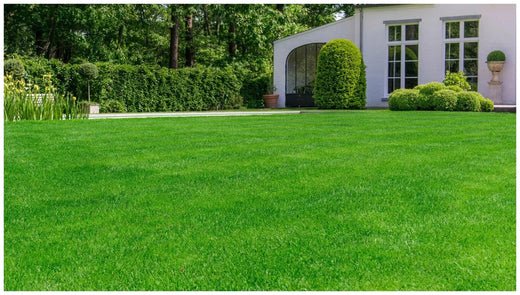
Credit: us.mammotion.com
Mow with the season in mind
Cool-season grass grows fastest in spring and fall, which may require more frequent mowing. Avoid scalping the lawn or removing more than about one-third of the grass blade in one pass. Removing too much at once weakens plants, exposes soil to heat, and can encourage weeds.
Keep mower blades sharp. Torn leaf tips lose moisture more quickly and can make the lawn look gray or ragged after mowing.
Water deeply when the lawn needs it
Established turf usually performs better with thorough watering that reaches the active root zone than with frequent shallow sprinkling. The amount and frequency depend on rainfall, grass species, temperature, soil type, slope, and local watering restrictions.
Signs that a lawn may need water include a dull bluish-gray color, leaf blades that do not spring back after being stepped on, and early wilting. These signs can also result from other stressors, so inspect irrigation coverage and soil moisture before assuming drought is the only cause.
Fertilize based on soil needs and growth cycles
Cool-season lawns commonly respond well to carefully timed fall fertilization because fall is an active root and shoot growth period. Spring applications may be appropriate in some situations, but excessive spring nitrogen can encourage lush growth that requires extra mowing and may be more vulnerable to stress later.
Use a soil test and the fertilizer label to guide product selection and application. Keep fertilizer off pavement, avoid applying before heavy rain, and follow local rules near waterways or storm drains.
Aerate and overseed when needed
Core aeration can help compacted lawns by removing small plugs of soil, allowing better air and water movement. It is most useful when compaction is actually present, such as in heavily trafficked clay soils. Aeration is not a cure-all for weeds, shade, poor drainage, or pest damage.
Overseeding is especially useful for bunch-type grasses such as tall fescue and perennial ryegrass. Fall is often the most favorable period because new seedlings face less heat stress than they would in midsummer.
Native Cool-Season Grasses and Lawn Alternatives
Native cool season grasses are grasses that naturally occur in particular North American regions and follow a cool-season growth pattern. They can be valuable in meadows, restoration plantings, erosion-control areas, and naturalized landscapes. However, native does not automatically mean suitable for a closely mowed, high-traffic suburban lawn.
Examples may include species such as Canada wildrye, Virginia wildrye, and some native brome grasses, depending on the region. Their mature height, appearance, wildlife value, and maintenance needs can differ greatly from conventional turfgrass.
Consider native cool-season species when you want to reduce mowing, support a more natural planting design, stabilize difficult areas, or create habitat-oriented landscaping. Select plants that are native to your state or ecological region rather than relying only on a broad “native” label. Your local native plant society, conservation district, or Cooperative Extension office can help identify appropriate options.
Common Problems With Cool-Season Grasses
Credit: simplelawnsolutions.com
Summer browning and thinning
Heat and drought are common causes of summer decline, especially in shallow-rooted lawns or compacted soil. Before increasing irrigation, check whether sprinklers are covering the area evenly and whether soil is actually dry below the surface. A brown patch near pavement may be heat stress, while an irregular patch elsewhere could involve disease, insects, pet damage, or another issue.
Weeds in thin turf
Weeds often take advantage of bare soil and weak grass rather than causing the original problem. Improve turf density through appropriate mowing, overseeding, soil care, and corrected watering practices. If herbicides are needed, identify both the weed and the desirable grass first, then use only a product labeled for that situation and follow all label directions.
Shade-related decline
Grass needs enough light to produce energy. Repeated overseeding will not solve deep shade under mature trees or beside buildings. Consider selective pruning by a qualified arborist where appropriate, reducing lawn area, or replacing struggling turf with mulch, shade-tolerant plants, or a suitable groundcover.
Damage from insects or disease
Brown patches, loose turf, chewed roots, leaf spots, and thinning can have several causes. Inspect the pattern of damage, roots, leaf blades, soil moisture, and nearby irrigation before treating. Avoid applying insecticides or fungicides based only on appearance; unnecessary treatments can harm beneficial organisms and may not address the actual problem.
Frequently Asked Questions
Can cool-season grass survive a hot summer?
Yes, many cool-season lawns survive summer heat, especially when the grass is well rooted and the soil is healthy. Performance varies by species, local climate, irrigation, mowing height, and the length of hot, dry weather. Some lawns may enter temporary drought dormancy, while others may need watering to avoid serious damage.
Is fescue always a cool-season grass?
The fescues commonly used in U.S. lawns, including tall fescue and fine fescues, are cool-season grasses. Their appearance and management needs differ, though: tall fescue is generally coarser and more drought-tolerant, while fine fescues are often better suited to shade and lower-maintenance areas.
Can I mix Kentucky bluegrass and perennial ryegrass?
Yes. These grasses are often combined in lawn seed blends because perennial ryegrass establishes quickly while Kentucky bluegrass can spread and fill in over time. Choose a blend suited to your region and sun exposure, and read the seed label to understand the proportions and included species.
Why does my cool-season lawn grow so fast in fall?
Fall often brings cooler air, warm soil, and more reliable moisture, which are favorable conditions for cool-season turf. The lawn may produce more leaf growth and root growth during this period, making fall a useful time for overseeding, soil improvement, and repairing thin areas.
Do cool-season grasses need to be reseeded every year?
Not necessarily. Kentucky bluegrass, tall fescue, perennial ryegrass, and fine fescues are perennial grasses that can return for multiple years. Annual overseeding may be useful for worn, thin, or bunch-type lawns, but a healthy, well-established lawn does not always require complete reseeding each year.