
If you are asking what is a soaker hose, it is a porous garden hose designed to release water slowly along its entire length. Instead of spraying water into the air, it lets water seep directly into the soil near plant roots.
Soaker hoses are commonly used in flower beds, vegetable gardens, shrub borders, and newly planted landscapes. They can reduce evaporation, keep leaves drier than overhead sprinklers, and make it easier to water long rows or densely planted areas.
The key to using one well is matching the hose layout, water pressure, and run time to your soil and plants. A soaker hose is simple equipment, but it is not a “set it and forget it” solution until you confirm that water is reaching the entire planting area evenly.
Related reading: garden hose fittings and accessories and watering needs in a beginner vegetable garden.
How a Soaker Hose Works
A traditional soaker hose is usually made from porous recycled rubber or a similar flexible material. When connected to a water supply, water moves through the hose and slowly escapes through tiny openings in its walls.
The water does not normally shoot outward like a sprinkler. It seeps or lightly weeps into the surrounding soil. This makes a soaker hose a type of low-pressure irrigation, often grouped with drip irrigation systems even though the two are not exactly the same.
For best results, lay the hose on the soil surface close to the root zone. Water spreads outward and downward through the soil, so the exact spacing depends on whether you have sandy, loamy, or clay-heavy ground.
Soaker Hose vs. Drip Irrigation
Both systems deliver water near plant roots, but they distribute it differently.
| Feature | Soaker Hose | Drip Irrigation |
|---|---|---|
| How water is released | Water seeps along the full hose length | Water is delivered through individual emitters or dripline outlets |
| Best for | Continuous rows, closely spaced plants, established beds | Widely spaced plants, containers, mixed landscapes, precise watering zones |
| Installation | Usually quick and simple | Can require tubing, emitters, fittings, and more planning |
| Water placement | Less precise, since the entire hose wets soil | More targeted at each plant or root zone |
| Pressure needs | Low, even pressure is important | Usually uses a pressure regulator and filter |
A soaker hose is often the easier choice for a straight vegetable row or a bed filled with plants. Drip irrigation can be the better long-term option when plants are spaced far apart, have different water needs, or are arranged in an irregular landscape.
Where Soaker Hoses Work Best
Soaker hoses work best where plants are grouped closely enough that a continuous wet strip makes sense. They are particularly useful where overhead watering would waste water or create avoidable foliage moisture.
- Vegetable gardens: Useful along rows of beans, peppers, tomatoes, cucumbers, squash, and other crops. Keep the hose near the soil rather than draped over plants.
- Flower borders: Helps water perennials, annuals, and densely planted beds without soaking blooms and leaves.
- Shrub beds: Can provide slow, deep watering around established shrubs when arranged in broad loops or gentle curves.
- Foundation plantings: Useful when hand watering is inconvenient, provided water is not concentrated against the foundation or causing drainage concerns.
- New plantings: Can help maintain consistent moisture around recently planted trees, shrubs, and perennials, although newly planted trees often benefit from more deliberately placed watering than a single straight hose can provide.
They are less useful for lawns, large open areas, and isolated plants that are several feet apart. A soaker hose can also be awkward in beds with many plants that prefer dry conditions, such as some drought-tolerant perennials, succulents, and Mediterranean herbs.
Benefits of Using a Soaker Hose
Water goes to the root zone
Plants take up most of their water through their roots, not their leaves. Because a soaker hose wets the soil directly, less water is lost to wind drift and evaporation than with an overhead sprinkler.
Leaves stay drier
Wet foliage does not automatically cause disease, but prolonged leaf wetness can favor some fungal and bacterial plant problems. Root-zone watering helps avoid repeatedly soaking leaves, flowers, and fruit.
It can reduce runoff
Water applied slowly is more likely to soak into the ground instead of flowing off the surface. This is especially helpful on mild slopes and in compacted beds, although severely compacted or steep areas may still need soil improvement, terracing, or another irrigation approach.
It is easy to set up
A basic setup may only require a faucet, a hose connection, a soaker hose, and possibly a timer. Gardeners can place the hose around plants without installing a permanent underground system.
It may help limit weed growth between rows
Because it waters a narrower zone than a sprinkler, a soaker hose may leave some paths and unplanted areas drier. It will not eliminate weeds, but it can avoid watering every inch of bare soil.
Limitations and Drawbacks to Know
Soaker hoses are useful, but they do not distribute water perfectly in every garden. Understanding their limits prevents common watering problems.
- Uneven watering can occur: The end of a long hose may receive less water than the section nearest the faucet, especially if pressure is too low, the hose is excessively long, or the line runs uphill.
- They can clog: Sediment, mineral deposits, and debris can reduce flow through the hose over time.
- They are not highly precise: Every section of the hose releases water, including sections that may not be close to a plant.
- Sun and weather shorten service life: Constant ultraviolet exposure, freezing temperatures, kinks, and being stepped on can damage the hose.
- They can overwater heavy soil: Clay soil absorbs water slowly. If the hose runs too long, the soil may stay saturated around roots.
- They can be difficult to inspect under mulch: Mulch is helpful, but a buried hose can hide leaks, kinks, and dry sections.
For complex landscapes, separate drip zones often provide more control. For a simple garden bed, however, a soaker hose can be a practical and affordable option.
.jpg)
How to Set Up a Soaker Hose Correctly
Good layout matters more than simply turning on the faucet. Set the system up when the bed is accessible, then test it before covering it with mulch.
- Plan the watering path. Identify the root zones that need regular moisture. Run the hose beside plant rows or in loops around grouped plants rather than zigzagging randomly across the bed.
- Place the hose on level ground when possible. A hose running downhill may release more water at the low end. On slopes, run hoses across the slope rather than straight downhill when the bed layout allows.
- Use a regular garden hose as a leader hose. If the faucet is some distance from the planting bed, use a non-porous hose to carry water to the bed. Only the porous soaker section should be in the area you intend to water.
- Keep bends broad. Avoid sharp turns and kinks, which restrict flow and can weaken the hose.
- Secure it gently. Garden stakes or landscape pins can keep the hose from shifting. Do not crush or puncture it.
- Test before mulching. Turn on the water at a low setting and look for wet soil along the complete hose length. Check that water reaches the far end.
- Add mulch after testing. A light layer of organic mulch can reduce evaporation and protect the hose from sunlight. Keep mulch pulled back from plant crowns and tree trunks.
Do not assume every hose can be connected into a very long chain. Manufacturers may set limits on recommended hose length, water pressure, or the number of sections that can be joined. Follow the product instructions for the specific hose and fittings you use.
Useful Components for a More Reliable System
A simple hose can work alone, but a few accessories can make watering more consistent and less wasteful.
- Timer: Helps prevent forgetting to shut off the water.
- Pressure regulator: Can reduce the risk of excessive pressure and improve even delivery where recommended by the hose manufacturer.
- Filter: Helps keep sediment from entering the hose, especially when water contains visible debris or mineral particles.
- Backflow prevention device: May be required by local plumbing rules in some situations and helps protect the household water supply from contamination.
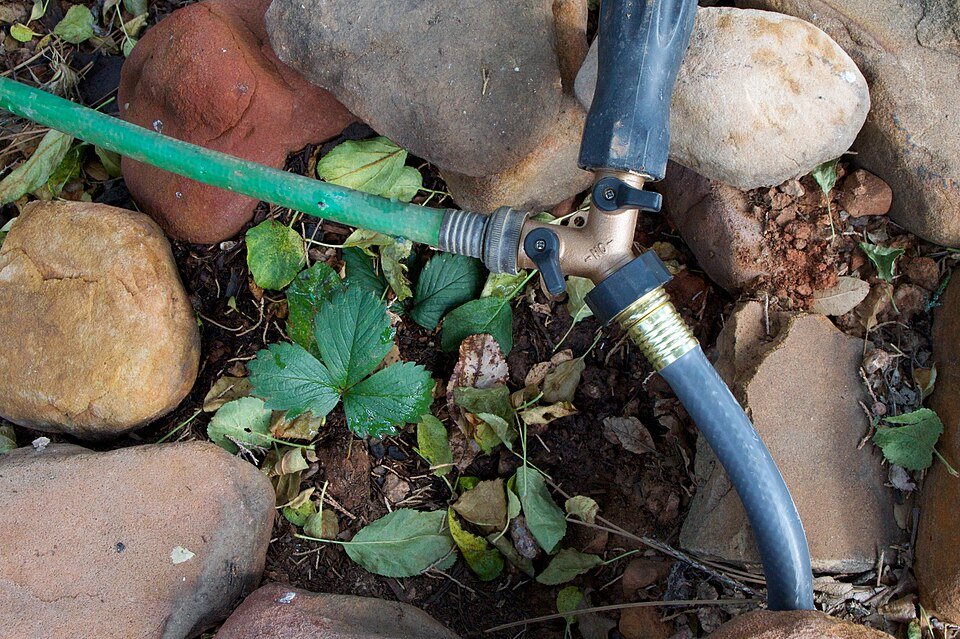
- Y-connectors and shutoff valves: Make it easier to divide watering areas or control individual hose runs.
Use fittings that are intended for garden-hose connections, and check them periodically for leaks. If you are connecting irrigation to a permanent plumbing system, local code requirements may apply.
How Far Apart Should Soaker Hose Lines Be?
Spacing depends largely on soil texture and the type of plants being watered. Water spreads farther sideways in clay-rich soil than in sandy soil. Sandy soil tends to absorb water more vertically, so hose lines may need to be closer together to wet a broad bed evenly.
For a narrow vegetable row, one hose placed near the row may be enough. For a wide planting bed, use parallel runs spaced according to how far moisture actually spreads in your soil. Rather than relying on a universal measurement, run a short test and dig a small inspection hole after watering. Check whether the root zone is moist, not merely whether the soil surface looks wet.
Keep the hose a short distance away from plant stems and crowns. Constant moisture directly against a crown can contribute to rot in plants that need good air circulation at the base. For shrubs and trees, place water over the active root zone rather than wrapping the hose tightly against the trunk.
How Long Should You Run a Soaker Hose?
There is no single correct run time. The right duration depends on water pressure, hose length, soil texture, weather, mulch, plant size, root depth, and how recently the plants were installed.
Start with a short test run at low pressure, then inspect the soil. The goal is to moisten the soil to the depth where most active roots are growing without creating standing water or constantly soggy conditions.
Use the soil, not the clock, as your guide
After watering, move aside mulch and check the soil several inches below the surface with a trowel or soil probe. If only the top layer is damp, the hose may need more time. If the ground is muddy or water pools around plants, reduce the run time or improve drainage.
New transplants generally need more frequent monitoring because their roots occupy a small area. Established trees and shrubs usually benefit from deeper, less frequent watering than shallow daily watering, but their needs still depend on weather and soil conditions.
Rainfall matters, too. A timer should be adjusted or paused after substantial rain, during cool periods, or when plants are not actively growing. Local watering restrictions may also limit the days or hours when outdoor irrigation is allowed.
Best Practices for Watering With a Soaker Hose
- Water early in the day when practical. Morning watering gives the soil time to absorb moisture before the hottest part of the day and avoids leaving the garden overly damp overnight.
- Use low pressure. A soaker hose should seep, not spray. If water jets from pores or fittings, reduce the faucet flow and inspect the system.
- Monitor the far end. Check for moisture near the last section of hose, not just near the faucet.
- Adjust for the season. Hot, dry, windy weather increases water demand, while cool or rainy weather lowers it.
- Match watering to plants. Keep plants with very different moisture needs on separate lines when possible.
- Use mulch wisely. Mulch conserves moisture, but it should not be piled against stems, crowns, or trunks.
- Turn off water during rain. A basic timer without a rain sensor will continue watering unless you adjust it.
Common Soaker Hose Problems and Fixes
The hose sprays instead of seeps
This usually points to excessive pressure, a damaged hose, or a split seam. Turn the water down first. If spraying continues from a specific spot, inspect for damage and replace or repair the affected section according to the manufacturer’s guidance.
The end of the hose stays dry
The hose may be too long for the available pressure, routed uphill, kinked, or blocked by debris. Straighten the line, reduce the length of the run, use a leader hose to reach the bed, and check whether a filter or lower-pressure setup is recommended.
Some plants are dry while others are wet
The hose may be placed too far from certain root zones, or the soil may not spread water evenly. Reposition the hose, add another line for wide beds, or separate plants with different watering requirements.
Water puddles on the surface
Heavy soil, compacted soil, or excessive run time can cause pooling. Reduce watering duration, allow more time between cycles, and consider improving the soil gradually with organic matter where appropriate. Do not keep watering simply because the surface looks dry if deeper soil is already wet.
The hose leaks at a connector
Check that the washer is present and undamaged, tighten the connection by hand, and inspect fittings for cracks. Avoid overtightening plastic fittings, which can split.
Maintenance and Winter Storage
Soaker hoses last longer when they are protected from damage and stored properly. Inspect the hose periodically for flattened sections, holes, clogged areas, leaks, and damaged connectors.
At the end of the growing season, disconnect the hose, drain as much water as possible, and store it away from prolonged sun and freezing conditions. Standing water can contribute to freeze damage in cold climates. Coil the hose loosely rather than sharply bending it.
If you cover a soaker hose with mulch during the season, uncover key sections occasionally to confirm it is still working. Replace hoses that have widespread leaks, brittle material, or poor water distribution. A hose that no longer wets the bed evenly can waste water while leaving plants stressed.
FAQ
Can a soaker hose be covered with mulch?
Yes. A light layer of mulch can protect the hose from sunlight and slow soil moisture loss. Test the hose first, and keep mulch away from plant crowns, stems, and tree trunks to reduce the risk of rot and pest issues.
Can you bury a soaker hose underground?
It is usually better to keep a soaker hose on the soil surface or just beneath mulch rather than deeply burying it. Deep burial makes leaks and clogs difficult to detect, and roots or soil movement may damage the hose. Use irrigation products specifically rated for underground installation if that is your goal.
Are soaker hoses safe for watering edible gardens?
Use a hose marketed and labeled for the intended purpose, and follow the manufacturer’s instructions. Materials vary by product, so do not assume every recycled-rubber or general-purpose garden hose is suitable for drinking-water or food-garden applications.
Can a soaker hose water trees?
A soaker hose can help water newly planted or small trees when arranged over the root zone, but avoid placing it directly against the trunk. For larger trees, watering needs extend well beyond the trunk area, so multiple hose loops or another slow-watering method may be more effective.
Should a soaker hose be left on all night?
Leaving it on all night is not automatically necessary or safe. Long run times can overwater soil, especially in clay or during cool weather. Use a timer, check moisture at root depth, and adjust the watering period based on your soil, weather, and plant needs.
Featured photo: Rosewoman / Wikimedia Commons (CC BY 2.0, resized and hosted locally).
