
A well-planned herb garden layout makes harvesting easier, keeps aggressive plants under control, and turns a practical growing space into an attractive part of the yard. Whether you have a sunny corner, a raised bed, a patio, or a few containers, the best design starts with how you cook, how much sun the area receives, and how often you can water.
Most culinary herbs thrive with at least six hours of direct sun and soil that drains well. The layout should also account for each plant’s mature size and growing habit. Compact herbs such as thyme can edge a path, while tall dill or fennel can create a light backdrop. Mint, meanwhile, is usually better contained in its own pot.
The following herb garden layout ideas combine productivity with visual appeal, helping you create a garden that is easy to maintain throughout the growing season.
Start With the Conditions of Your Growing Space
Before choosing a shape or planting style, assess the site. A beautiful herb garden can struggle if its layout ignores sunlight, drainage, and access.
Choose the sunniest practical location
Popular Mediterranean herbs such as basil, rosemary, sage, oregano, thyme, lavender, and chives generally perform best in full sun. In most gardens, that means six or more hours of direct light per day.
If your yard has partial shade, reserve the brightest spots for sun-loving herbs and use shadier areas for plants that tolerate less intense light, including parsley, cilantro, mint, chervil, and lemon balm. Even shade-tolerant herbs usually produce more strongly flavored growth with several hours of morning or filtered sun.
Plan for drainage before planting
Herbs from dry, sunny regions often decline in wet soil. Rosemary, lavender, thyme, and sage are especially vulnerable to root problems when their roots remain saturated. If the intended area holds water after rain, consider a raised bed, a mound of improved soil, or containers rather than planting directly into the ground.
Do not assume every herb needs the same soil. Basil and parsley appreciate more consistent moisture and richer organic matter than rosemary or lavender. Grouping plants with similar needs is one of the simplest ways to make an herb garden layout easier to manage.
Keep the garden close to the kitchen
A location near the back door, grill, patio, or kitchen path encourages frequent harvesting. Even a small herb planter beside the steps can be more useful than a large bed at the far end of the property.
Place frequently picked herbs, such as basil, parsley, chives, thyme, and cilantro, along the front edge or nearest walkway. Save less frequently harvested herbs and larger perennial plants for the back or center of the design.
Use Plant Groups That Share Similar Needs
One of the most useful herb garden layout principles is to avoid mixing every herb together without a plan. Herbs vary widely in water needs, height, spread, and life cycle.
| Herb group | Examples | Best layout approach |
|---|---|---|
| Dry-soil, sun-loving perennials | Rosemary, thyme, sage, oregano, lavender | Place in the sunniest, best-drained area; give larger plants room to mature. |
| Moisture-loving annuals and leafy herbs | Basil, cilantro, parsley, dill | Grow in richer soil with regular watering; replant annuals as needed. |
| Spreading or invasive herbs | Mint, lemon balm, some oregano varieties | Use containers or a clearly contained bed to limit runners and self-seeding. |
| Vertical or tall herbs | Dill, fennel, bay laurel, large rosemary plants | Position toward the back of a border or center of an island bed so they do not shade smaller plants. |
Separate mint from the main bed
Mint is productive, fragrant, and useful, but it can spread quickly through underground stems. Planting it in a container is usually the simplest solution. Keep the pot above ground rather than sinking it into a garden bed, since stems can escape over the rim or through drainage holes.
Lemon balm can behave similarly in favorable conditions. Some gardeners also contain oregano, especially vigorous varieties, although oregano is often easier to manage than mint.
Give perennial herbs permanent positions
Woody herbs may live for several years where winters and drainage suit them. Rosemary, sage, thyme, lavender, and oregano can become the structural backbone of the garden. Place them where they will not need to be moved every spring to make room for annual vegetables or herbs.
Keep in mind that winter survival depends on the herb species, cultivar, drainage, and local climate. Rosemary, for example, is perennial in many mild regions but may need winter protection or indoor shelter in colder areas.
Herb Garden Layout Ideas for Different Spaces
The right design does not need to be large. A productive layout can be built around one raised bed, a small border, a collection of pots, or a formal garden pattern.
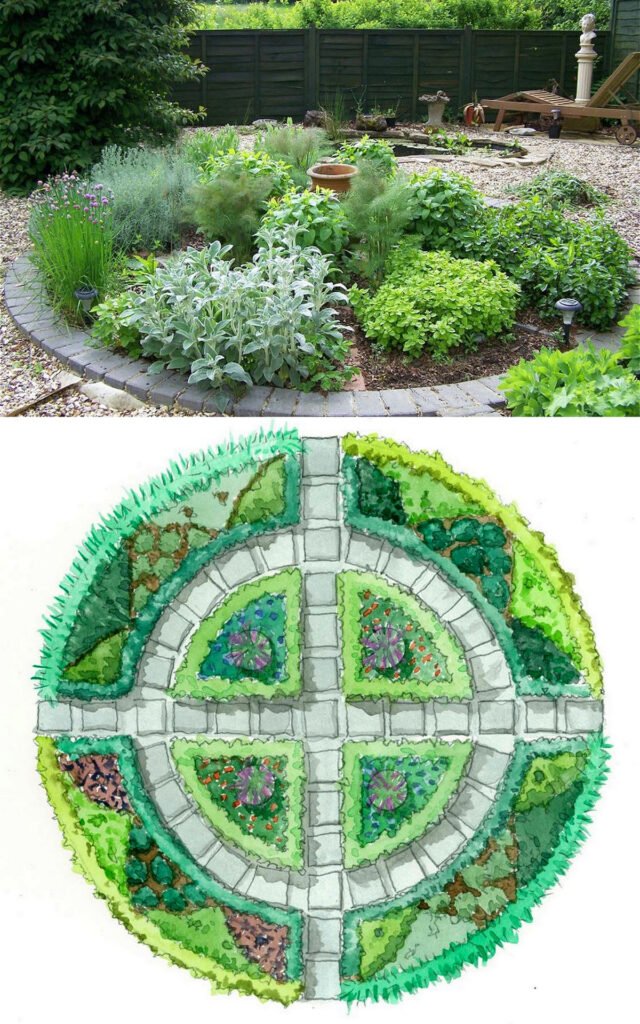
Credit: apieceofrainbow.com
Raised-bed kitchen herb garden
A raised bed is one of the most flexible choices for homeowners with compacted soil, poor drainage, or limited mobility. A bed that can be reached from both sides reduces the need to step on the soil, which helps prevent compaction around herb roots.
For a simple layout, plant taller herbs in the middle or along the north side of the bed where they are less likely to shade lower plants. Use medium-sized herbs such as basil, parsley, and sage in the center. Let low-growing thyme trail near the edge, where it softens the bed’s lines and remains easy to snip.
- Back or center: dill, fennel, tall rosemary, or bay in a container
- Middle: basil, parsley, sage, chives, and cilantro
- Front edge: creeping thyme, compact oregano, or alpine strawberries if desired
Keep plants spaced according to their expected mature size, not their size at purchase. A crowded bed may look full at first, but poor airflow can increase disease pressure and make harvesting more difficult.
Four-quadrant herb garden
A four-quadrant design divides a square or rectangular bed into four smaller planting areas separated by narrow paths or stepping stones. It creates a tidy, classic look and makes it easy to group herbs by water needs or culinary use.
For example, one section can hold Italian cooking herbs such as basil, oregano, parsley, and thyme. A second can contain tea herbs, including chamomile, lemon verbena, and mint in a pot. A third can be dedicated to dry-soil perennials such as sage and lavender. The final section can rotate with annual herbs such as cilantro and dill.
This arrangement is especially helpful when you want to refresh only one section each season without disturbing established perennial plants.
Formal knot-style herb garden
Formal herb gardens use repeated shapes, clipped edges, and symmetrical planting. Traditional designs often feature low hedges of herbs such as thyme, germander, lavender, or boxwood around geometric paths. Inside the shapes, gardeners can plant culinary herbs, flowers, or seasonal annuals.
This style works best in a sunny location where the lines are visible from a patio, window, or main walkway. It requires more trimming than a casual bed, but it creates strong visual structure year-round.
Choose edging plants carefully. Some herbs grow too loosely for crisp borders, while others can become woody or sparse with age. Low-growing thyme is attractive but may not create a perfectly uniform hedge in every climate. For a less formal version, use curved paths and repeated clusters rather than strict geometry.
Spiral herb garden
An herb spiral is a raised, coiled planting mound that creates several small microclimates in one footprint. The top and south-facing sides are usually warmer and drier, while the lower areas retain more moisture. This makes the design useful for gardeners who want to grow a range of herbs with different preferences.
Plant dry-loving herbs such as thyme, sage, and oregano near the higher, sunnier portions. Put parsley, cilantro, and chives lower down where soil moisture is more consistent. Mint should still be planted in a separate container, even if the spiral includes a damp lower area.
Build the spiral with stable materials and avoid making it so tall or steep that soil washes away during heavy rain. In areas with freeze-thaw cycles, use durable edging materials and check for shifting after winter.
Container herb garden for patios and decks
Containers are ideal for renters, small yards, balconies, and gardeners who want herbs near an outdoor cooking area. They also let you match soil and watering more closely to each plant.
Use a large container for a shrub-like herb such as rosemary or bay, and separate pots for basil, parsley, chives, and mint. A wide, shallow planter can hold thyme, trailing oregano, and compact sage. Make sure each container has drainage holes, and use a potting mix designed for containers rather than dense garden soil.
Containers dry out faster than in-ground beds, particularly in hot, windy weather. Check the soil regularly and water thoroughly when needed rather than following a rigid schedule. If local watering restrictions apply, follow the rules set by your water authority.
Herb border along a walkway
An herb border can make a path productive without looking like a traditional vegetable garden. Use low-growing, aromatic herbs near the edge, with taller plants behind them. Thyme, chives, compact oregano, sage, and lavender can all contribute texture and scent.
Avoid placing delicate plants where they will be constantly brushed, stepped on, or hit by mower discharge. Culinary thyme may tolerate light contact, but repeated foot traffic can thin it out. Keep enough room between the path and plants for maintenance and harvesting.
Design for Beauty With Height, Texture, and Color
Herbs offer more ornamental value than many gardeners expect. Their leaves range from silvery gray and deep green to chartreuse, purple, and variegated patterns. Flowers can attract beneficial insects and pollinators when allowed to bloom.

Credit: garden.eco
Layer plants by mature height
A layered herb garden looks fuller and is easier to view from one side. In a border against a fence or wall, put the tallest plants at the back. In a bed viewed from all sides, place tall plants in the center.
- Tall: dill, fennel, mature rosemary, bay laurel, and tall varieties of basil
- Medium: sage, parsley, chives, lavender, and bush basil
- Low or trailing: thyme, creeping oregano, chamomile, and some compact savory varieties
Check plant labels for mature dimensions because size varies by species and cultivar. Fennel, for example, can grow tall enough to shade neighboring herbs, while some thyme varieties remain only a few inches high.
Repeat colors and leaf shapes
Repeating a few plants across the garden makes a mixed herb bed look intentional. You might repeat silvery sage near both ends of a border, use purple basil as an accent in several spots, or echo the fine foliage of chives throughout the design.
Contrast also adds interest. Broad basil leaves stand out beside fine-leaved thyme. Gray-green sage provides a calm background for bright green parsley. Lavender flowers and chive blooms add seasonal color, though flowering can change the flavor and texture of some culinary herbs.
Allow selected herbs to flower
When herbs flower, they can support pollinators and beneficial insects. Chives, oregano, thyme, sage, and lavender are especially valued for their blooms. You do not need to let every plant flower, however. Basil and cilantro are often harvested for leaves, and flowering can signal a change in leaf flavor or a slower production of new tender growth.
A practical compromise is to keep some plants for harvest and allow a few extras to bloom. This works well if you grow several basil or cilantro plants through the season.
Plan Paths, Access, and Maintenance Space
Even a small herb garden benefits from clear access. If you cannot reach a plant easily, you are less likely to harvest it, prune it, or notice early pest and disease problems.
Make beds easy to reach
Limit the width of an in-ground or raised bed so you can comfortably reach the middle from the sides. The ideal width depends on whether you can access one side or both, as well as your own reach and mobility. Avoid designing a bed that requires stepping into the planting area.
For larger layouts, include paths that are stable, well-drained, and wide enough for regular walking and garden tools. Gravel, mulch, pavers, and stepping stones can all work, depending on the style of the garden and local conditions.
Leave room for mature plants
Small nursery plants can be misleading. Sage can form a broad clump, rosemary may become a substantial shrub in favorable climates, and lavender needs airflow around its base. Planting too closely creates a lush look for one season but can lead to crowding later.
If the bed looks sparse after planting, use temporary annual herbs such as basil or cilantro to fill open areas. As perennial herbs grow, reduce or relocate the temporary plants rather than forcing everything to compete.
Put water access within reach
Locate the garden near a hose, rain barrel system where permitted, or irrigation zone if possible. A simple drip system can help keep annual herbs evenly watered while reducing wet foliage, but it should be checked regularly for clogs, leaks, and uneven coverage.
Different sections may need different amounts of water. A container of basil can need attention far more often than an established thyme plant in well-drained soil. Grouping plants by moisture needs makes this easier to manage.
Useful Layout Mistakes to Avoid
A productive herb garden does not need to be complicated, but a few common design choices can create unnecessary work.
- Planting mint directly into a mixed bed: Its spreading roots can overwhelm nearby herbs.
- Grouping all herbs by appearance alone: Lavender and parsley may look good together, but their preferred soil moisture differs.
- Ignoring mature size: Large rosemary, sage, dill, and fennel plants can shade smaller herbs.
- Using poorly drained soil for Mediterranean herbs: Excess water is often more damaging than short dry periods for these plants.
- Putting annuals where permanent plants belong: Basil and cilantro need seasonal replacement, while woody perennials are better suited to long-term spots.
- Creating paths that are too narrow or unstable: Difficult access makes routine harvesting and weeding less likely.
- Overfertilizing: Excess fertilizer can encourage weak, overly soft growth and may reduce the intensity of flavor in some herbs.
Match the Layout to How You Cook and Garden
The most attractive herb garden layout is usually one that reflects how you use the plants. A cook who reaches for basil, parsley, oregano, and thyme several times a week should keep those herbs together near the kitchen. A gardener who enjoys herbal teas may prefer a dedicated container grouping for mint, chamomile, lemon verbena, and lemon balm.
You can also arrange plants around themes without sacrificing good growing conditions. A pizza garden may include basil, oregano, thyme, and parsley. A grilling bed could feature rosemary, sage, chives, and thyme. A pollinator-friendly herb border might emphasize lavender, oregano, chives, sage, and flowering thyme.
Use themes as a starting point, then adjust for sun, soil moisture, plant size, and local climate. The result will look more intentional and require less correction later.
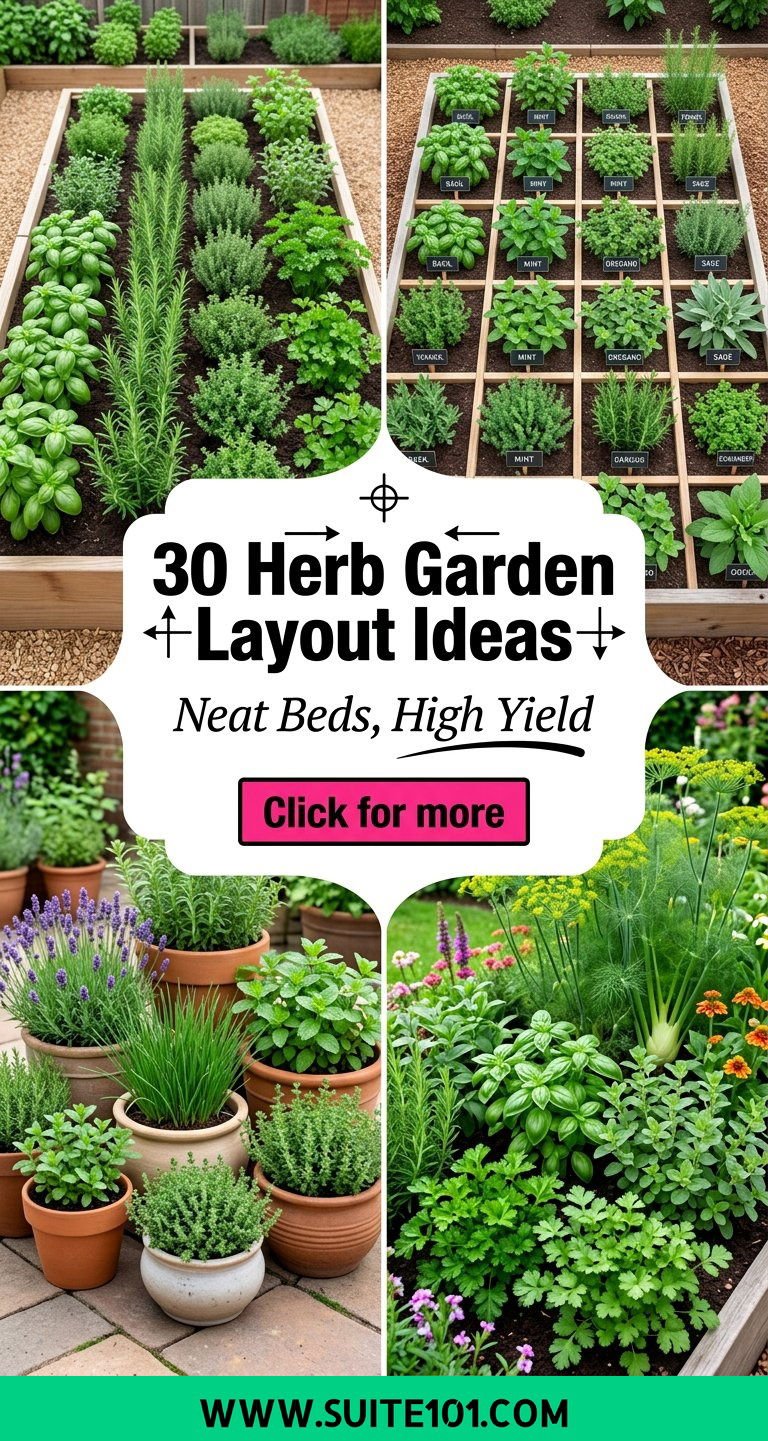
Credit: suite101.com
Frequently Asked Questions
How large should a beginner herb garden be?
Start with a size you can easily water, weed, and harvest. A small raised bed, a narrow border, or several containers is often enough for a beginner. Growing a few herbs you use regularly is more practical than planting a large collection that receives inconsistent care.
Can herbs and vegetables grow in the same bed?
Yes, provided their light, water, and spacing needs are compatible. Basil can grow well near warm-season vegetables, while parsley and chives fit into many mixed beds. Keep vigorous spreaders contained, and avoid allowing tall herbs to shade smaller vegetable crops.
Which herbs are easiest to grow from seed?
Cilantro, dill, basil, chives, and parsley are commonly grown from seed, although parsley can germinate slowly and unevenly. Thyme, rosemary, and lavender are often easier for beginners to start from nursery plants because seedlings can be slow-growing.
Should I mulch around herb plants?
Mulch can reduce weeds and conserve soil moisture, especially around basil, parsley, and other moisture-loving herbs. Keep mulch from resting directly against woody stems or crowns, and use it lightly around dry-soil herbs so the soil does not stay overly wet.
How can I keep an herb garden productive through the season?
Harvest regularly without removing too much growth from any one plant, remove weeds before they compete heavily, and replace short-lived annuals as needed. Watch for changes in sunlight, heat, rainfall, and plant crowding, then adjust watering and pruning based on current conditions rather than a fixed calendar.